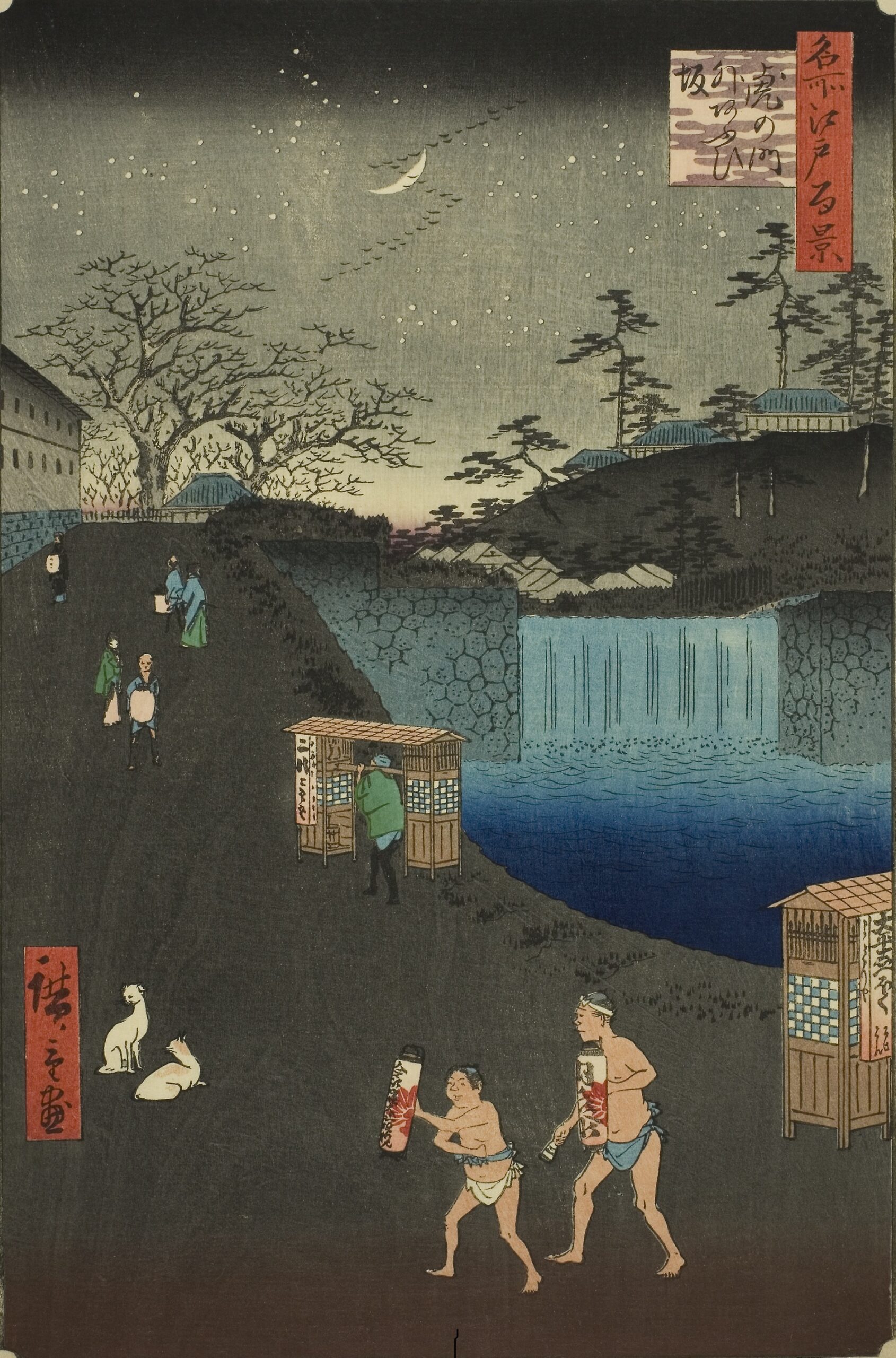
Utagawa Hiroshige – One Hundred Famous Views of Edo – 115 – Winter – Bikunishi Bridge in the Snow 歌川広重-名所江戸百景-115-冬-びくにはし雪中
Current Address: Near the Former Site of Hikuni Bridge, Chuo Ward
Latitude and Longitude: Latitude: 35.6820, Longitude: 139.7760
Published: October 1858 Age: 62
Tourist Guide-Style Commentary: “Bikunibashi Bridge in the Snow”
■ Introduction
Utagawa Hiroshige’s “One Hundred Famous Views of Edo” is a large-scale series of 119 paintings depicting the seasonal scenery of Edo.
Among them, “Bikunibashi Bridge in the Snow” is a painting that symbolizes the atmosphere of winter.
This masterpiece by Hiroshige captures a glimpse of Edo’s urban life and atmosphere in a tranquil, snowy landscape, and is now considered a valuable record of Edo’s winter scenery.
■ What is Bikunishi Bridge?
Bikunishi Bridge (also written as Ogu Bridge) was a small bridge located in what is now the Taito and Chiyoda wards.
While there are various theories about its exact location, it was one of the small bridges in Edo and served as a road used by commoners.
“Bikuni” refers to “bikuni” (nuns), and the bridge was named after the nearby nunnery.
Many place names and bridges in Edo were derived from such religious facilities.
■Highlights of the Illustration
Bikuni Bridge spans the Kyobashi River and was originally a gathering place for prostitutes known as bikuni.
It was considered a relatively shady place.
On the left is a momonji restaurant called Owariya.
The large “mountain whale” in the foreground is a slang term for wild animal meat.
After the introduction of Buddhism, four-legged meat was shunned and rarely eaten.
From around the mid-Edo period, it began to be eaten as a way to recover from illness, known as yakugui, and some shops even made a living from it.
“○Yaki Jusanri” on the right is a shop selling roasted Satsuma sweet potatoes.
The name comes from the round shape of the sweet potato when cut crosswise and the sum of nine and four, which means “thirteen,” in the Japanese phrase “tastier than chestnuts.”
■Searching for a Modern-Day “Bikunihashi”
Unfortunately, there is no bridge called “Bikunihashi” anymore.
By tracing the remains of Edo bridges, you can find remnants of them in the modern road network and river development.
It’s also fun to compare them with ukiyo-e prints while strolling around Tokyo’s bridges.
■Recommended Points from the Tourist Guide
① Visiting Edo’s Famous Landmarks in Winter
Visiting areas that are well suited to snowscapes, such as Ueno and Asakusa, in winter may bring you a little closer to the world depicted by Hiroshige.
② Overlapping Ukiyo-e with Modern-Day Snowscapes
Snow is no longer a rare sight in Tokyo, but on snowy days, walking along bridges and slopes and imagining Hiroshige’s “Snow Paintings” can make everyday scenery feel like a painting.
- Viewing at an Ukiyo-e Museum
You can sometimes come across the actual “Bikunihashi Yukina” at places like the Ota Memorial Museum of Art.
The colors of the print and the texture of the paper have a powerful impact that can’t be experienced through prints or digital images.