Utagawa Hiroshige – One Hundred Famous Views of Edo – 17 – Spring – View North of Asukayama – Commentary 歌川広重-名所江戸百景-17-春-飛鳥山北の眺望 解説
Current Address: Asukayama, Oji 1-chome, Kita-ku
Latitude and Longitude: Latitude 35.7486: Longitude 139.7366
Published: May 1856 Age: 60
Commentary
<1> Introduction
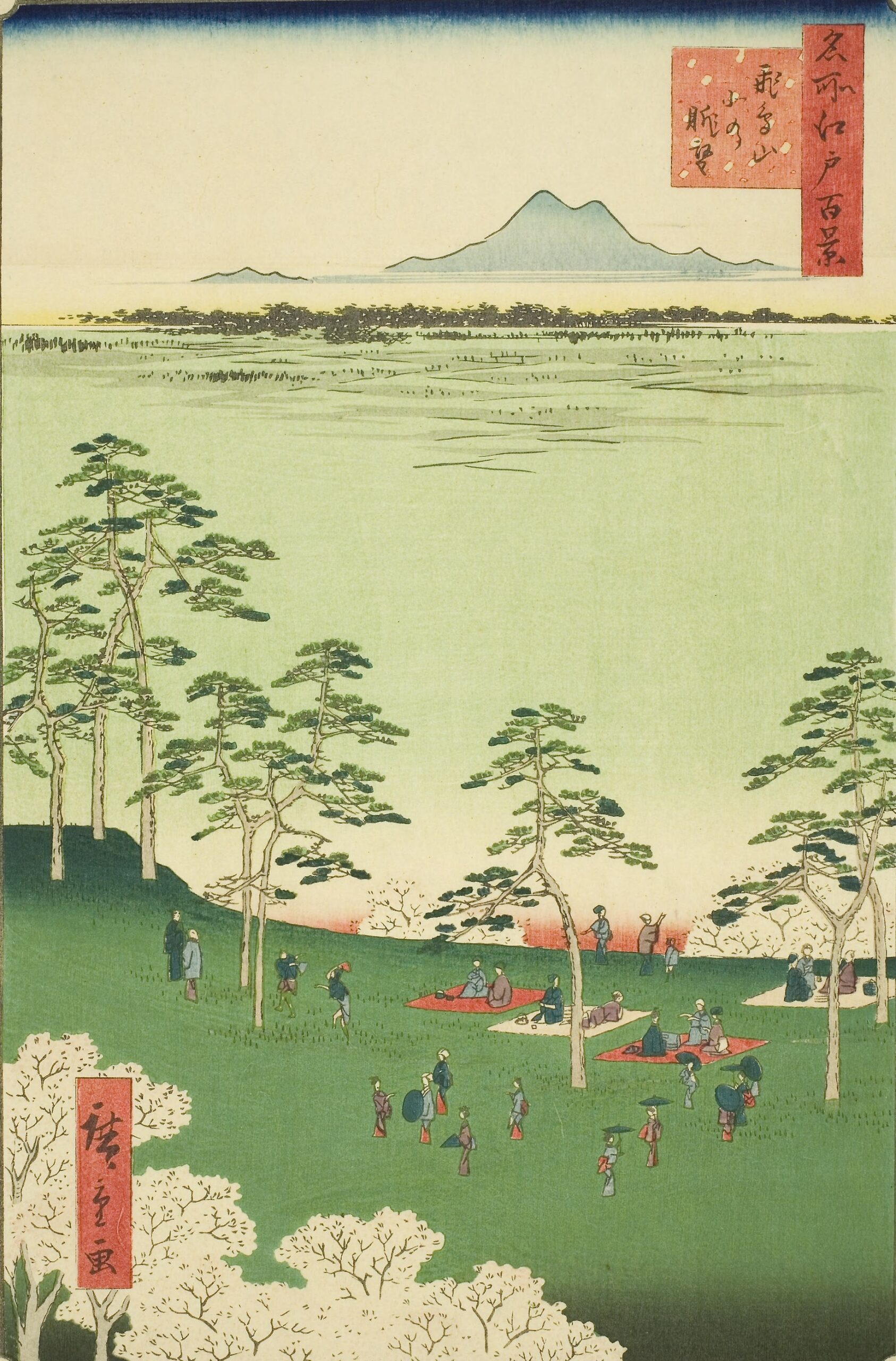
“View North of Asukayama” depicts the panoramic view north from Asukayama, a popular recreational spot for the Edo commoners.
Asukayama is located in what is now Oji, Kita Ward, Tokyo. After Tokugawa Yoshimune planted and maintained the area, it became a popular cherry blossom viewing spot for Edo residents.
This work, composed from the perspective of Asukayama, offers a distant view of the Tone River system and the expansive Musashi Plain, capturing Edo’s “recreational culture” and the “scale of nature” in a single painting.
<2> What is Asukayama?
Between 1716 and 1736, the eighth shogun, Tokugawa Yoshimune, planted 1,000 cherry tree saplings on Asukayama to increase the number of recreational areas for the common people.
This marked the beginning of the “Asukayama Cherry Blossoms.”
Away from the center of Edo, out of the reach of the shogunate, it was a place where commoners enjoyed drinking parties.
Easily accessible from downtown Edo, it was ideal for cherry blossom viewing, water activities, and strolling, so it was bustling with Edoites throughout the year.
The area around Asukayama was home to many temples and shrines, including Oji Inari and Oji Gongen, making it a tourist destination combining faith and pleasure.
The name Asukayama originated when the local lord, Toyoshima, enshrined a branch of the Asuka Myojin deity from Kishu Shingu on the mountain’s summit.
From the summit, it offers a scenic view of Mount Fuji to the west and Mount Tsukuba to the north.
<3> Highlights of the Painting
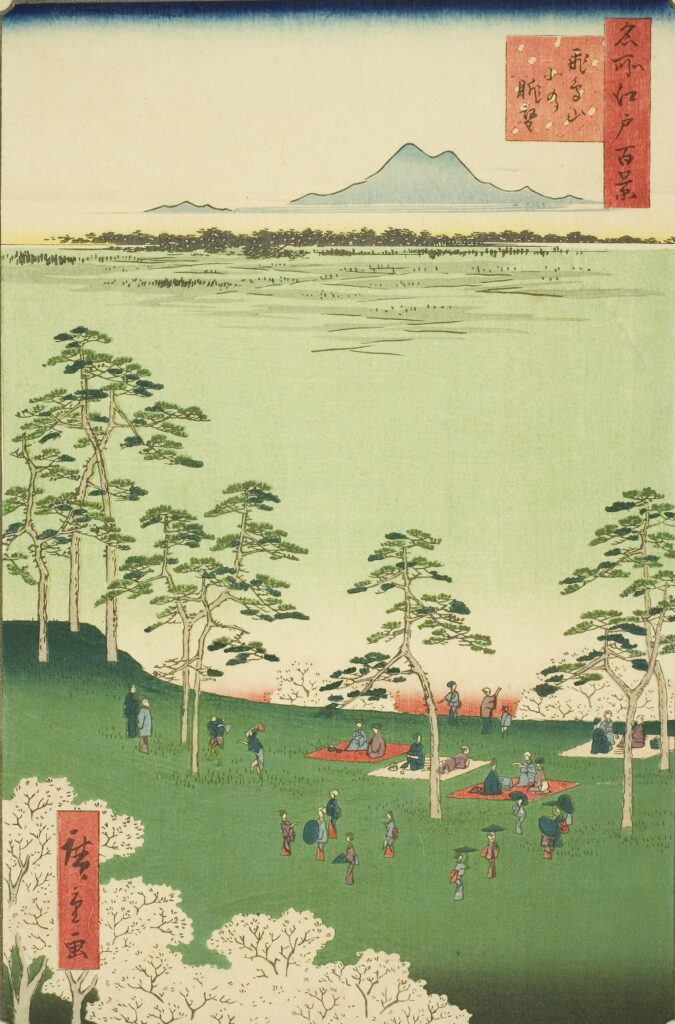
Looking north from the heights of Mt. Asukayama, this painting depicts the flowing Arakawa River and the Musashino Plateau beyond.
The expanse of the sky and land is emphasized, creating a sense of the magnificent scenery extending beyond Edo.
In the foreground, people are depicted enjoying cherry blossom viewing, eating dumplings and sharing sake, vividly depicting the bustling life of Edo’s common people.
It is said that under clear skies, the Chichibu Mountains and Nikko Mountain Range could be seen.
For Edoites, this painting evokes a longing for nature “outside of everyday life.”
By placing the cherry blossom clusters in the foreground and creating a “frame effect” that overlooks the Kanto Plain beyond, the painting adds a sense of three-dimensionality and depth to the painting.
On the mountaintop in the foreground, cherry blossoms are in full bloom, and people are relaxing on mats eating sake and lunch boxes, dancing, and playing tile throwing.
A rural landscape is depicted in the middle ground. Mount Tsukuba is depicted in the center above.
<4> Asukayama for the Edo Commoners
The three most famous cherry blossom viewing spots in Edo were Asukayama, Ueno, and the Sumida River banks, and of these, Asukayama had the most down-to-earth atmosphere.
Nearby were Oji Inari Shrine and Oji Shozoku Enoki, the setting for the fox fire legend, and it was common to visit Asukayama after a festival or pilgrimage.
It attracted people throughout the year, with cherry blossoms in spring, a cool summer retreat, autumn leaves in autumn, and snowy scenery in winter.
<5> Asukayama Today
Today, it remains maintained as Asukayama Park, one of Tokyo’s most famous cherry blossom viewing spots.
In spring, it bustles with cherry blossom viewers, conveying the bustle of the Edo period.
Located just a short walk from JR Oji Station, you can easily reach the top of the hill by taking the Ascargo monorail.
Within the park, you’ll find the Paper Museum, Kita Ward Asukayama Museum, and Shibusawa Memorial Museum, allowing you to experience history and culture.
<6> Tourist Guide
1. Spring Cherry Blossoms
A famous cherry blossom viewing spot dating back to the Edo period. The illuminated cherry blossoms at night are also a highlight.
2. Places Associated with Shibusawa Eiichi
Travel in the footsteps of the father of modern Japanese economics at the Shibusawa Memorial Museum.
3. Oji Inari Shrine and Oji Shozoku Enoki
Experience the charm of folklore, including the foxfire legend and New Year’s Eve festival.
4. Observation Point
Looking north from the hilltop, you can relive a part of the scenery depicted in Hiroshige’s paintings.