Utagawa Hiroshige – One Hundred Famous Views of Edo – 47 – Summer – Oji Fudo-no-taki Waterfall – Commentary 歌川広重-名所江戸百景-47-夏-王子不動之瀧 解説
Current Address: Shojuin Temple, Takinogawa 2-chome, Kita-ku
Latitude and Longitude: Latitude 35.7524, Longitude 139.7348
Published: September 1857 Age: 61
Commentary
<1> Introduction
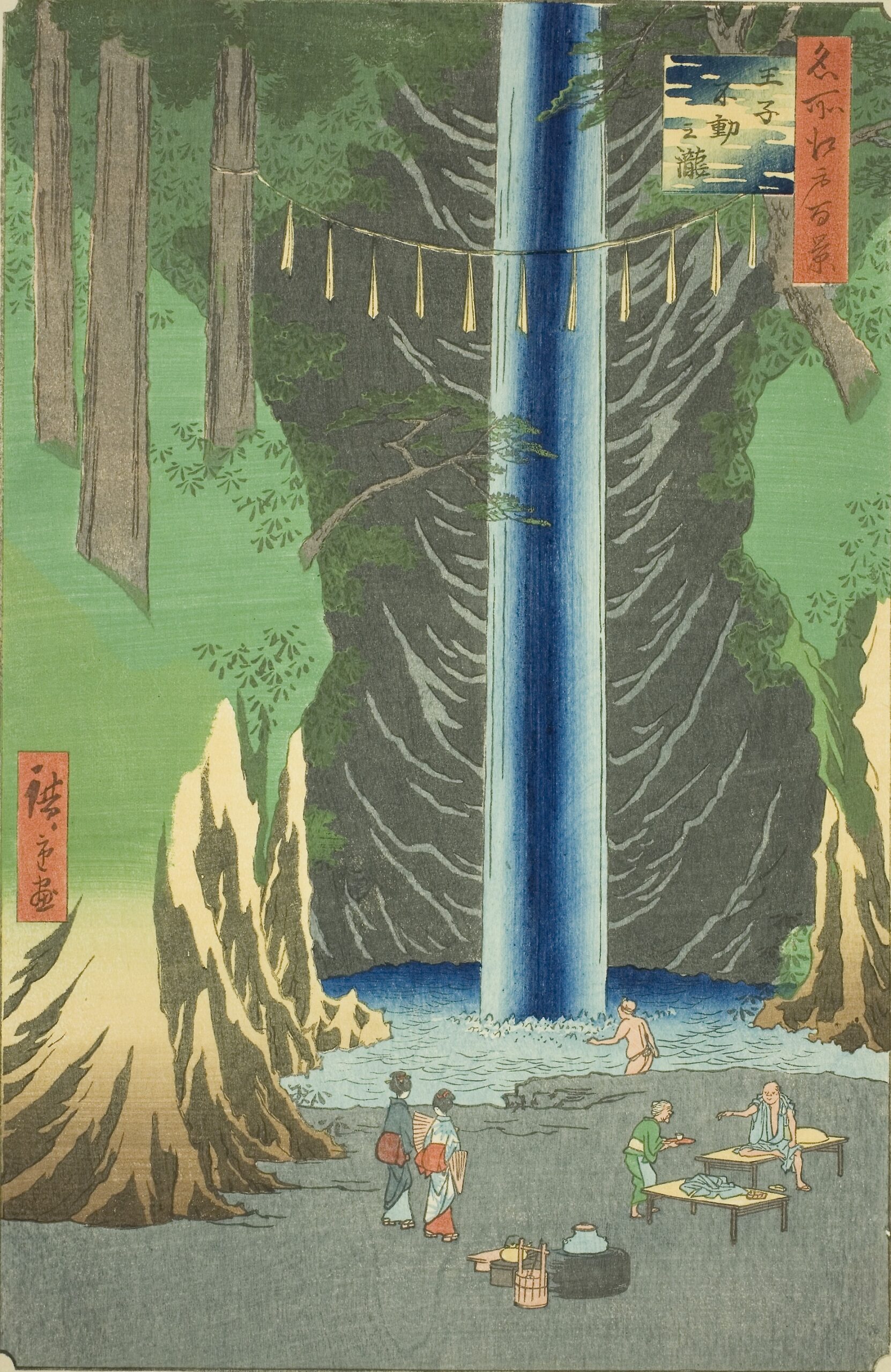
“Oji Fudo-no-taki Waterfall” is highly popular as a scene that blends nature and faith.
Oji was a popular tourist destination known for its cherry blossoms along the Otonashi River and cherry blossom viewing at Asukayama.
The artist meticulously depicts the cool breeze of the waterfall and the figures of worshippers.
The work conveys a space of faith that was cherished by the common people of Edo as a place to purify the body and calm the soul.
Not only is it a tourist attraction, but it also offers a glimpse into the spiritual culture of the time.
<2> What is Oji Fudo?
Oji is home to numerous sacred sites, including Oji Gongen (now Oji Shrine), which has its roots in Kumano worship, and Inari Shrine.
The Fudodo Hall, located in one corner of the area, was a place dedicated to Acala, attracting devout worshippers from the common people of Edo.
A pure waterfall flows beside the Fudodo Hall, and it was a training ground where ascetics and worshippers would perform mizugori (water purification rituals).
In the hot summer, the hall bustled with people coming to purify themselves and pray for recovery from illness and protection from misfortune, drawing many pilgrims from throughout Edo.
<3> Highlights of the Painting
A tall waterfall is depicted in the center, powerfully depicting the vertical cascade of white water.
Hiroshige’s distinctive linework accentuates the force of the water, filling the canvas with a refreshing feeling.
In front of the basin of the waterfall, people are depicted praying and ascetics bathing in the water.
The painting exudes a sense of life at the time, when commoners of Edo visited for both faith and entertainment.
A small Fudo Hall is depicted beside the waterfall, and the red flags and shrine roof add color to the space surrounded by greenery.
It is a scene typical of Edo, when syncretism of Shinto and Buddhism was thriving.
The deep forest in the background conveys the fact that such a mysterious natural landscape remained so close to the great city of Edo.
According to Shojuin legend, there was a monk named Gakusenbo who mastered the teachings of Fudoson in Ryumon, Washuu, between 1555 and 1558.
One day, he was inspired by a spiritual dream to this part of the eastern provinces, where he practiced and mastered the teachings of Fudo.
In the autumn of the same year, a flood occurred, and he obtained a shining spiritual statue of Fudo in the water, which he enshrined here.
This waterfall is called Fudo Falls or Senryu Falls, and it is said that sick people who bathed in its waters were cured.
Located behind Shojuin Temple, Fudo Falls resembles a cavern surrounded by cliffs on three sides.
Blessed with abundant water, its roaring sound echoes throughout the area.
Some visitors are about to take a dip in the falls, others are resting on the veranda after a dip, and a woman has come to admire the sights.
A sacred rope (shimenawa) is strung above the falls, marking the sacred grounds.
<4> Modern-day Oji Fudo Falls
Today, the Oji area has developed as the center of Kita Ward.
Along with Oji Shrine and Oji Inari Shrine, Oji Fudoson still stands.
While the waterfall itself has been scaled down, a small waterfall and Fudo Hall remain within the grounds, and they continue to attract worshippers.
Combine this with Asukayama Park and Otonashi Waterside Park, where you can enjoy beautiful cherry blossoms in spring and autumn foliage in autumn, to create a walking course where you can experience both nature and faith.
<5> Tourist Guide
① Visit to Oji Fudoson Temple
By visiting the waterfall and Fudodo Hall, you can experience the “place of water and prayer” that commoners of the Edo period would have experienced.
② Asukayama Park
This famous cherry blossom viewing spot was Japan’s first designated park.
We recommend walking while imagining the scenery depicted in Hiroshige’s paintings, along with the cherry blossoms and autumn leaves.
③ Otonashi Waterside Park
This waterside park was developed along the Otonashi River, the source of the Kanda River.
The scenery here is reminiscent of Hiroshige’s “Otonashi River Weir, Sesoku Otaki Waterfall and Song.”