Utagawa Hiroshige – One Hundred Famous Views of Edo – 37 – The Crossing of a Tile-Clad Gas Station at Hashiba on the Sumida River 歌川広重-名所江戸百景-37-墨田河橋場の渡かわら竈 解説
Current Address: Near Hashiba 2-chome, Taito Ward
Latitude and Longitude: Latitude 35.7190, Longitude 139.7950
Published: April 1857 Age: 61
Comment
<1> Introduction
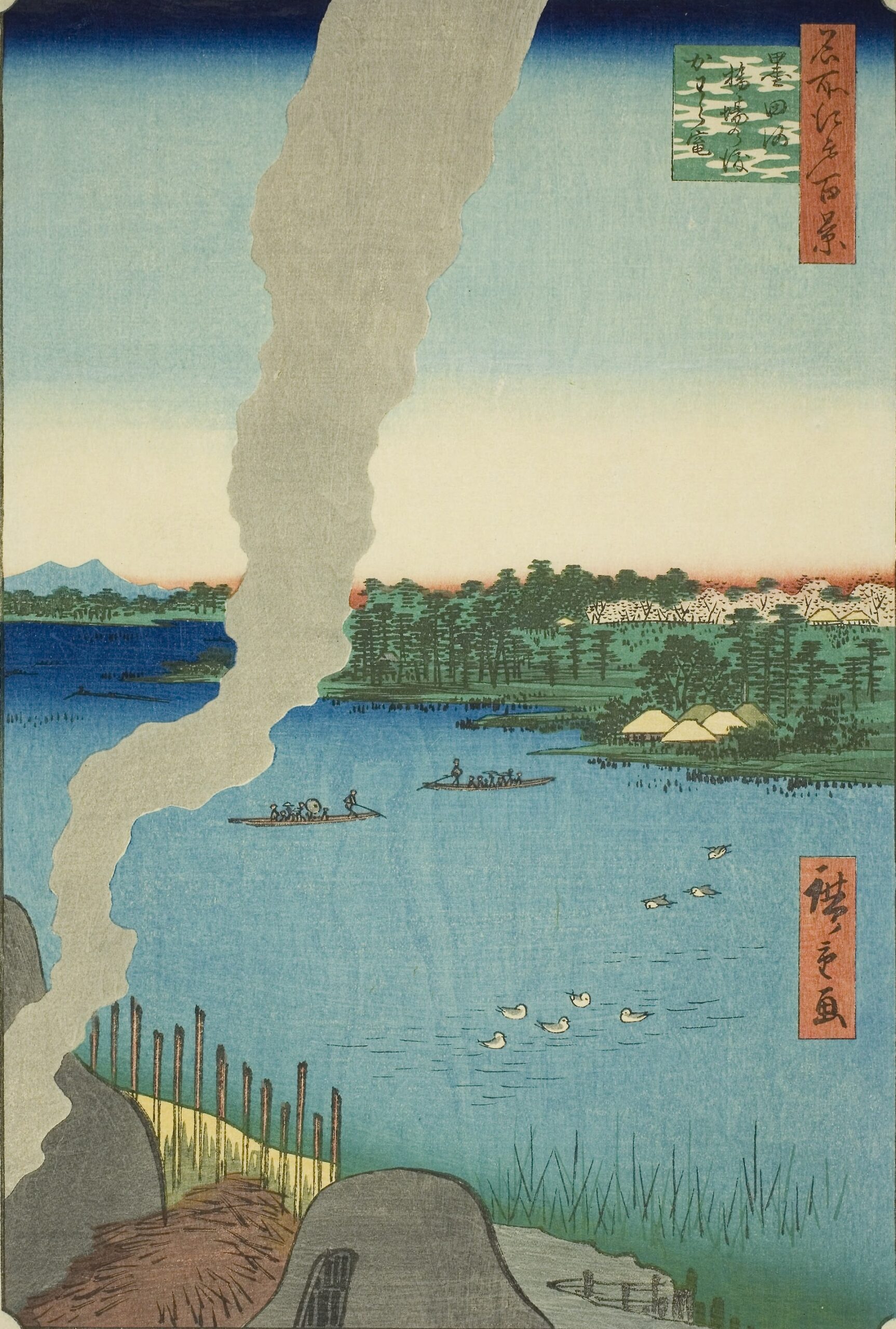
“The Crossing of a Tile-Clad Gas Station at Hashiba on the Sumida River” is a painting depicting a scenic spot on the east bank of the Sumida River.
The combination of a ferryboat, a riverside hearth, and the majestic flow of the Sumida River reflects the connection between everyday life and nature.
It symbolizes how boat traffic and waterfront life supported Edo’s economy and culture.
<2> Hashiba and the Tile-Clad Gas Station
The area is currently Hashiba, Taito Ward, and Tsutsumi-dori, Sumida Ward. Located in the middle reaches of the Sumida River, this wide river made it a key point for water transportation.
A ferry crossing, Hashiba no Watashi, was established here and served as a key transportation hub connecting the city of Edo with the suburbs.
At the time, when there were few bridges, ferries were essential for common people.
They were used for commuting, transporting goods, and sightseeing.
The name “Hashiba” comes from the fact that a bridge was built here from the Heian period through the Middle Ages.
During the Edo period, there were no bridges, and ferries transported people instead.
A “kawara kamado” is a terracotta stove built on the riverside.
A facility where boatmen and vacationers along the river could boil water and prepare simple meals.
<3> Highlights of the painting
The depiction of ferries passing back and forth across the wide waters of the Sumida River vividly conveys the transportation scene in Edo.
The figures of people boarding boats and their movements across the river are a true representation of everyday life for ordinary people.
The depiction of the “tile hearth” in the foreground suggests steam rising.
You can sense the atmosphere of people relaxing by the river.
In the distance, the village of Sekiya and the fields stretch out across the river, creating an idyllic scene typical of an urban outskirts.
The composition’s depth clearly expresses the connection between Edo and nature.
The expansive water surface and the clear colors of the sky accentuate the refreshing summer air, giving the viewer a pleasant sense of coolness.
The distinctive shape of Mount Tsukuba can be seen in the distance.
The foreground bank is Imado, located north of the Sumida River Sanyabori moat.
Imado was a popular town known for the earthenware tiles and dolls made along the Sumida River.
The gray band dividing the image represents smoke rising from the hearth.
Two ferryboats can be seen in the middle of the Sumida River, where a capital bird flies in flight.
Hashiba Ferry is also known as Masaki Ferry.
It connected Asakusa Hashiba-cho, located upstream from Azumabashi Bridge on the Sumida River, with Terashimamura in Mukoujima.
The forest behind it is the Water God Forest, where the water god is enshrined.
A shrine and torii gate can be faintly made out among the trees.
Water God Forest is one of Hiroshige’s favorite places to paint.
<4> Edo Citizens and Hashiba Ferry
Many people used the ferry as a convenient crossing when traveling from the city to the suburbs.
Farmers were often seen transporting their produce, and townspeople went there for outings.
The area around Hashiba was also known as a scenic spot on the Sumida River, bustling with people enjoying cherry blossom and moon viewing, and boating.
During the Edo period, riverside areas were also popular subjects for haiku and senryu. Everyday scenes such as ferries and stoves are popular subjects in the literary world.
<5> Modern-day Remnants
The place name “Hashiba” remains in Taito and Sumida wards, conveying memories of the ferry terminal of the time.
The Sumida River today has well-maintained banks and a promenade.
You can relive the waterside culture of the Edo period through boating experiences and houseboat cruises.
Sightseeing spots such as Sensoji Temple and Imado Shrine are nearby, so combining these visits with historical strolls will give you a real feel for the atmosphere of the time.
<6> Tourist Guide
1. Hashiba Area Stroll
The area around Hashiba today is a residential area.
Walking along the river will bring to mind Hiroshige’s compositions.
2. Sumida River Terrace
The view of the Sumida River from the waterfront promenade offers a spectacular view that evokes the atmosphere of the Edo period.
3. Pair with Asakusa
Hashiba’s proximity to Asakusa makes it easy to incorporate into your sightseeing route, allowing you to enjoy a stroll through the downtown area while immersing yourself in history.
4. Houseboat Experience
You can still experience the boating activities enjoyed by commoners of the Edo period.
You can fully enjoy Sumida River culture along with the food and night view.