Utagawa Hiroshige – One Hundred Famous Views of Edo – 36 – Spring View of Sekiya Village along the Uchigawa River and the Forest of the Water God from Masaki – Commentary 歌川広重-名所江戸百景-36-春真崎邊より水神の森内川関屋の里を見る圖 解説
Current Address: Near Minamisenju 3-chome, Arakawa Ward
Latitude and Longitude: Latitude 35.729587; Longitude 39.808638
Published: August 1857 Age: 61
Commentary
<1> Introduction
“View of Sekiya Village along the Uchigawa River and the Forest of the Water God from Masaki” depicts the lives of Edo citizens and the abundance of nature against the backdrop of the majestic flow of the lower Sumida River.
The composition, with boats passing on the river, the rural landscape of Sekiya in the distance, and the greenery of Suijin no Mori overlapping, symbolically depicts the appeal of Edo’s “waterside culture.”
<2> Masaki, Suijin no Mori, Uchikawa, and Sekiya no Sato
Masaki is a cape-like area jutting out from a large bend in the Sumida River. Its stunning views made it one of Edo’s most scenic spots.
It was a popular spot for boating and enjoying the cool evening breeze, and is frequently featured in haiku and waka poetry.
Suijin no Mori was a forest located near what is now Higashikomagata in Sumida Ward, with Suijin Shrine located along the river.
It was a place of worship where people prayed for safe boat travel, and its many teahouses and rest areas made it a popular recreational spot for the common people.
Uchikawa and Sekiya no Sato
Uchikawa refers to an inlet-like waterway branching off from the Sumida River, and played a key role in supporting boat traffic and waterfront life.
Sekiya no Sato was a rural area on the east bank of the Sumida River, stretching from what is now Minamisenju in Arakawa Ward and Yahiro in Sumida Ward.
Despite being close to Edo, its rural landscape remained and it was beloved as a peaceful village.
The cool breeze was particularly pleasant in the summer, attracting many visitors for boating.
<3> Highlights of the Painting
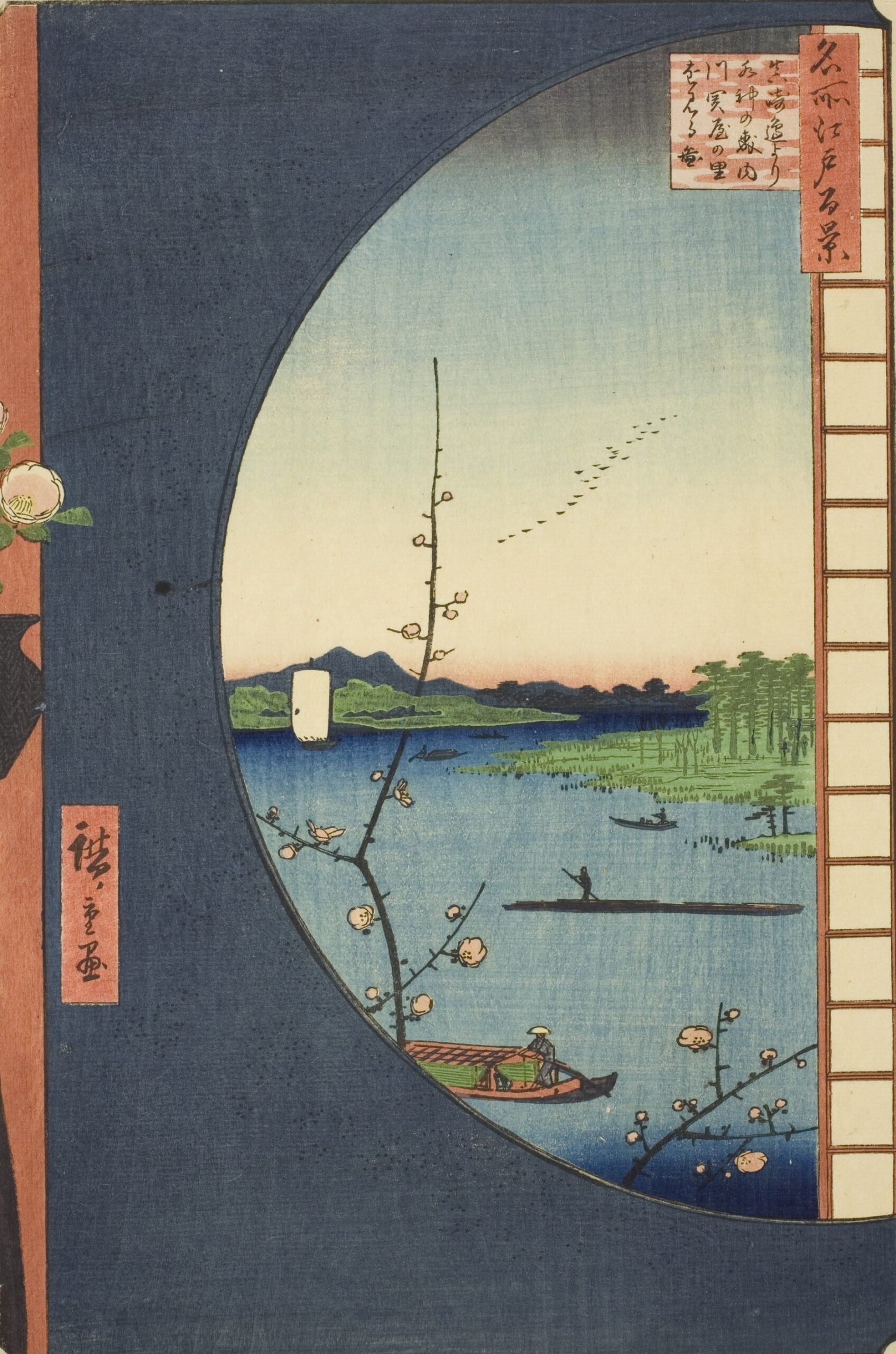
In the foreground, houseboats and fishing boats are depicted sailing along the Sumida River, conveying the sense of life and bustle of the river.
The shapes of the boats and the people’s gestures provide clues to the boating culture of the time.
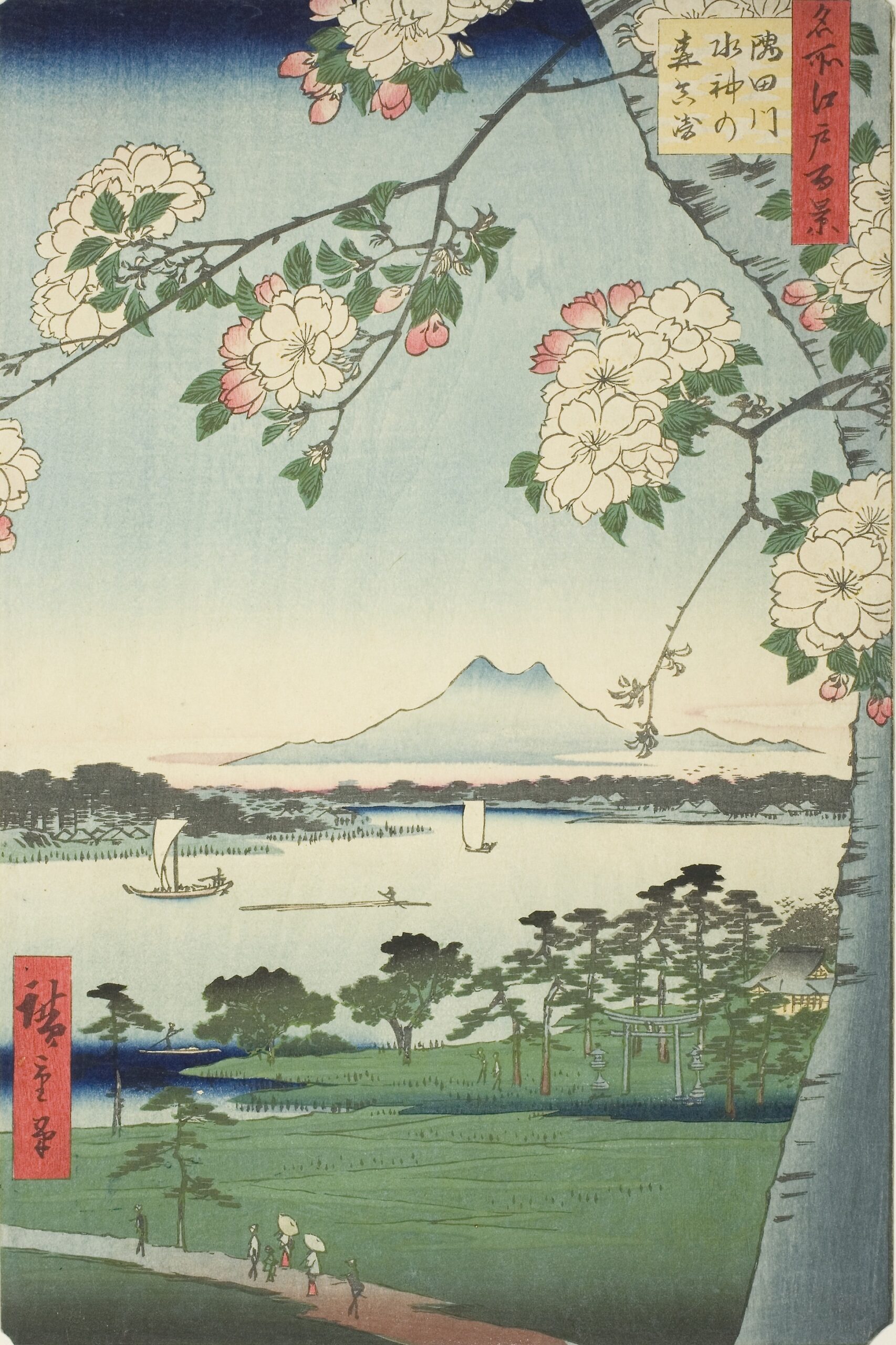
The deep green of the Suijin Forest creates a calming effect that contrasts with the flow of the river.
It also suggests its role as a place of worship centered around the shrine.
The eye is drawn along the curve of the river into the distance, where the fields and houses of Sekiya Village spread out in a hazy glow.
Hiroshige’s distinctive perspective effectively expresses the expanse of Edo.
The sky is painted in pale tones, creating a refreshing feeling and evoking the clear air of an Edo summer.
From the second floor of Masaki’s restaurant, a circular window overlooks the Suijin Forest and Sekiya Village on the opposite bank.
Plum branches, symbolizing the season, are displayed on the room’s pillars.
The painting depicts covered boats and rafts enjoying boating on the Sumida River, with Mount Tsukuba in the distance.
Many literati and artists come to enjoy boating from downstream on the Sumida River.
According to the legend of Masaki Inari Shrine, Chiba no Suke Kanetane was able to lead the vanguard on the battlefield many times thanks to a sacred jewel passed down through generations in his family.
Chiba Moritane, who later became the lord of Ishihama Castle, enshrined this sacred jewel as the castle’s guardian deity and named it Masaki Inari Myojin.
Located along the Sumida River, this Inari Shrine is known for its scenic beauty.
<4> Edo Citizens and the Scenery
Commoners of Edo enjoyed boating to Masaki or Sekiya in the summer.
They enjoyed the luxury of enjoying sake and snacks while being blown by the river breeze and gazing at the forest and rural scenery.
Combining faith and entertainment, such as visiting the Suijin Shrine and then enjoying a boat ride, was a typical part of everyday life for the common people.
The Sumida River and Masaki have been featured in numerous haiku and senryu poems.
<5> Modern Remnants
Today, Suijin Shrine remains in Higashikomagata, Sumida Ward, conveying vestiges of Edo-period faith.
The place name “Sekiya” remains in Minamisenju, Arakawa Ward, and Yahiro, Sumida Ward, evoking the geography of the Edo period.
Although the Sumida River is lined with skyscrapers and bridges today, a stroll along the promenade allows you to imagine the boating scenes of the past.
Particularly on summer evenings, you can experience the atmosphere experienced by ordinary Edo residents.
<6> Tourist Guide
1. Visiting Suijin Shrine, Sumida Ward
The setting for Hiroshige’s “Forest of the Water God.” Though the shrine is small, it exudes a historic charm.
2. Stroll along the Sumida River Terrace
Walking along the riverside promenade, you can enjoy superimposing the topography of Masaki and Sekiya onto the scenery.
3. Boating Experience
Even today, a houseboat cruise allows you to enjoy the Sumida River scenery from the same perspective as the common people of the Edo period.
4. Combine with a visit to Asakusa
Since it’s within walking distance of Sensoji Temple and Kaminarimon Gate, it’s easy to incorporate into your sightseeing itinerary.