Utagawa Hiroshige – One Hundred Famous Views of Edo – 39 – Distant View of Azumabashi and Kinryuzan 歌川広重-名所江戸百景-39-吾妻橋金龍山遠望 解説
Current Address: 3-chome, Mukojima, Sumida-ku, Sumida River
Latitude and Longitude: Latitude 35.7101, Longitude 139.7985
Published: August 1857 Age: 61
Explanation
<1> Introduction
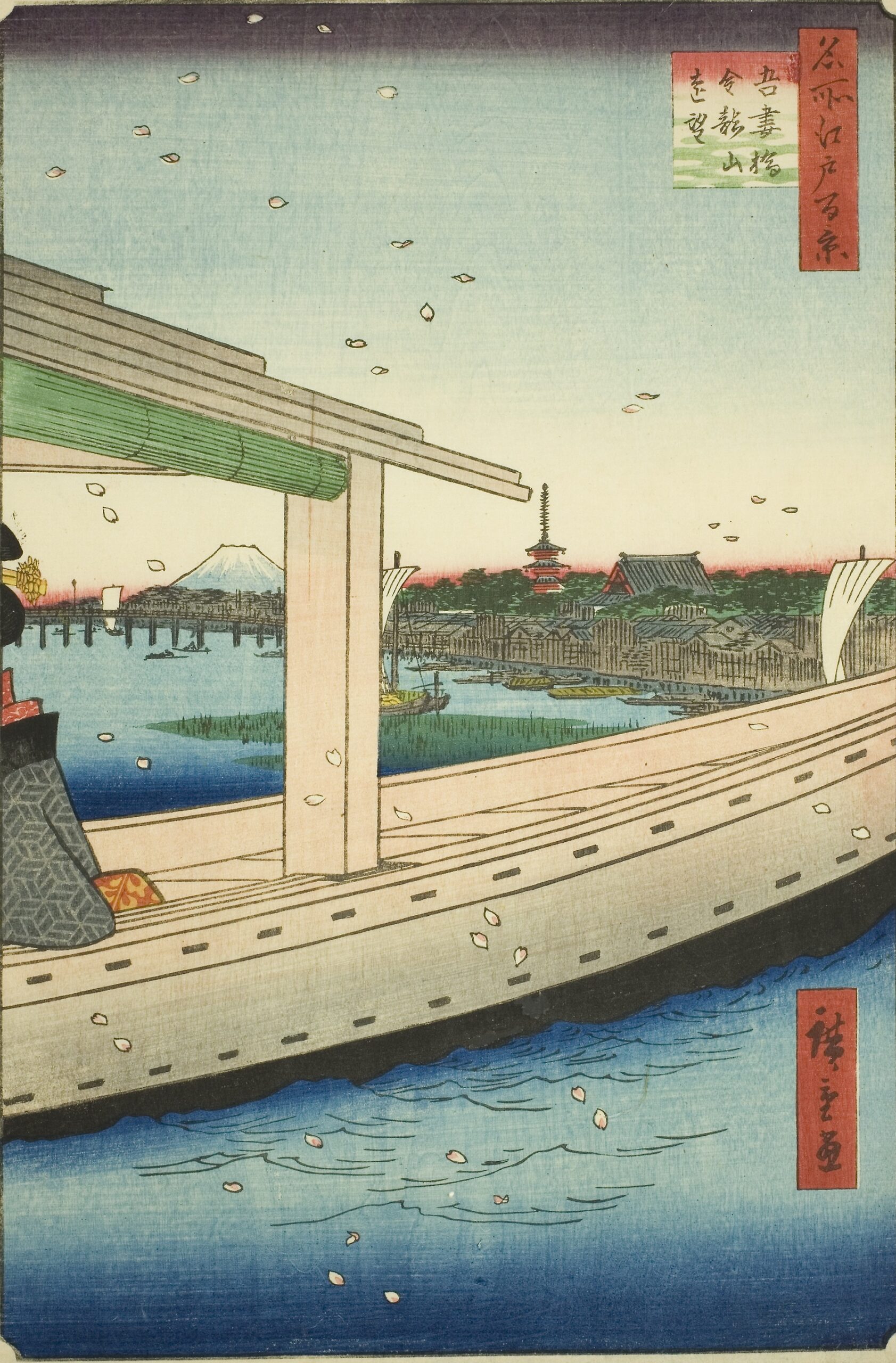
“Distant View of Azumabashi and Kinryuzan” depicts a view of Asakusa’s famous Sensoji Temple (Kinryuzan) in the distance, seen from across the Azumabashi Bridge over the Sumida River.
Skillfully combining the refreshing waters of the Sumida River with the lively atmosphere of Asakusa, where the faith and entertainment of the Edo commoners intersected, the painting evokes the scenes of people enjoying boating and pilgrimages at the time.
<2> Azumabashi Bridge and Kinryuzan Sensoji Temple
Azumabashi Bridge spans the Sumida River and is located at the eastern end of Asakusa.
Originally a temporary bridge, it became an important transportation hub supporting the flow of people as Edo developed.
Teahouses and boathouses line the foot of the bridge, bustling with worshippers heading to Sensoji Temple and people enjoying the river.
The area around Azumabashi Bridge also flourished as a departure and arrival point for riverboats.
Many people used boats to visit Sensoji Temple, and it became a center of recreational culture for the common people of Edo.
Kinryuzan Sensoji Temple is Edo’s oldest temple, said to have been founded in 628 when two fisherman brothers pulled a Kannon statue from the Sumida River.
The temple’s mountain name, “Kinryuzan,” is also mentioned in Hiroshige’s title.
Sensoji Temple was also under the patronage of the Tokugawa Shogunate and attracted the devout faith of the common people of Edo.
Bustling with activity throughout the year, including New Year’s shrine visits and the Tori-no-ichi festival, the Sumida River is one of Edo’s most popular tourist destinations.
The area around Sensoji Temple also thrived as a temple town, and was Edo’s premier entertainment district, lined with theaters, sideshows, and teahouses.
<3> Highlights of the Painting
A bold perspective is used, placing the bridge in the foreground with Kinryuzan Sensoji Temple visible beyond it.
The figures of people traveling on boats and the bridge give the painting a lively, dynamic feel.
Many boats float on the river, with people enjoying sightseeing trips and ferry rides.
The Sumida River was known as “Edo’s Mother River” and was a place of relaxation for common people.
A bright sky stretches above, and Sensoji Temple appears small in the distance, emphasizing the sense of openness and perspective.
The foreground depicts the daily lives and leisure activities of common people, with the religious site of Sensoji Temple in the background.
This contrast succinctly expresses the unique characteristics of the city of Edo.
Azumabashi Bridge, spanning the Sumida River, was built in 1774 and is approximately 141 meters long.
At first, its official name was Okawabashi Bridge, but the colloquial name Azumabashi was later officially recognized.
The bridge was built by private individuals, and a toll of 2 mon was collected, with the funds used to cover maintenance costs.
On the east bank of the Sumida River from the bridge is Mukojima, and on the west bank is Sensoji Temple.
In the foreground, a wealthy man enjoys a boat ride with a geisha while admiring the cherry blossoms on the Sumida River.
Only the back of the geisha can be seen in the image.
Flower petals blown in the wind from the Sumida embankment are visible in the middle ground, along an island on the Sumida River, a boat tied up on the opposite bank, Sensoji Temple, the five-story pagoda, and Azumabashi Bridge.
Mount Fuji can be seen peeking out between the boat’s roof pillars in the distance.
<4> Asakusa and the Sumida River at the Time
During the Edo period, visiting temples and shrines was both a religious activity and a major form of entertainment.
Pilgrims who visited Sensoji Temple would enjoy boating or a rest at a teahouse on the way home.
The Sumida River was a major transportation artery and also a place of entertainment for the common people.
The houseboats and ferries that ply the river are a symbol of the Edo atmosphere.
<5> Azumabashi Bridge and Asakusa Today
Azumabashi Bridge today is a steel bridge, offering spectacular views of Tokyo Skytree.
At the foot of the bridge is the Asahi Beer headquarters’ “Flame Object,” making it a popular tourist attraction.
Even today, Sensoji Temple remains one of Japan’s leading tourist destinations, attracting over 30 million visitors annually.
The area around Azumabashi Bridge has been developed with walking paths and a water bus stop, and the culture of enjoying the river has been passed down in modern times.
At night, the bridge is lit up, creating a magical atmosphere.
<6> Sightseeing Guide
① View from Azumabashi Bridge
This is the perfect vantage point for enjoying the three views of Tokyo Skytree, the Sumida River, and Sensoji Temple all at once.
② Visiting Sensoji Temple
The approach to the temple, which includes Kaminarimon Gate, Nakamise Street, and the main hall, still conveys the bustle of the temple since the Edo period.
③ Sumida River Cruise
Experience the charm of boat transport by passing under Azumabashi Bridge on a houseboat or water bus.
④ Night View Stroll
The area around Azumabashi Bridge is lit up at night, creating a fantastical sight that is different from the daytime.