Utagawa Hiroshige – One Hundred Famous Views of Edo – 41 – Ichigaya Hachiman – Commentary 歌川広重-名所江戸百景-41- 市ヶ谷八幡 解説
Current Address: 15 Ichigaya Hachiman-cho, Shinjuku-ku, Ichigaya Kamegaoka Hachiman Shrine
Latitude and Longitude: 35.6920°; Longitude: 139.7330°
Published: October 1857 Age: 61
Commentary
<1> Introduction
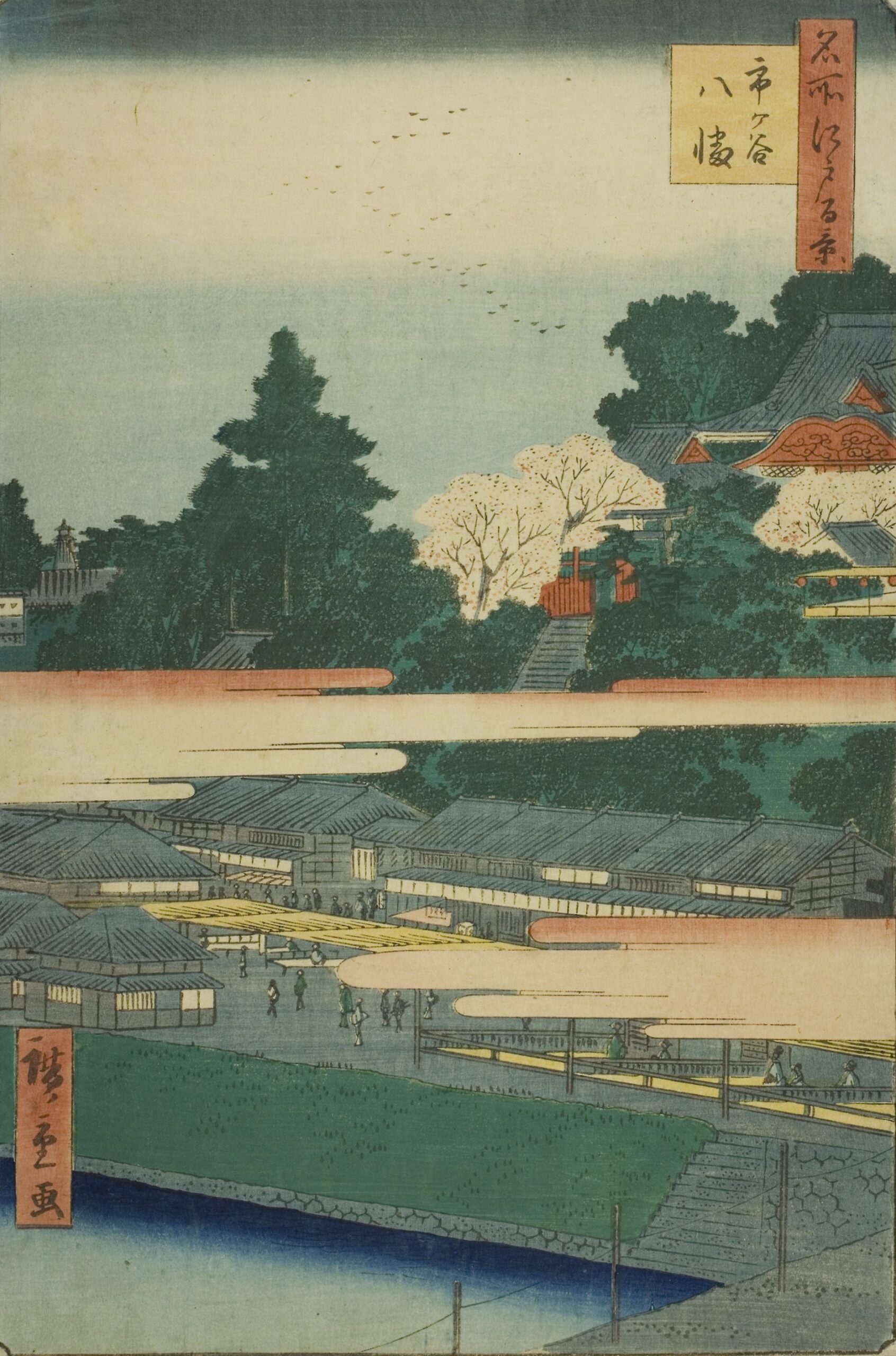
“Ichigaya Hachiman” is based on the Hachiman Shrine located on a hill in Ichigaya near the outer walls of Edo Castle.
This Hachiman Shrine, also known as “Ichigaya Kameoka Hachiman Shrine,” has been widely worshipped by the common people of Edo since the Sengoku period.
<2> History of Ichigaya Hachiman Shrine
Ichigaya Hachiman Shrine is believed to have been founded between 1469 and 1487, and is said to have been enshrined by Ota Dokan as the guardian deity of Edo Castle.
He was revered as a deity prayed for victory in battle and as a guardian deity of the region.
During the Edo period, he was affectionately known as “Ichigaya Hachiman” and was worshipped by the Tokugawa Shogunate and daimyo families alike.
He was particularly known as the guardian deity of the west side of Edo Castle, and was an important figure in Edo’s military and political affairs.
Worshipped not only by samurai but also by commoners, his festivals and fairs were crowded with people.
Events such as New Year’s visits and Setsubun were particularly popular, with pilgrims coming from all over the Edo area.
<3> Highlights of the painting
The approach leading from the shrine’s torii gate is depicted in powerful perspective.
The pilgrims are depicted as small dots in the background, conveying that the shrine was both a place of worship and a social gathering place for the local people.
Ichigaya is located on a plateau along the Kanda River, and the Edo cityscape could be seen in the distance from the temple grounds.
This view is boldly incorporated to express a culture of “enjoying the scenery” while also visiting the shrine.
Hachiman, a deity deeply worshipped by samurai, symbolizes bravery and victory.
Enshrined near Edo’s military base, Ichigaya Hachiman is depicted as a symbolic presence protecting the security and prosperity of Edo.
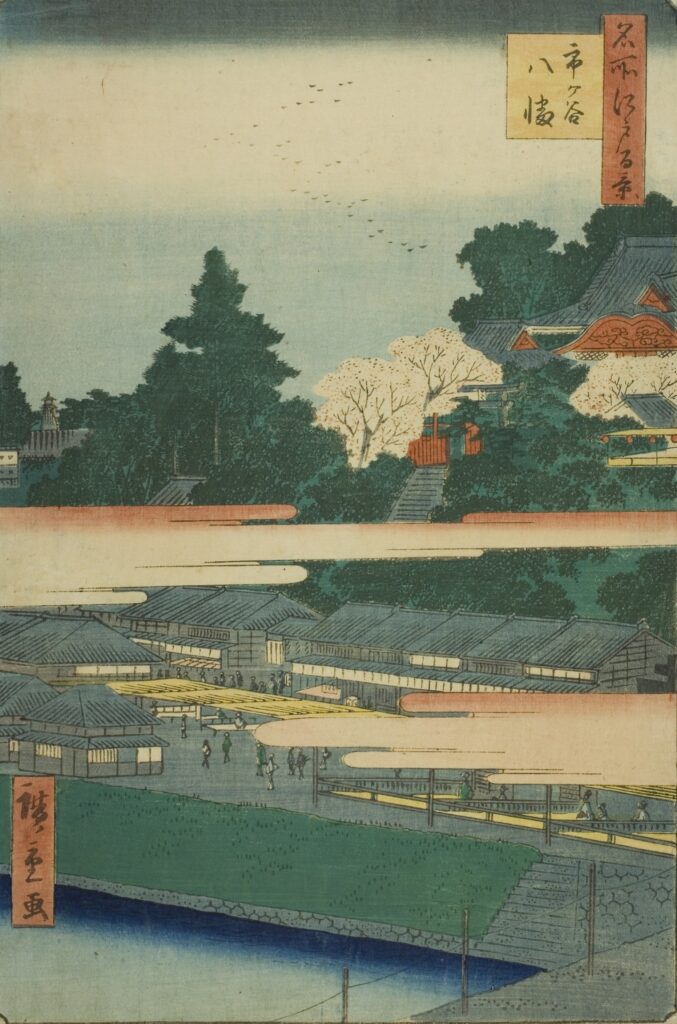
Looking across the outer moat at Ichigaya Hachimangu Shrine from the bridge over Ichigaya Gomon Gate.
The vermilion-painted Ichigaya Hachimangu Shrine, depicted on a hilltop reached by a flight of stone steps, is particularly impressive.
This Hachimangu Shrine is said to have been founded by Ota Dokan, who enshrined the Tsurugaoka Hachiman Shrine in Kamakura.
It was given the name Kameoka Hachiman, a play on the character for crane.
Originally enshrined within Ichigaya Gomon Gate, it was relocated to this location outside the gate between 1624 and 1644.
The cherry blossoms within the shrine grounds are in full bloom.
The area in front of Hachimangu Shrine was known as a bustling entertainment district, a trend evident in the rows of hanging teahouses.
<4> Edo Commoners and Ichigaya Hachiman
Hachiman Shrine’s festivals were a great source of enjoyment for Edotsuko.
Street stalls lined the approach to the shrine, and there were sometimes theaters and sideshows.
More than simply a religious event, they were a place for entertainment and socializing.
Edo commoners relied on Hachiman Shrine for all aspects of daily life, such as prayers for safe childbirth, recovery from illness, and the growth of their children.
Ichigaya Hachiman, in particular, held the stature of “the god protecting Edo Castle,” but was also an object of everyday prayer.
<5> Ichigaya Kameoka Hachiman Shrine, still standing today
The shrine remains in Ichigaya, Shinjuku Ward, as Ichigaya Kameoka Hachiman Shrine.
Though located amid the hustle and bustle of the city, the grounds are shrouded in tranquility, evoking the atmosphere of Edo.
Events that have continued since the Edo period, such as the autumn festival and the Setsubun festival, are still held on a grand scale.
The Setsubun bean-throwing ceremony, in particular, attracts many visitors. The Ichigaya area was a popular destination for many Edo-period literati, and Hachimangu Shrine has been the subject of much literature and art.
<6> Sightseeing Guide
1. Visiting Ichigaya Kameoka Hachimangu Shrine
Visit the modern-day grounds and experience the history of faith that has continued since the Edo period.
Comparing it with Hiroshige’s paintings is fascinating.
2. Strolling along the Kanda River
A stroll along the Kanda River will give you a glimpse into the history of Edo’s water transportation and the town.
3. Exploring the surrounding area
Many historical sites related to Edo Castle remain in the vicinity, including the Ministry of Defense and the remains of the outer moat.