Utagawa Hiroshige – One Hundred Famous Views of Edo – 27 – Spring – Kamata Plum Garden 歌川広重-名所江戸百景-27-春-蒲田の梅園 解説
Current Address: Umeyashiki Park, 3-25 Kamata, Ota Ward
Latitude and Longitude: Latitude 35.5610, Longitude 139.7160
Published: February 1857 Age: 61
Explanation
<1> Introduction
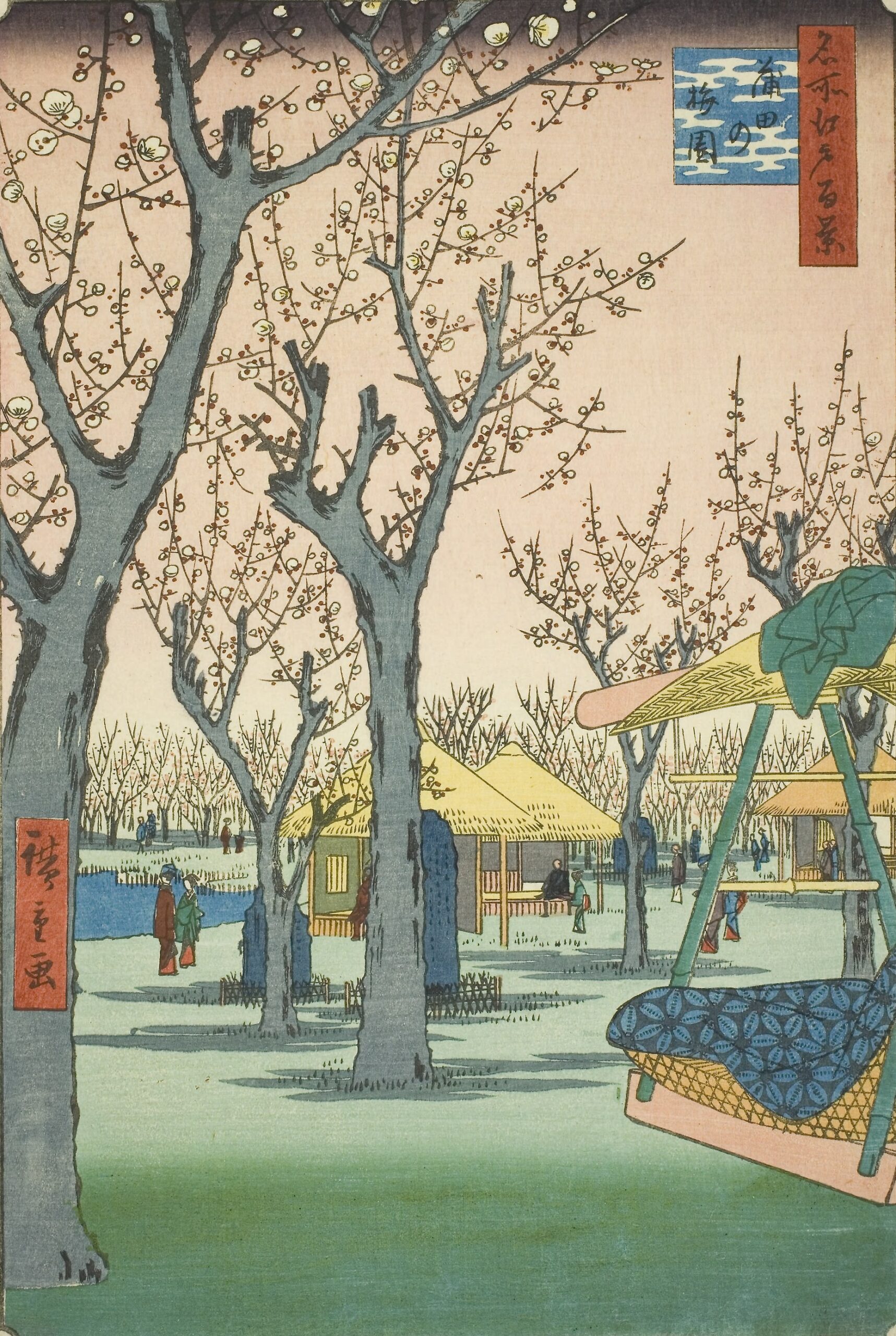
“Kamata Plum Garden” depicts a famous plum blossom viewing spot, symbolizing the arrival of spring.
Today, “Kamata” is often associated with a transportation hub in southern Tokyo.
During the Edo period, it was a quiet farming village with extensive plum groves and a popular cherry blossom viewing spot for the common people of Edo.
<2> What is Kamata?
The area around Kamata in Ota Ward, Tokyo, is today.
The area was close to the post towns of Rokugo and Haneda on the Tokaido road heading south from Edo, and featured a rural landscape.
Plum orchards were popular on the outskirts of Edo, and along with Kameido Tenjin Shrine and Mukojima Hyakkaen Gardens, the plum orchards of Kamata were beloved by common people.
In addition to cherry blossom viewing, umeboshi (pickled plums) and umeshu (plum wine) made from the plums were also known as local specialties.
<3> Highlights of the Painting
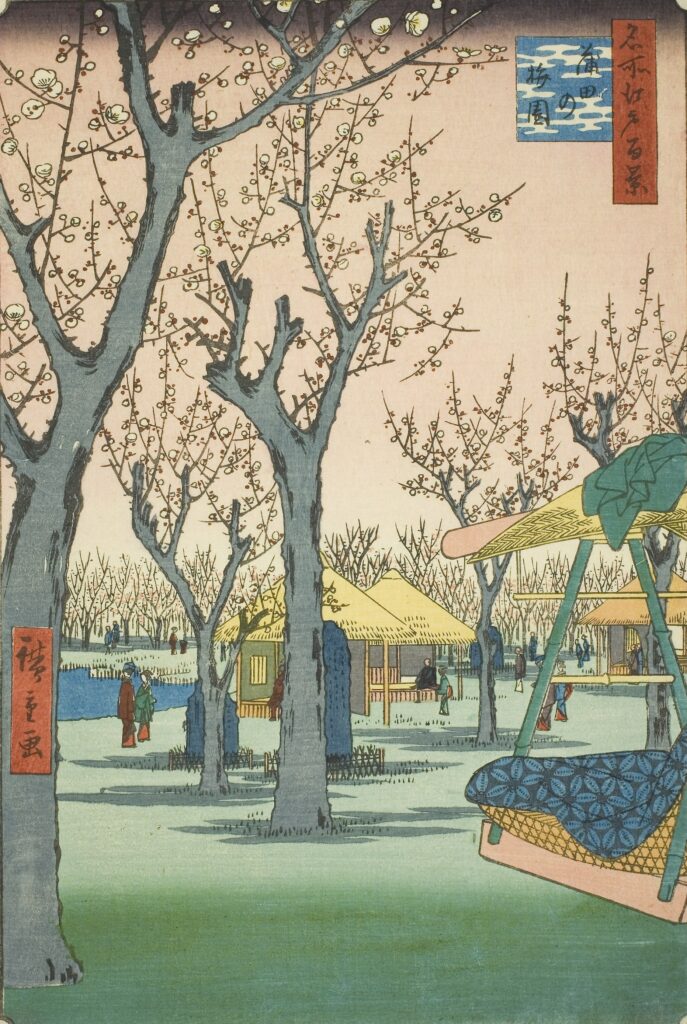
The painting depicts white and red plum blossoms extending their branches.
The flowers are so densely packed that it seems as if the air itself is filled with a sweet fragrance.
Small figures of Edo commoners who have come to view the blossoms are scattered throughout the garden.
With people spreading out their lunch boxes, playing the shamisen, and children running around, the painting conveys a scene filled with the joy of spring.
The plum branches in the foreground overflow, drawing the eye to the sea of flowers in the background.
The composition truly evokes the feeling of being “enveloped in flowers.”
The Kamata area has long been known for its plum groves, and the “Plums of Kamata” are featured in the “Illustrated Guide to Famous Places of Edo.”
Around 1818-1830, there was a shop owner west of Omori along the Tokaido Road who sold a cold medicine called Wachūsan, a souvenir from Omori.
Since his main family home was located in Rokujizo Umenoki, Ritto-cho, Omi, the landscaping he built with plum trees as its sign came to be known as the Ume Yashiki.
Open to the public, the property housed a teahouse, a theater, a restaurant, and more, and contained hundreds of plum trees.
During flowering season, the scent of the plum blossoms spread along the Tokaido Road.
The mountain dragon in the foreground was probably for travelers, who would stop by from the Tokaido Road to rest.
<4> “Plum Viewing” for the People of Edo
Plum blossoms were as popular as cherry blossoms as spring flowers for the common people of Edo.
Plum blossoms, also known as “harutsugegusa” (spring heraldry), symbolize hope and the changing of the seasons because they bloom fragrantly while the cold weather lingers.
Kamata’s plum orchard was less formal than Kameido Tenjin Shrine and was a popular spot for cherry blossom viewing, offering a casual and accessible experience.
<5> Modern Kamata and the Remains of the Plum Orchard
Unfortunately, the plum grove from that time has long since disappeared.
Today, Kamata has become increasingly urbanized, becoming a strategic hub connecting downtown, residential areas, and the airport.
The local place name “Umeyashiki” remains, derived from Kamata’s plum orchard.
Umeyashiki Station on the Keikyu Line is a place that still bears witness to this name.
<6> Tourist Guide
1. Stroll Around Umeyashiki Station
The “Kamata Plum Orchard Monument,” from which the station takes its name, offers a glimpse into the atmosphere of the Edo period.
② In addition to nearby attractions, visit Rokugo Shrine (a historic local shrine), Haneda Airport (a modern-day gateway to the skies), and Ikegami Honmonji Temple (a major temple dating back to the Edo period) to enjoy a time-travel experience from the Edo period to the present day.
③ Modern-day Plum Blossom Viewing
Kamata itself does not have a plum grove.
The nearby Ikegami Plum Garden (run by Ota Ward) holds a plum festival every February.