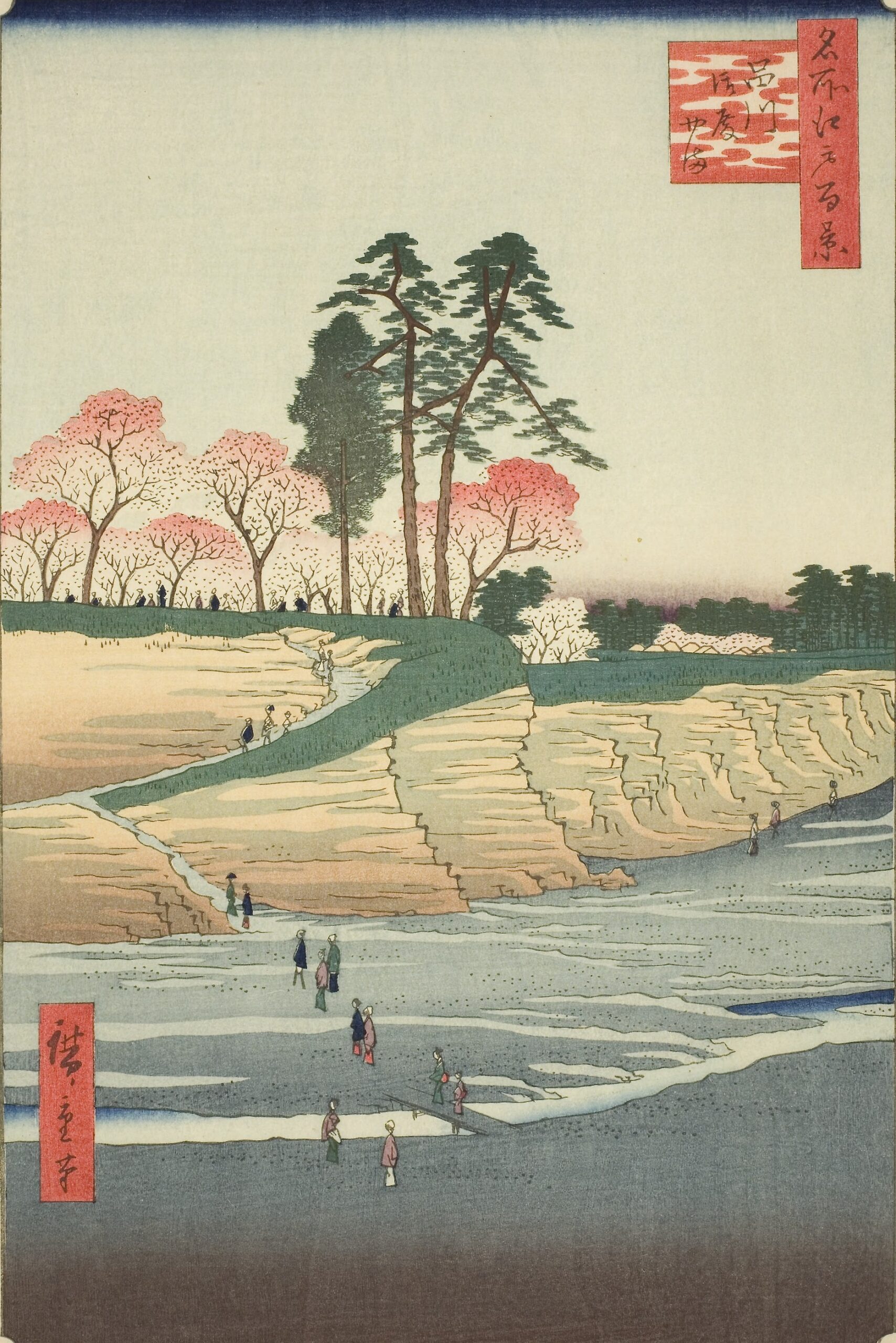
Utagawa Hiroshige – One Hundred Famous Views of Edo – 28 – Spring – Shinagawa Gotenyama 歌川広重-名所江戸百景-28-春-品川御殿やま 解説
Current Address: Near Kitashinagawa 3-chome, Shinagawa Ward
Latitude and Longitude: Latitude 35.6260, Longitude 139.7325
Published: April 1856 Age: 60
Explanation
<1> Introduction
“Shinagawa Gotenyama” depicts the view from a hilltop in Shinagawa, a post town on the Tokaido Highway.
The expansive, open composition of the sea and sky conveys the scenic seaside spot beloved by the common people of Edo.
<2> About Shinagawa Gotenyama
“Gotenyama” is said to have originated from a fort built by Ota Dokan during the Muromachi period. It later became known as the Tokugawa family’s palace (a facility similar to a rest area or guesthouse) and was later named after that site.
During the Edo period, this spot was known as a famous cherry blossom viewing spot, and many common people would visit in the spring to view the flowers.
Records indicate that the shogunate also held grand cherry blossom viewing events here.
From the elevated vantage point, one can enjoy a panoramic view of Edo Bay, including ships with full sails and the Boso mountain range.
<3> Highlights of the Painting
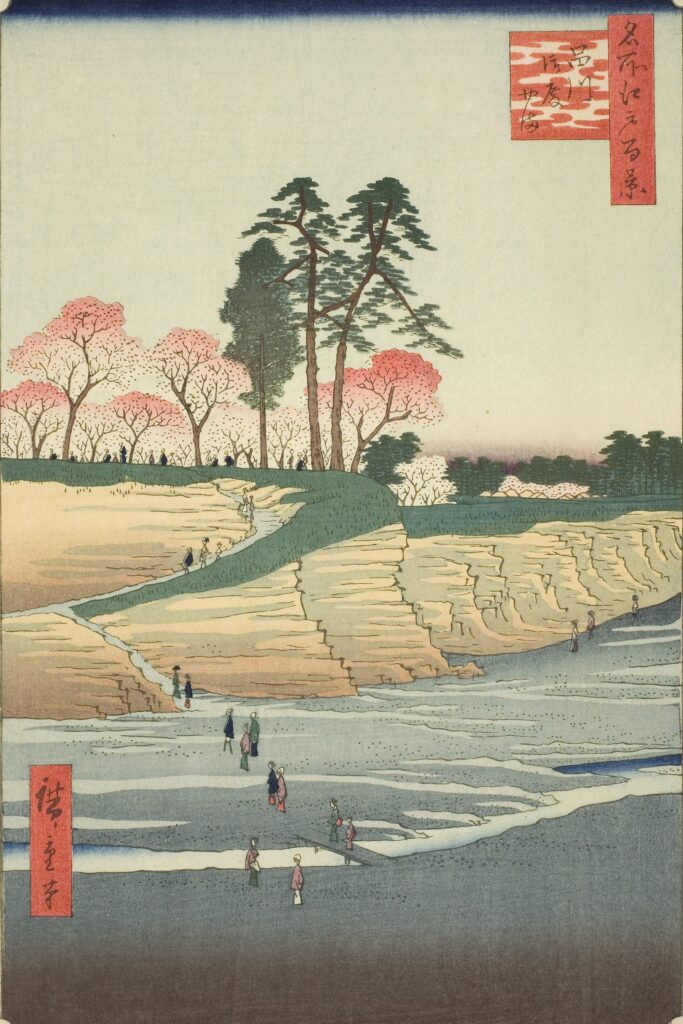
The sea and sky are depicted prominently, as if looking down from a high vantage point, creating a sense of openness.
The placement of cherry blossoms and pine trees in the foreground and the bold depiction of the sea and sky in the background create a sense of perspective typical of ukiyo-e.
The painting is dotted with figures of people enjoying cherry blossom viewing, spreading out their lunches and admiring the scenery, conveying an atmosphere of leisure and leisure.
In particular, the image of common people relaxing beneath the cherry blossoms is symbolic of Edo’s leisure culture.
At the time, Edo Bay was a deeper inlet than it is today, and the waters of Shinagawa were a brilliant blue.
The white of the sailing ships adds color to the sky and sea, creating a refreshing impression of spring.
The name Gotenyama comes from the shogun’s hunting resort and a resting place for daimyo traveling along the Tokaido road on their alternate attendance routes.
It burned down between 1688 and 1704 and was never rebuilt.
After cherry trees were planted there by the eighth shogun, Yoshimune, it became a place of relaxation for the common people of Edo.
In 1721, signs prohibiting violence were erected after some drunken disturbances occurred.
This painting depicts the area four years after the plateau was removed in 1853 to make way for a battery off the coast of Shinagawa.
We can see that it remained a well-known cherry blossom viewing spot.
<4> Gotenyama for the common people of Edo
Gotenyama was an extremely popular cherry blossom viewing spot in Edo.
Along with cherry blossom viewing spots in Yoshiwara and Mukojima, it enjoyed special appeal as a “cherry blossom viewing spot with a view of the sea.”
Commoners brought sake and food and enjoyed banquets accompanied by shamisen and drumming.
Gotenyama, with its pleasant sea breeze, was a popular summer destination for people seeking a cool breeze.
<5> Modern-Day Gotenyama
During the Meiji period, this area underwent a major transformation with the construction of railways and urban development.
Its fame as a famous cherry blossom viewing spot has been lost.
The name “Gotenyama” remains to this day.
The area around Kitashinagawa and Gotenyama in Tokyo’s Shinagawa Ward is now known for its office buildings and upscale residential areas.
The name “Gotenyama” is reflected in the Gotenyama Garden (a hotel and corporate garden facility), and in spring, visitors can enjoy rows of cherry blossom trees.
<6> Tourist Guide
① Gotenyama Garden (Shinagawa)
The modern-day Gotenyama area is home to lush gardens where you can enjoy seasonal flowers and nature.
A stroll reminiscing about this former cherry blossom viewing spot is recommended.
② Stroll Through Shinagawa-juku
Shinagawa-juku, once the first post town on the Tokaido Road, still retains remnants of temples, shrines, and ancient roads.
Walking through Kita-Shinagawa and Minami-Shinagawa will give you a taste of what it was like to be a traveler in the Edo period.
③ Combine with Tennozu and the Tokyo Bay Area
If you want to imagine the ocean views depicted in Hiroshige’s paintings, we recommend taking a trip to Tennozu or Shinagawa Seaside.