Utagawa Hiroshige – One Hundred Famous Views of Edo – 30 – Spring – Kameido Umeyashiki (Plum Garden) – Description 歌川広重-名所江戸百景-30-春- 亀戸梅屋舗 解説
Current Address: 3-chome, Kameido, Koto-ku
Latitude and Longitude: Latitude 35.7065, Longitude 139.8283
Published: November 1857 Age: 61
Description
<1> Introduction
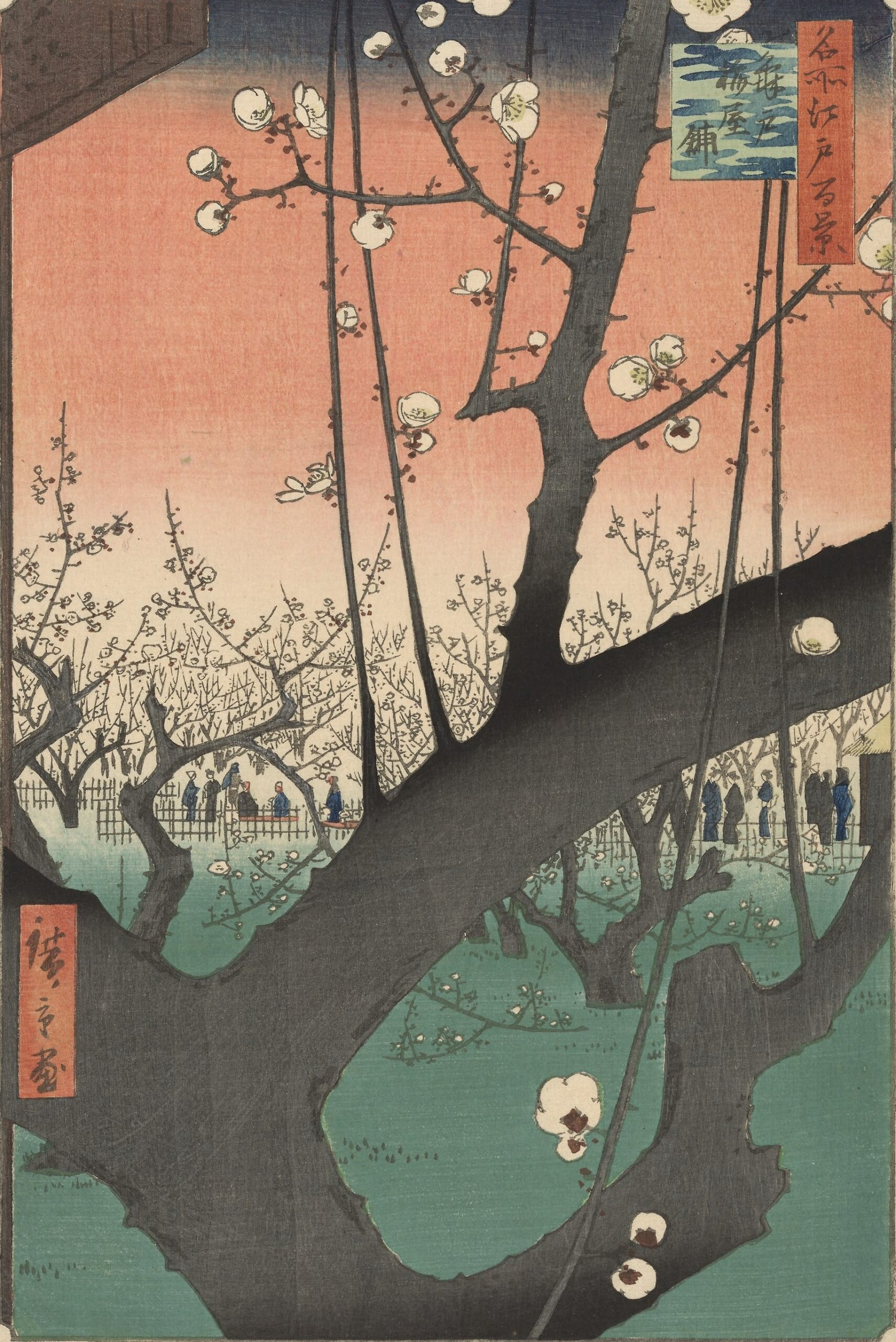
“Kameido Umeyashiki” is set in the famous Umeyashiki garden near Kameido Tenjin Shrine.
It was a popular spot for viewing plum blossoms among the people of Edo.
<2> About Kameido Umeyashiki
Kameido Umeyashiki began in the mid-Edo period when merchant Iseya Hikoemon purchased a plum grove located in the lower residence of the samurai Taga clan, opened it to the public, and established a teahouse.
As its name suggests, hundreds of plum trees were planted here, and it became a famous plum blossom spot, attracting large crowds from all over Edo.
In early spring, many pilgrims and visitors flocked to the area, making it a very lively “plum-viewing resort” where visitors could enjoy rice dumplings and sake at teahouses while viewing the plum blossoms.
<3> Highlights of the Painting
In the foreground, an old plum tree is depicted with its branches spreading out in a splendid manner.
The whiteness of the flowers and the strength of the branches symbolize the plum garden’s specialty.
In the background, a scene of a teahouse and people admiring the blossoms can be seen, vividly depicting the Edo commoners enjoying the plum blossoms.
By depicting the people through the blossoms, the viewer feels as if they themselves are standing beneath the tree and gazing at the scenery through the flowers.
This plum garden was located in Seikoen, the garden of the farmer Kiemon, located just 4 blocks behind Kameido Tenjin.
It covered an area of approximately 12,000 square meters and contained 300 plum trees.
The Garyu Ume tree is famous for its resemblance to a dragon resting in anger.
Although it was only 3m tall, the trunk was 1.6m thick and the branches spread out in all directions, wrapping around a sash, measuring 9m to 11m.
Also within the estate was Kamegai Well, from which the area of Kameido was named.
The composition shows a large, close-up view of the branching plum tree in the foreground.
A sign on the left reads “Garyu Ume.”
The plum orchard was enclosed by a fence, preventing entry.
In the middle ground, people are depicted enjoying the plum blossoms in a rest area.
<4> Plum Estates for the Common People of Edo
In Edo, plum blossoms bloomed earlier than cherry blossoms, heralding the arrival of spring.
In addition to appreciating the plum blossoms, people could also enjoy themselves in what would today be called a “theme park” – dining at teahouses and buying souvenirs.
The area also served as a cultural hub, with haiku poets and artists visiting and incorporating them into their poetry and paintings.
<5> Modern-Day Moto-Hachiman
The former plum residence no longer exists, but a stone monument commemorating the site of the plum residence stands in a corner of Kameido, Koto Ward.
Kameido Tenjin Shrine (enshrines Sugawara no Michizane, the god of learning) holds its annual Plum Festival from February to March.
<6> Tourist Guide
1. Visiting Kameido Tenjin Shrine
Kameido Tenjin Shrine, known for its blessings of academic success, is also a famous spot for viewing plum and wisteria blossoms.
We especially recommend visiting during the plum and wisteria festivals.
2. Touring the Monuments of the Kameido Plum Residence
Within walking distance of JR Kameido Station, you’ll find a stone monument commemorating the site of the plum residence, a reminder of the Edo period.
3. Explore Hiroshige’s Ukiyo-e Exhibition
Hiroshige’s “One Hundred Famous Views of Edo” is occasionally exhibited at museums such as the Edo-Tokyo Museum and the Ota Memorial Museum of Art.
Viewing the original painting will give you a taste of what it was like to view the plum blossoms of Edo.