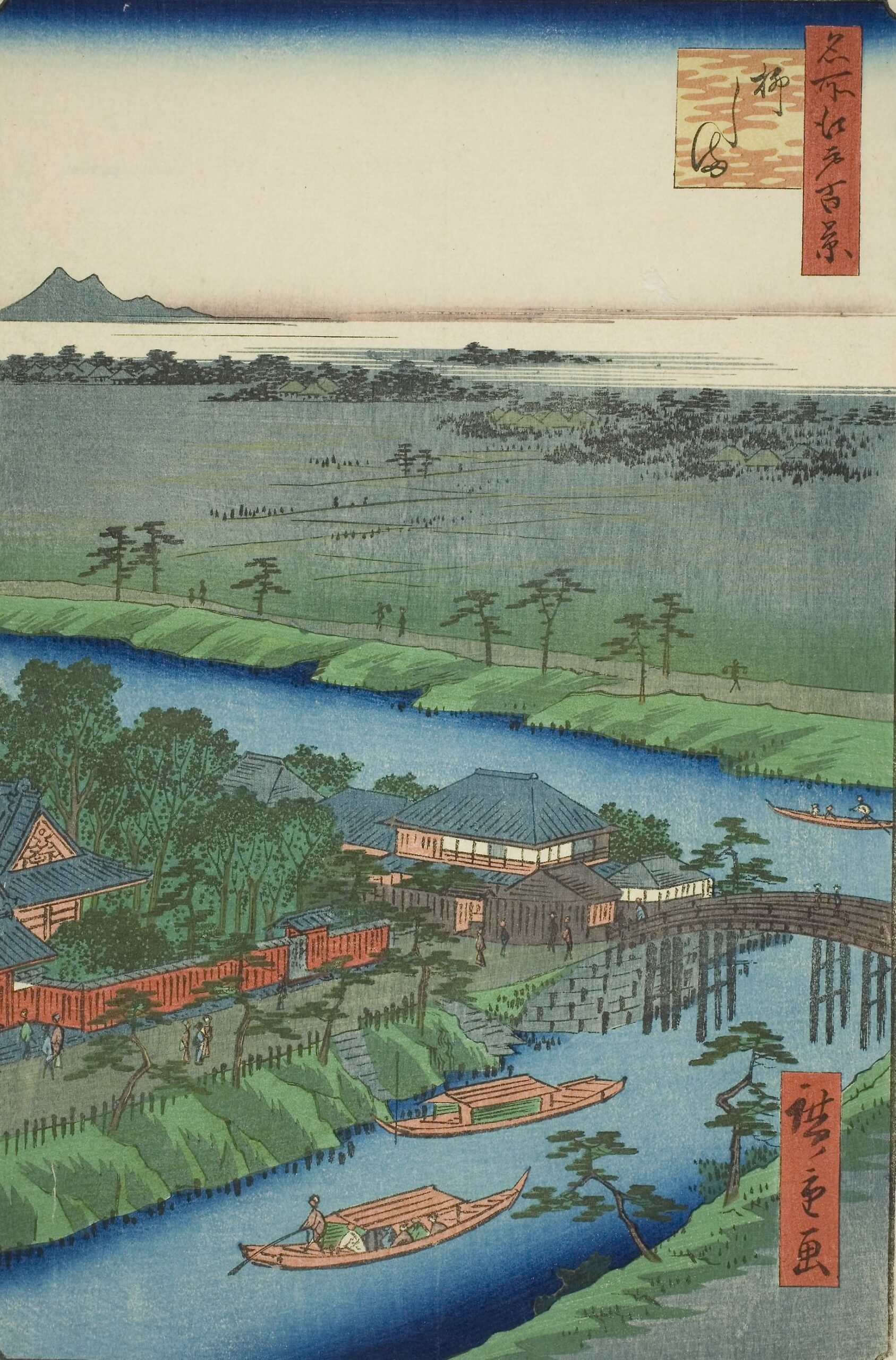
Utagawa Hiroshige – One Hundred Famous Views of Edo – 32 – Spring – Yanagishima 歌川広重-名所江戸百景-32-春-柳しま
Current Address: Hosshoji Temple, Narihira 1-chome, Sumida Ward
Latitude and Longitude: Latitude 35.7100: Longitude 139.8150
Published: April 1857 Age: 61
Comment
<1> Introduction
“Yanagishima” is based on a scenic spot located on an island in the Sumida River.
Yanagishima was once a popular spot for boating and recreation among the common people of Edo.
<2> What is Yanagishima?
“Yanagishima” is located on the east bank of the Sumida River, in the area of present-day Higashi-Mukojima and Oshiage in Sumida Ward.
The area was named after the many willow trees planted on the island and riverbank jutting out into the river.
During the Edo period, the Sumida River was a popular destination for common people for cherry blossom viewing, river festivals, fireworks displays, and other recreational activities.
Among these, Yanagishima became a popular spot for those seeking coolness and enjoying the river breeze.
Small shrines and temples are dotted around the area, and many people visit them while strolling.
<3> Highlights of the painting
A large willow tree is depicted in the foreground, its branches swaying in the breeze. This truly symbolizes the origin of the place’s name.
The river surface is widely captured, emphasizing the cool waterside scene.
Small boats and people crossing the river are also depicted, conveying a sense of bustle.
In the background, the town of Edo, the roofs of temples and shrines, and even Mount Fuji can be seen, creating a majestic view from the riverside.
The name Yanagishima comes from the abundance of willow trees in the area.
The Nichiren sect’s Hosshoji temple was located here, and within its grounds was Myoken-do, affectionately known as Yanagishima’s Myoken-sama by the common people of Edo.
During the Edo period, Yanagishima was worshipped by kabuki actor Nakamura Nakazo, ukiyo-e artist Katsushika Hokusai, and geisha, among others, as a shrine believed to ward off misfortune and bring good fortune.
It is located at the southwest corner where the upper Kitajikken River and the lower Yokojikken River intersect.
The hall visible within the vermilion-painted walls is Myoken-do.
Yanagishima Bridge separates Yanagishima from Kameido Village.
The bridge in the center is Yanagishima Bridge.
At the foot of the bridge is Hashimoto, a ryotei restaurant famous for its kaiseki cuisine.
An inflatable boat is depicted on the Kitajikken River, and a roofed boat on the Yokojikken River.
<4> Yanagishima for the common people of Edo
Yanagishima was a popular base for boating trips to cool off in the summer evenings and watch fireworks.
Bringing food and sake and enjoying the river breeze was a luxurious pastime unique to Edo.
Edo’s summers were unbearably hot, so the shade of the riverside trees and the waterside were ideal places to escape the heat.
The willow trees along Yanagishima served as a natural air conditioner for the common people.
Edo-period writers and artists also visited the area, and it is said that they inspired their waka and haiku poems.
<5> The Modern-Day Yanagishima Area
Today, the place names “Higashi-Mukojima” and “Yanagishima” remain in Sumida Ward, preserving the memories of these famous spots.
Nearby, you’ll find the Sumida River Terrace and Mukojima Hyakkaen Gardens, where you can relive the Edo period while strolling along the river.
Enjoying the scenery of the Sumida River while also getting a panoramic view of the modern-day symbol, Skytree, makes this a recommended sightseeing route for experiencing the contrast between Edo and Tokyo.
<6> Tourist Guide
1. Sumida River Cruise
A cruise ship offers a modern-day Edo-era boating experience, perfect for soaking up the atmosphere around Yanagishima.
2. Mukojima Hyakkaen Gardens
A famous flower spot dating back to the Edo period, where you can immerse yourself in the Edo atmosphere depicted by Hiroshige.
3. Combine your sightseeing with the Skytree tour to enjoy a timeless stroll through the city by touring the historic Yanagishima and modern Tokyo landmarks at the same time.