Utagawa Hiroshige – One Hundred Famous Views of Edo – 59 – Summer – “I at SakaSai” – Commentary 歌川広重-名所江戸百景-59-夏-逆井のわたし 解説
Current Address: SakaSai Bridge, 9-chome, Kameido, Koto Ward
Latitude and Longitude: Latitude: 35.7240, Longitude: 139.8600
Published: February 1857 Age: 61
Commentary
<1> Introduction
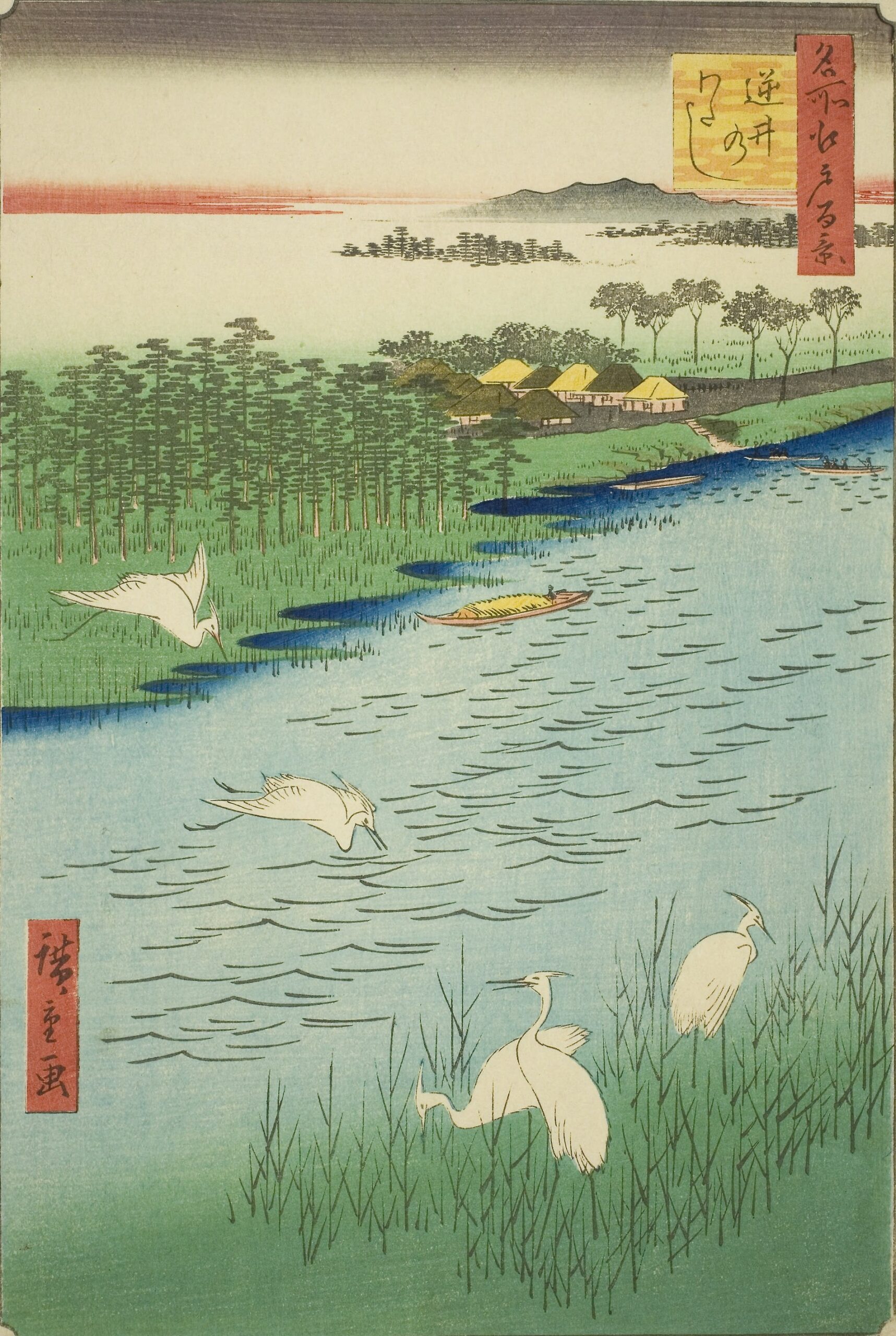
“I at SakaSai” depicts a ferry terminal near the Komatsu River, connecting what is now Edogawa Ward, Tokyo, and Ichikawa City, Chiba Prefecture.
A “ferry” is a system for transporting people and cargo by boat instead of a bridge.
It was an essential piece of transportation infrastructure during the Edo period.
The SakaSai Ferry was a strategic point connecting central Edo with the Boso region, supporting the transport of many travelers, goods, and the livelihoods of ordinary people.
This idyllic waterfront scene vividly captures a glimpse of Edo’s transportation system.
<2> What is SakaSai Ferry?
SakaSai Ferry was located at the crossing point from the area around Komatsugawa River in Edogawa Ward to Ichikawa.
It was a ferry crossing the Edogawa River (formerly the Nakagawa and Arakawa River systems) and was considered an important gateway to the Boso region.
This shows that the area had a deep connection with water.
It functioned as a transportation route for goods connecting the city of Edo with the Boso Peninsula.
It was a logistics route, particularly for supplying agricultural and marine products to Edo.
For common people, it was a familiar means of transportation used for short trips to Boso or for pilgrimages to temples and shrines.
<3> Highlights of the painting
The river surface is depicted in large detail, with a majestic depiction of a ferryboat crossing it.
The idyllic expanse of water exudes the serene atmosphere typical of the suburbs of Edo.
The figures of travelers boarding the ferry and common people standing on the shore give a sense of how closely the ferry was integrated into daily life.
It was used by a wide range of people, not only for daimyo processions and merchant barges, but also for farmers and pilgrims.
With fields and trees spreading out in the background, it depicts a relaxed suburban landscape that is different from the urban area of Edo.
On a clear day, the Boso mountain range would be visible, creating a sense of exhilaration as one sets off on a journey.
The Nakagawa River, which flows roughly parallel to the east of the Sumida River, was painted facing downstream.
Sakai Ferry, visible in the background on the right, is where the Sumida and Nakagawa rivers meet.
To the outside right, the Tatekawa River should join them.
On the opposite bank is Komatsugawa Village.
If you head east from here, you can reach Sakura in Shimousa Province via Ichikawa River.
Five white egrets have flown into the reeds in the foreground, perfectly capturing the idyllic atmosphere.
It is said that the name SakaSai comes from the fact that water would flow back up to this area at high tide in Edo Bay. 4> Modern-day Kameido Tenjin Shrine
<4> Modern-day Remains of SakaSai Ferry
The SakaSai Ferry has now been abandoned.
The Komatsugawa Ohashi Bridge and the Keiyo Road, connecting Komatsugawa in Edogawa Ward and Ichikawa City, now serve as transportation routes.
A stone monument has been erected in part of the ferry site as a historic site.
You can feel the remnants of Edo-period transportation here.
The surrounding area features Komatsugawa Waterside Park and a walking path along the Edogawa River.
<5> Tourist Guide
1. Strolling around Komatsugawa Waterside Park
The waterside park along the Edogawa River is rich in nature, allowing you to feel the remnants of the ferry site from that time.
The rows of cherry blossoms in spring and the autumn foliage are also highlights.
2. Ichikawa Kokubunji
This ancient temple is located beyond the ferry.
Established in the Nara period, it was also a place of worship for the common people of Edo.
3. Zenyoji Temple (Kagemuki no Matsu)
This famous temple is located on the Komatsu River, and its impressive black pine trees are over 600 years old. Combining the ferry ride with a tour of the temples and shrines will give you a taste of the Edo period pilgrimage.