Utagawa Hiroshige – One Hundred Famous Views of Edo – 57 – Summer – Irises of Horikiri 歌川広重-名所江戸百景-57-夏-堀切の花菖蒲 解説
Current Address: Near Horikiri 2-chome, Katsushika Ward
Latitude and Longitude: Latitude: 35.7436, Longitude: 139.8306
Published: July 1856 Age: 60
Explanation
<1> Introduction
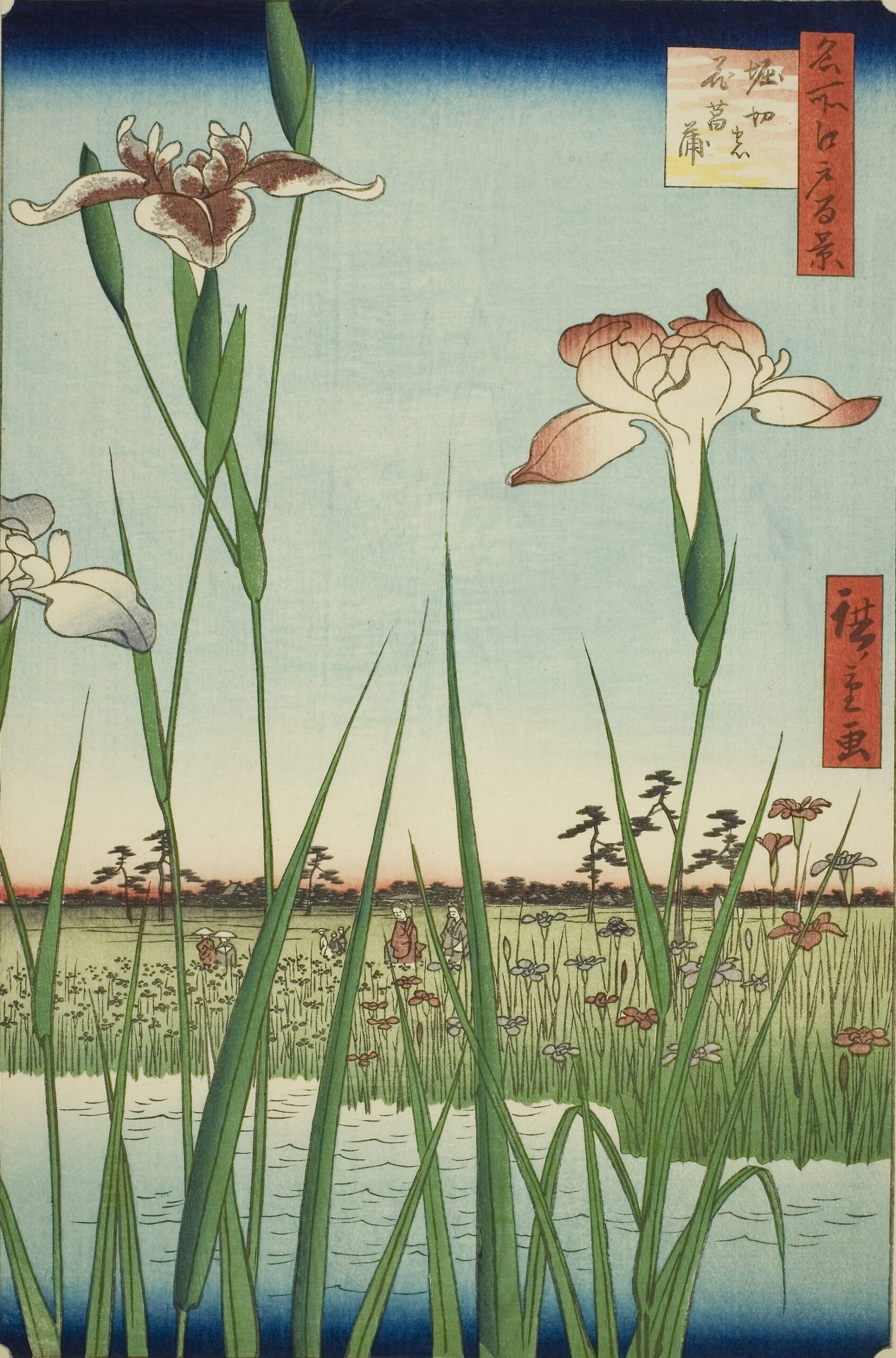
“Irises of Horikiri” depicts the scenery of Horikiri, known as a famous spot for colorful flowers in early summer.
Irises are a native Japanese plant, and during the Edo period, with the spread of horticultural culture, they became popular as ornamental objects.
Horikiri is a prime spot for such viewing.
It was a “resort of early summer pleasure spot” where Edo commoners would arrive by boat to admire the beautiful flowers and enjoy the season while relaxing in teahouses.
<2> About Horikiri
Horikiri is an area stretching along the east bank of the Sumida River.
At the time, it was a tranquil rural area. From Edo, visitors could travel by boat up the Sumida River or by foot overland.
In the late Edo period, gardeners and farmers began cultivating irises, and eventually, improved varieties were developed.
The diverse irises grown in Horikiri became known throughout Edo as “Horikiri Irises.”
During the early summer flowering season, Edo residents flocked to the area to enjoy boating, cherry blossom viewing, and relaxing at teahouses.
For Edoites of the time, Horikiri was a popular short trip destination, a short trip from Asakusa.
<3> Highlights of the Painting
The irises fill the entire canvas, expressing the profusion of purple, white, and pale blue flowers so beautifully that one can almost smell their fragrance.
Sightseers walking through the flower fields and people cooling off in teahouses are added as background, vividly portraying Edo commoners enjoying the refined beauty of the season.
Beyond the flowers is a rural landscape, with the sky prominently depicted.
Horikiri is a wetland area near the confluence of the Ayase River and the Sumida River.
The place name Horikiri refers to the ruins of the castle where the Kasai clan lived, which was located in the area.
Various plants were cultivated here, but irises are most famous.
Iris cultivation has a long history.
At the end of the Muromachi period, local lord Kubodera Taneo ordered his vassals to bring back seeds from Asaka-numa in Koriyama, Oshu.
Irises began to be cultivated in the early 19th century, and Izaemon II inherited varieties from two samurai retainers and worked hard to propagate them, resulting in Edo’s largest iris garden.
People can be seen enjoying the cherry blossoms between the leaves of the large iris depicted in the foreground.
<4> Modern-Day Horikiri and Iris
Today, the Horikiri Iris Garden has been developed in Horikiri, Katsushika Ward. Approximately 200 species and 6,000 irises bloom in early summer, carrying on the traditions of the Edo period.
The floral scenes depicted in Edo-period ukiyo-e prints have been brought back to life in the modern day.
Not only the iris garden, but the surrounding area retains a strong downtown atmosphere, making it a great place for a stroll.
With Japanese confectionery shops and long-established restaurants, you can walk around while reliving the Edo era atmosphere.
It is about a 10-minute walk from Keisei Electric Railway’s Horikiri Shobuen Station.
<5> Tourist Guide
1. Horikiri Iris Garden (Iris Festival in June)
The Katsushika Iris Festival is held every June.
The irises in full bloom are illuminated at night.
You can enjoy this “early summer tradition” that has continued since the Edo period in the modern day.
② Collaborative sightseeing with Katsushika Shibamata
Shibamata, just a few stops on the Keisei Line, is home to Taishakuten Temple and the Tora-san Memorial Museum, allowing you to fully enjoy the charm of the downtown area.
③ Pairing Japanese Iris with Japanese Sweets
At local Japanese sweet shops, you can enjoy high-quality sweets modeled after Japanese irises, as well as seasonal treats.