Utagawa Hiroshige – One Hundred Famous Views of Edo – 56 – Summer – Komagatado and Azumabashi Bridge 歌川広重-名所江戸百景-56-夏-駒形堂吾嬬橋 解説
Current Address: Komagatado, 2-chome, Kaminarimon, Taito-ku
Latitude and Longitude: 35.7105, Longitude: 139.7905
Published: January 1857 Age: 61
Explanation
<1> Introduction
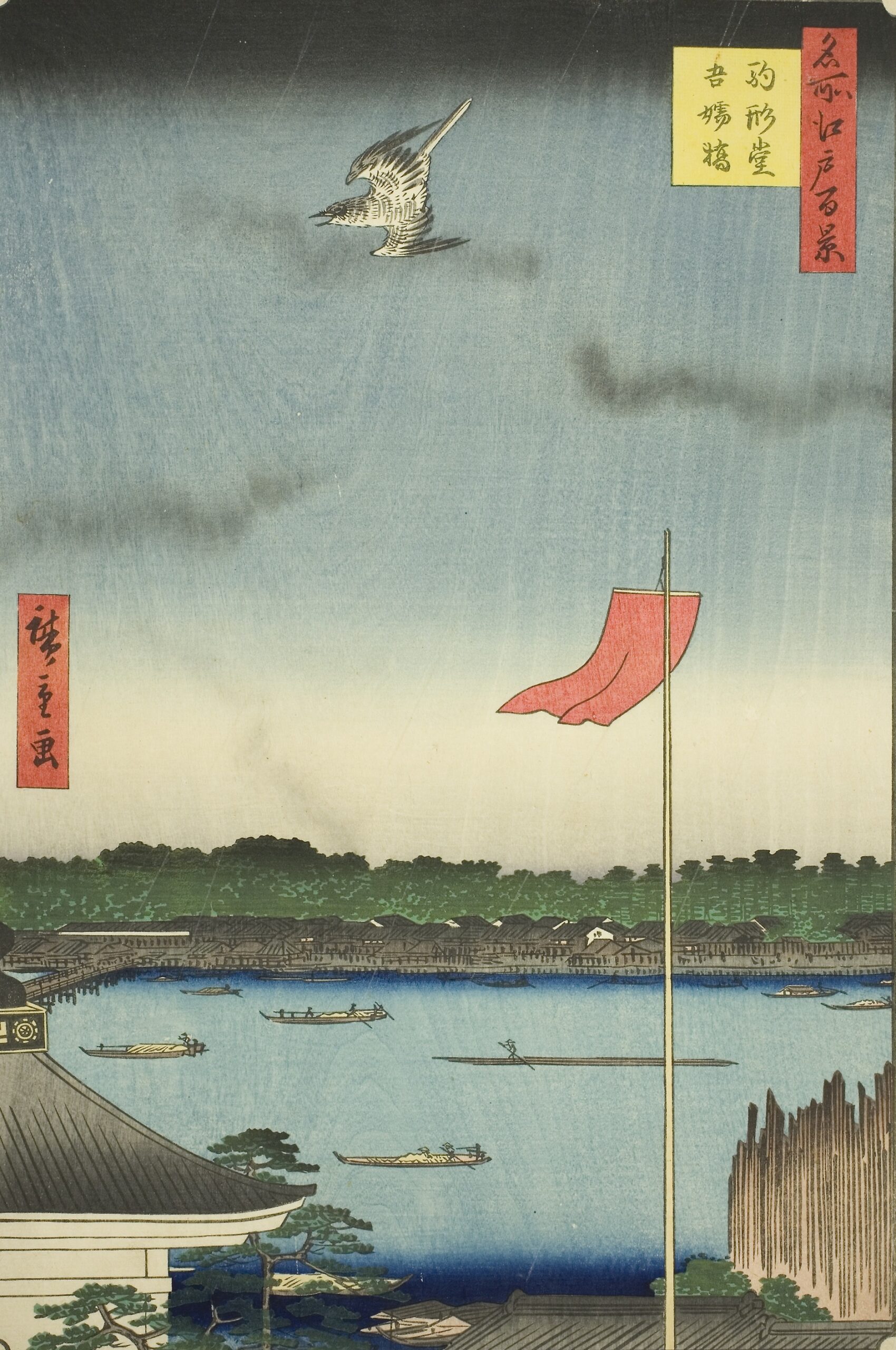
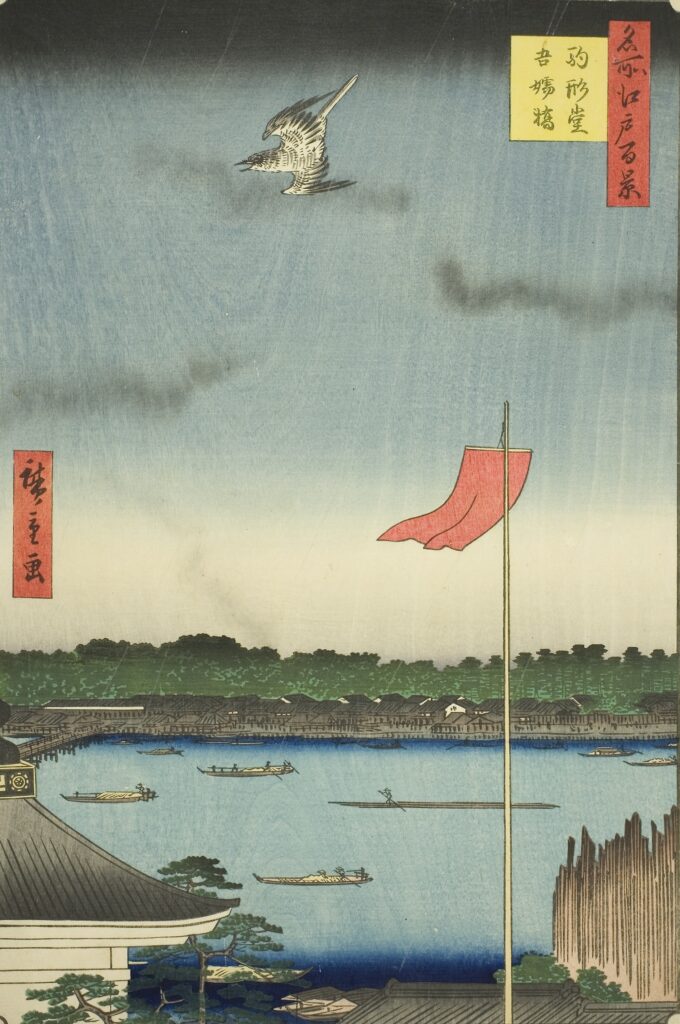
“Komagatado and Azumabashi Bridge” is a vivid portrait of Edo’s waterfront culture, centered around the main hall of Sensoji Temple and Azumabashi Bridge over the Sumida River.
The small Asakusa chapel, Komagatado, is depicted in the foreground, with the Sumida River and Azumabashi Bridge in the background, and the cityscape and mountains in the distance. This work is full of Edo-style charm, blending the faith familiar to the common people of Edo with the waterfront scenery.
<2> About Komagatado and Azumabashi Bridge
Komagatado is one of the outlying temple grounds of Sensoji Temple.
The principal image enshrined here is the Bato Kannon (Bato Kannon), a Buddha believed to grant safe travels and protect traffic, and as the guardian deity of horses, it was symbolic that it was built in Asakusa, a key transportation hub in Edo.
The area where the hall is located is said to have been named “Komagata” after the Bato Kannon.
During the Edo period, the temple attracted many worshippers, and it was customary to stop by Komagata Hall on the way to Sensoji Temple.
Compared to the grandeur of the large temple, Sensoji, Komagata Hall is small and approachable.
It was beloved as a “town hall” where common people would pray on a daily basis.
Azumabashi Bridge connects Asakusa and Mukojima, and during the Edo period, ferrying was mainly by boat.
Later, a bridge was built, and it became an important transportation route essential for pilgrimages to Asakusa and traveling across the Sumida River.
“Azuma” means eastern provinces, and was a word that symbolized the east for people living in Edo.
It was a popular and bustling bridge, used by many people to visit Sensoji Temple, view cherry blossoms, and play in the river.
The view of the Sumida River from the bridge offers a spectacular view, with boats passing by and mountains in the distance.
<3> Highlights of the painting
The small yet imposing Komagata Hall is depicted in the foreground on the left.
By placing a “place of prayer,” familiar to the common people, in the foreground, the close connection between faith and everyday life is indicated.
The wide river and Azumabashi Bridge are depicted in the middle ground.
The boats passing on the river symbolize the bustle of Edo’s water transportation. The presence of the bridge and the expansiveness of the river create a sense of scale befitting Edo’s great city.
The town of Asakusa and distant mountains are arranged in the background, creating a spacious and expansive space.
Hiroshige’s distinctive use of “shading” to create a delicate color palette in the sky evokes the atmosphere of a sunrise or sunset.
This is a view looking east from the west bank of the Sumida River.
Azumabashi Bridge can be seen upstream on the left.
The temple building in the left corner is Komagata-do Hall, which enshrines the Bato Kannon (Bato-Headed Bodhisattva).
It is currently located at the foot of Komagata-bashi Bridge, more than four meters north.
A cuckoo flying into the overcast sky suggests the early May showers.
The red flag that seems to be thrusting up from below on the right is the sign for Hyakusuke, a haberdashery shop that was located west of Komagata-do Hall.
Just beyond Azumabashi Bridge on the left center is the secondary residence of the Hosokawa family, lords of the Shinden domain in Kumamoto.
<4> Komagata-do Hall and Azumabashi Bridge Today
The current Komagata-do Hall, rebuilt in the Showa era, now stands quietly near Asakusa Station, with only a reinforced concrete building remaining.
The principal image, Bato Kannon, is still enshrined there, and visitors flock to it as a guardian deity for safe travels and safe travels.
Today, Azumabashi Bridge is a modern arched bridge that remains an important transportation route connecting Asakusa and Mukojima.
Its striking red railings blend seamlessly with the scenery of Tokyo Skytree and the Sumida River, making it a popular tourist attraction.
Located just a few minutes’ walk from Sensoji Temple, a stroll along the Sumida River offers a immersive Edo-period experience.
<5> Tourist Guide
1. Visiting Komagata-do Temple
This small temple is steeped in history, and visitors can experience the faith of Bato Kannon Bodhisattva.
It also offers traffic safety charms, making it a recommended spot for travelers.
2. Strolling Azumabashi Bridge
The bridge offers a spectacular view of the Sumida River and Tokyo Skytree.
Enjoy the refreshing river breeze during the day and the illuminated bridge and Skytree at night.
3. Enjoy it as a Set with Asakusa
After visiting Komagata-do Temple and Azumabashi Bridge, a classic itinerary is to tour Sensoji Temple and Nakamise Shopping Street.
The attraction is the opportunity to experience the bustle of both the Edo period and modern times all at once.