Utagawa Hiroshige – One Hundred Famous Views of Edo – 60 – Summer – Fukagawa Hachimanyama Opening – Commentary 歌川広重-名所江戸百景-60-夏-深川八まん山ひらき 解説
Current Address: Tomioka Hachimangu Shrine, 1-chome, Tomioka, Koto Ward
Latitude and Longitude: Latitude: 35.6719, Longitude: 139.7966
Published: August 1857 Age: 61
Commentary
<1> Introduction
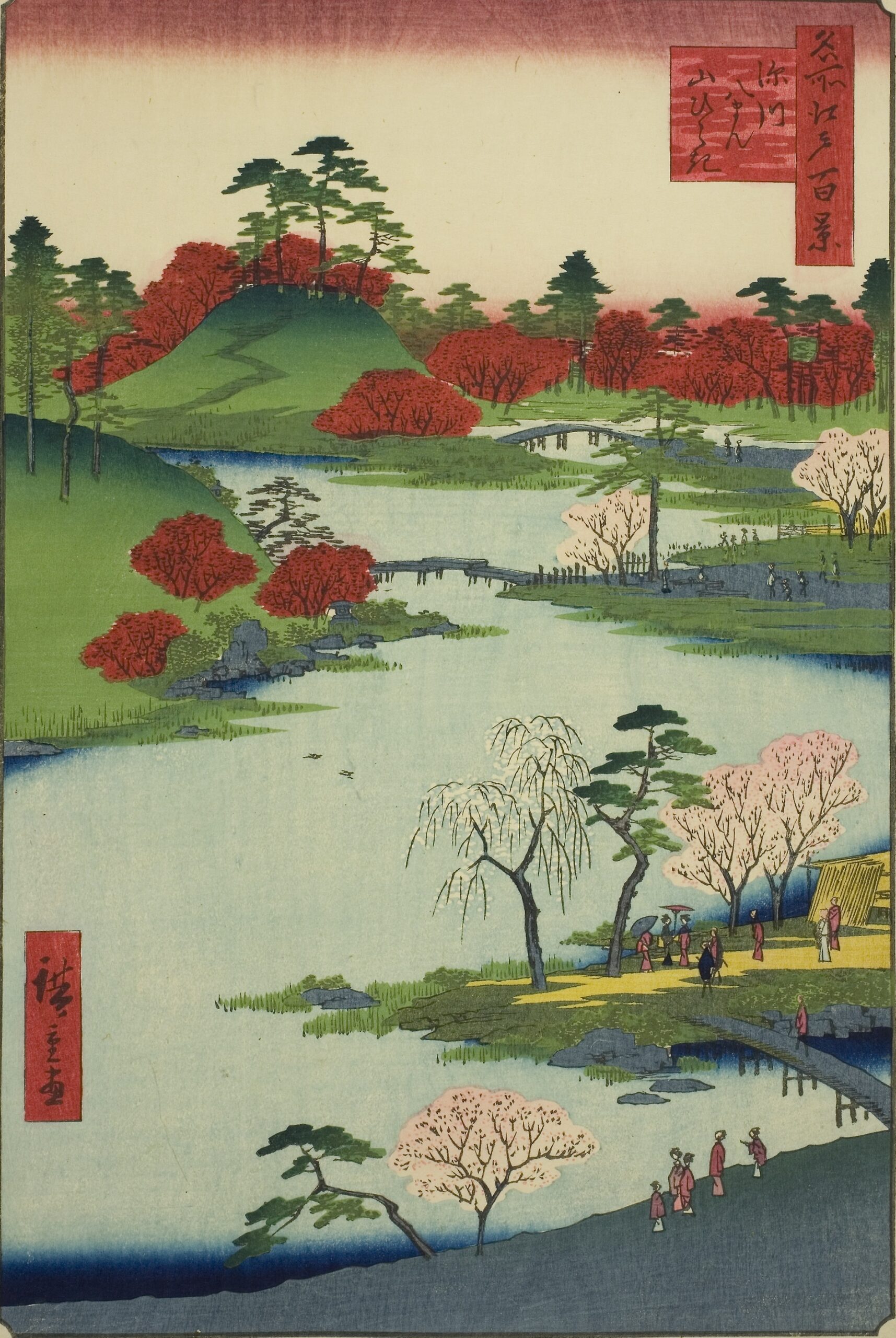
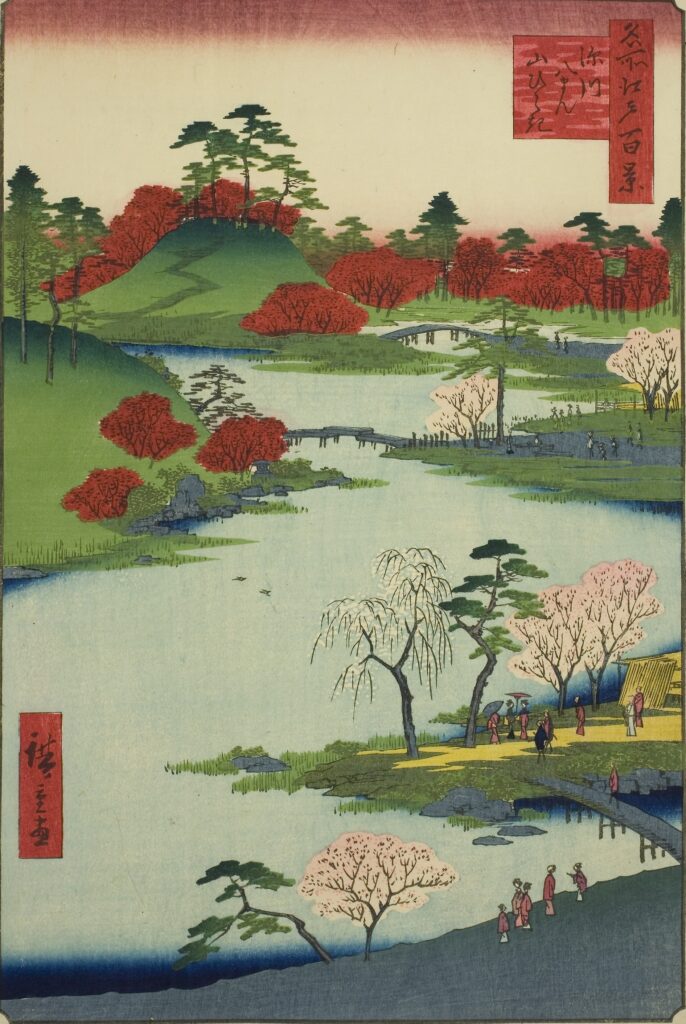
“Fukagawa Hachimanyama Opening” is set at Tomioka Hachimangu Shrine in what is now Tomioka, Koto Ward.
The work depicts the festival of Hachimangu Shrine, a beloved shrine for the common people of Edo.
The bustling shrine grounds and the hustle and bustle of the festival procession are vividly depicted.
<2> About Tomioka Hachimangu Shrine (Fukagawa Hachiman)
Tomioka Hachimangu Shrine was founded in 1627 by order of Shogun Tokugawa Iemitsu, enshrining the Tsurugaoka Hachimangu Shrine in Kamakura. It was worshipped as a guardian deity protecting the east side of Edo Castle.
It was also worshipped as the guardian deity of fishermen and sailors, and deeply revered by people living along the coast of Edo Bay.
It is famous for having hosted Kanjin Sumo wrestling events.
The shrine is deeply connected to sumo.
The Hachiman Festival (opening of the mountain) is a grand festival held every August.
With floats and portable shrines paraded around, it is a grand event that is counted as one of Edo’s three major festivals.
<3> Highlights of the painting
Fukagawa Hachiman refers to Tomioka Hachimangu Shrine, and the neighboring Eitai-ji Temple managed the Hachimangu Shrine.
Eitai-ji Temple was the temple name given by Kyoto’s Ninna-ji Temple. It received approximately 20,000 tsubo (approx. 19,000 m2) of land from the shogunate and was the largest on the east bank of the Sumida River.
The garden was open to the public from March 21st, the anniversary of Kobo Daishi’s death, to the 28th, during the cherry blossom and azalea season.
While it is unlikely that both flowers bloomed at the same time, this accentuates the image of the garden.
The term “mountain opening” is thought to be a combination of the Shingon Buddhist practice of “opening the forest and springs” and the artificial mountain Kabutoyama (Kabutoyama) located within the Kabutoyama Garden.
<4> Modern Tomioka Hachiman Shrine and Festivals
The shrine is easily accessible, just a few minutes’ walk from Monzen-Nakacho Station on the Tokyo Metro Tozai Line.
The Tomioka Hachiman Shrine Annual Festival is still held in August today.
The main festival, held every three years, features over 120 mikoshi (portable shrines) of various sizes parading through the town, the spectacle of them being carried while being splashed with water, is particularly impressive.
Tomioka Hachiman Shrine is also known as the birthplace of sumo, and a monument to a sumo wrestler has been erected within the shrine grounds.
This is a place where you can experience the history of kanjin sumo in the Edo period.
<5> Sightseeing Guide
1. Visiting Tomioka Hachimangu Shrine
We recommend touring the shrine’s beautiful vermilion-lacquered building and the sumo monuments.
During festival season, you can experience the excitement of Edo.
2. Strolling around Monzen-Nakacho
Monzen-Nakacho, which flourished as a temple town, is still home to long-established Japanese confectionery shops, izakayas, and shopping arcades.
3. Fukagawa Fudodo
Next to Hachimangu Shrine is Fukagawa Fudodo, another popular spot bustling with pilgrims since the Edo period.
By visiting both Hachimangu Shrine and Fukagawa Fudodo, you can experience Edo’s religious culture on a deeper level.
4. Fukagawa Meshi
There are many long-established restaurants in the area serving the Edo specialty “Fukagawa Meshi” (clam-based rice).
This is a must-try Edo delicacy on your way home from a festival or visit to a shrine.