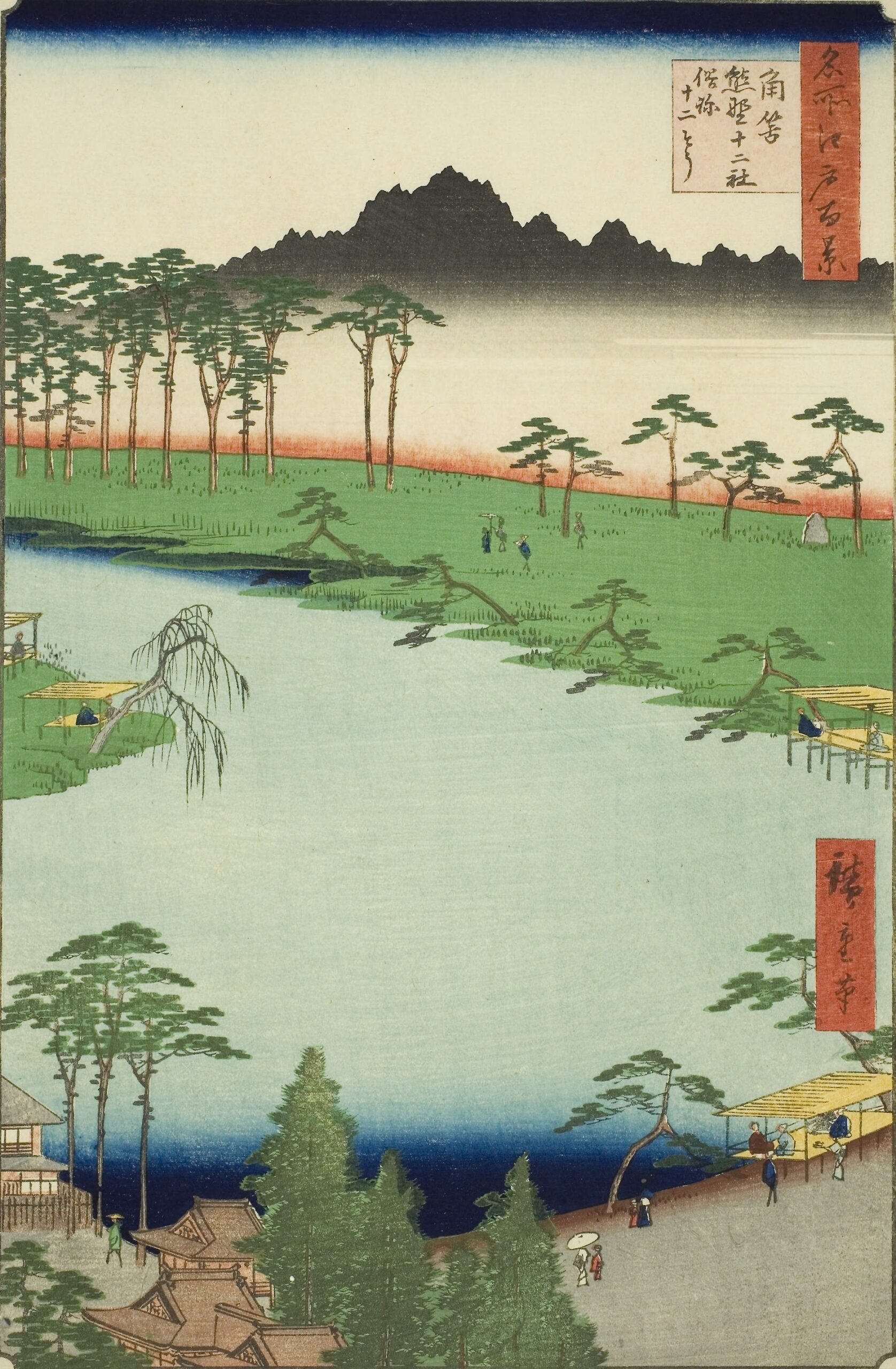
Utagawa Hiroshige – One Hundred Famous Views of Edo – 65 – Summer – Tsunohazu Kumano Twelve Shrines (Commonly Known as the Twelve Shrines) 歌川広重-名所江戸百景-65-夏-角筈熊野十二社 俗称十二そう
Current Address: Around Kumano Shrine, Tsunohazu, Shinjuku Ward
Latitude and Longitude: Latitude: 35.6990, Longitude: 139.7010
Published: July 1856 Age: 60
Tourist Guide-Style Commentary: “Tsunohazu Kumano Twelve Shrines (Commonly Known as the Twelve Shrines)”
■ Introduction
Utagawa Hiroshige’s “One Hundred Famous Views of Edo” is a large-scale series depicting the seasonal scenery of Edo.
Among these, “Tsunohazu Kumano Twelve Shrines” is based on the grounds of Kumano Shrine, which was located in what is now the west side of Shinjuku.
The subject of this work is the area around Shinjuku Central Park.
The nickname “Twelve Shrines” comes from the twelve large and small shrine buildings enshrined within the grounds.
During the Edo period, this area known as Tsunohazu was a rural area located on the outskirts of Edo Castle.
However, it also served as a base for Kumano worship, attracting the faith of the common people. It was also popular as a leisure destination for those seeking scenic views of its cherry blossoms and ponds.
Hiroshige’s ukiyo-e vividly conveys the image of this “place of healing” near Edo.
■ About the Kumano Twelve Shrines
Kumano Shrine is a faith centered on the Kumano Sanzan (three mountains of Kumano) on the Kii Peninsula, and has spread throughout the country since the Middle Ages.
Kumano worship was fervent in Edo, and Tsunohazu Kumano Shrine was nicknamed “Twelve Shrines” for the twelve shrines dedicated to the twelve deities.
The shrine grounds include a large pond, and the surrounding area is blessed with abundant nature.
Carp and turtles swim in the pond, and the surrounding forests and rows of cherry blossom trees add a touch of seasonal color.
In addition to visiting temples and shrines, the people of Edo enjoyed strolls and boating along the pond’s shores.
■ Highlights of the Painting
Officially known as Kumano Jusansho Gongensha, it is located in Tsunohazu Village.
This village has an ancient history, with records dating back to the Sengoku period.
Between 1394 and 1428, people from Kii Province built a shrine, enshrining Kumano Gongen as the head deity and twelve gongen shrines on the Kii Peninsula, including the Kumano Three Shrines, hence the name Jusansha.
There are records of subsequent repairs to the shrine by Ota Dokan and Tokugawa Ieyasu.
During the Edo period, the river was dammed to the west of the shrine to create Benten Pond, and a waterfall was created northeast of the shrine.
The large pond in front is Benten Pond. Kumano Jusansho Gongensha is at the bottom left.
It became a popular destination for viewing autumn leaves and cherry blossoms, especially in the summer, as a place to cool off.
Restaurants were built around the edge of the pond, and it was a popular place for actors to pray, as it signified the ability to perform the twelve acts.
■ Modern-day Remains of the Twelve Shrines
This area is located in the vicinity of Shinjuku Central Park in Nishi-Shinjuku, Shinjuku Ward, Tokyo.
Kumano Shrine itself still stands today, and continues to serve as the guardian deity of the area as Shinjuku Jusansha Kumano Shrine.
The former large pond has been filled in.
A monument marking the site of the Jusansha Pond has been erected in the park, displaying Hiroshige’s ukiyo-e print.
The area is now surrounded by skyscrapers, and has undergone significant changes since the Edo period.
Visiting the shrine buildings and stone monuments within the grounds allows you to relive the site’s past.
■ Tourist Guide Recommendations
- Visit Shinjuku Jusansha Kumano Shrine
Including the main hall, stone monuments and shrines dating back to the Edo period remain within the grounds, allowing you to experience the history of the “Twelve Shrines” depicted by Hiroshige. - Stroll Through Shinjuku Central Park
The site of the former pond has been developed into a park, and the spacious green space and fountain plaza offer a relaxing space.
As you stroll around with an ukiyo-e print in hand, you can experience the contrast between Edo and modern-day landscapes.
③ Nearby Tourist Spots
The Tokyo Metropolitan Government Building and its skyscrapers stand nearby, and you can get a panoramic view of Shinjuku from the building’s observation deck (free).
You can get a real sense of how this religious site on the outskirts of Edo has transformed into Japan’s largest business district.