Utagawa Hiroshige – One Hundred Famous Views of Edo – 66 – Summer – Kojimachi 1-chome, Sanno Festival Nerikomi 歌川広重-名所江戸百景-66-夏-糀町一丁目山王祭ねり込
Current Address: Kojimachi, Chiyoda Ward
Latitude and Longitude: Latitude: 35.6813, Longitude: 139.7376
Published: July 1856
Age: 60
Tourist Guide-Style Commentary: “Kojimachi 1-chome, Sanno Festival Nerikomi”
■ Introduction
Utagawa Hiroshige’s “One Hundred Famous Views of Edo” is a masterpiece depicting the landscapes and lives of Edo’s people throughout the four seasons.
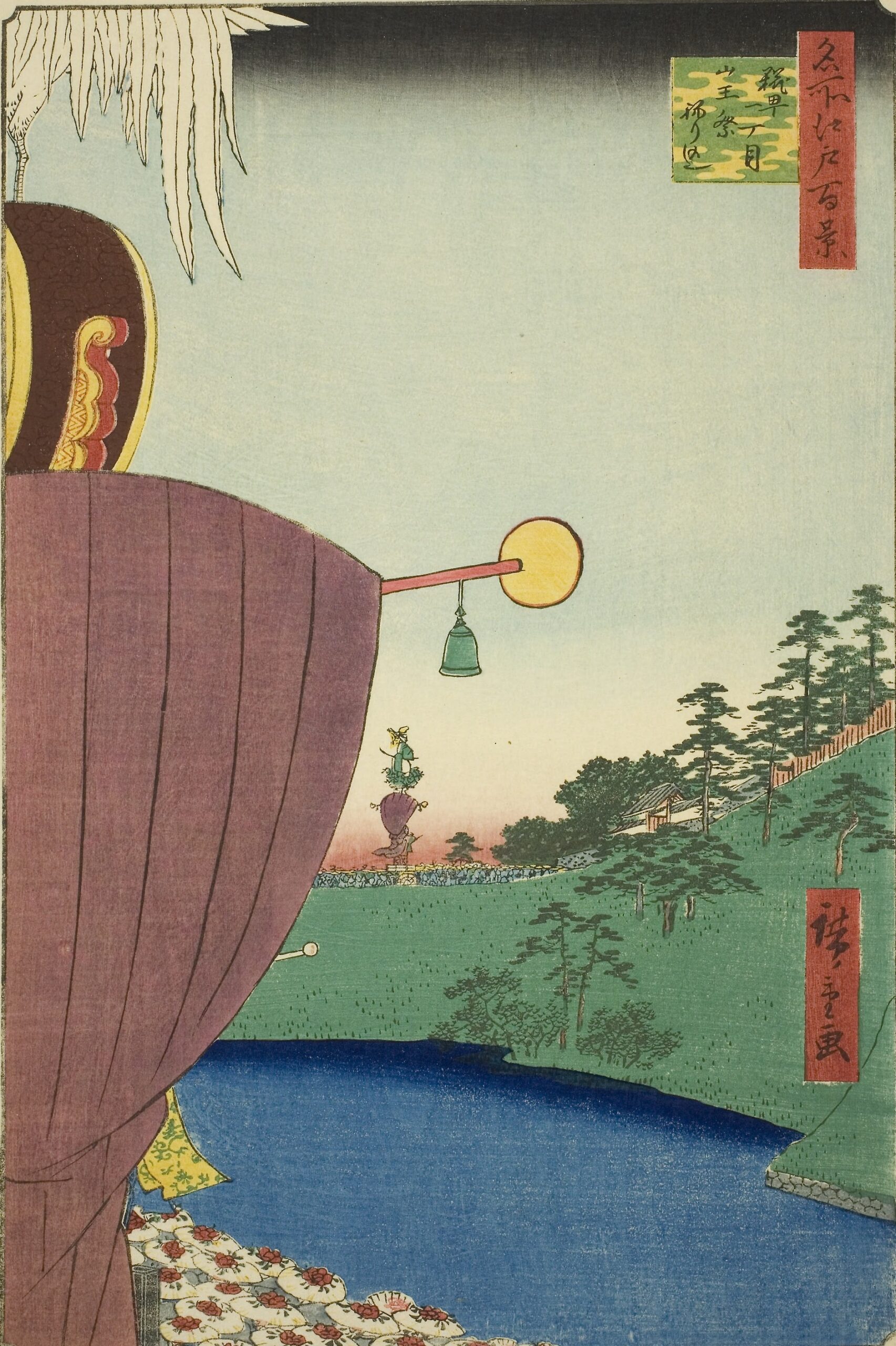
Among these works, “Kojimachi 1-chome, Sanno Festival Nerikomi” depicts the festival of Hie Shrine (Sanno Gongen), one of Edo’s three major festivals.
The Sanno Festival, which involved townspeople and samurai from the Edo Castle area, and even the Shogunate, was such a large-scale event that it was called the “Tenka Matsuri” (national festival), and was a major annual event for the common people.
Hiroshige vividly depicts the excitement of this festival, with the mikoshi (portable shrines), floats, and crowds parading through the town streets.
■ About the Sanno Festival
The Sanno Festival was held at Hie Shrine, the guardian shrine of Edo Castle, and was renowned alongside the Kanda Festival, another national festival.
The main festival, held every other year, was a particularly prestigious event, with a procession of floats entering Edo Castle and viewed by the shogun.
Kojicho, located just outside Edo Castle, was the main stage for the festival procession.
The sight of the gorgeous floats parading in front of townspeople and samurai residences was a sight that truly symbolized the prosperity of Edo.
■ Highlights of the painting
Kojicho 1-chome was located on the road extending from Hanzo Gomon Gate at Sakuradabori, and was the closest neighborhood to the gate.
Using a bold, large foreground composition, this painting depicts the Sanno Festival, a festival held at Hiyoshi Sanno Gongen Shrine every other year on June 15th, alternating with the Kanda Myojin Festival.
In the foreground on the left is a float from Odenmacho, modeled after the legendary rooster, Ikkodori, spreading its wings atop a drum.
In the background is a monkey float from Minamidenmacho, modeled after a monkey, the messenger of Mount Sanno.
Each float was accompanied by parishioners from each neighborhood, wearing flower hats.
After parading to Gongen Shrine, the procession continued along Sakurada Moat.
From Kojicho 1-chome, passing Hanzo Gomon Gate in the back right, the procession then proceeded into Edo Castle to be presented to the shogun.
This is why, like the Kanda Myojin Festival, it is also known as a Tenka Matsuri (national festival).
The moat in the foreground is Sakurada Moat.
■ Modern-Day Sanno Festival
The “Hie Shrine Sanno Festival” is held every June.
During the main festival, held every other year, a procession stretches hundreds of meters.
It parades through Akasaka, Nihonbashi, Otemachi, and other areas, passing on Edo traditions to the present day.
While the landscape of Kojimachi has been transformed into a skyscraper and office district, part of the procession still passes through Chiyoda Ward, allowing you to experience the intersection of Edo and modern times.
■ Tourist Guide Recommendations
- Visit Hie Shrine
Hie Shrine, located in Akasaka, is the center of the Sanno Festival.
In the lush grounds, you can experience the history of faith and festivals that have continued since the Edo period. - View the Sanno Festival
During the main festival, held every other year, gorgeous mikoshi (portable shrines) and floats parade through the city center.
It’s a great opportunity to experience the excitement depicted in ukiyo-e prints in modern times. - Stroll through the Kojimachi/Nagatacho area. Modern-day Kojimachi is an office district, but traces of the old town name and monuments remain along the streets.