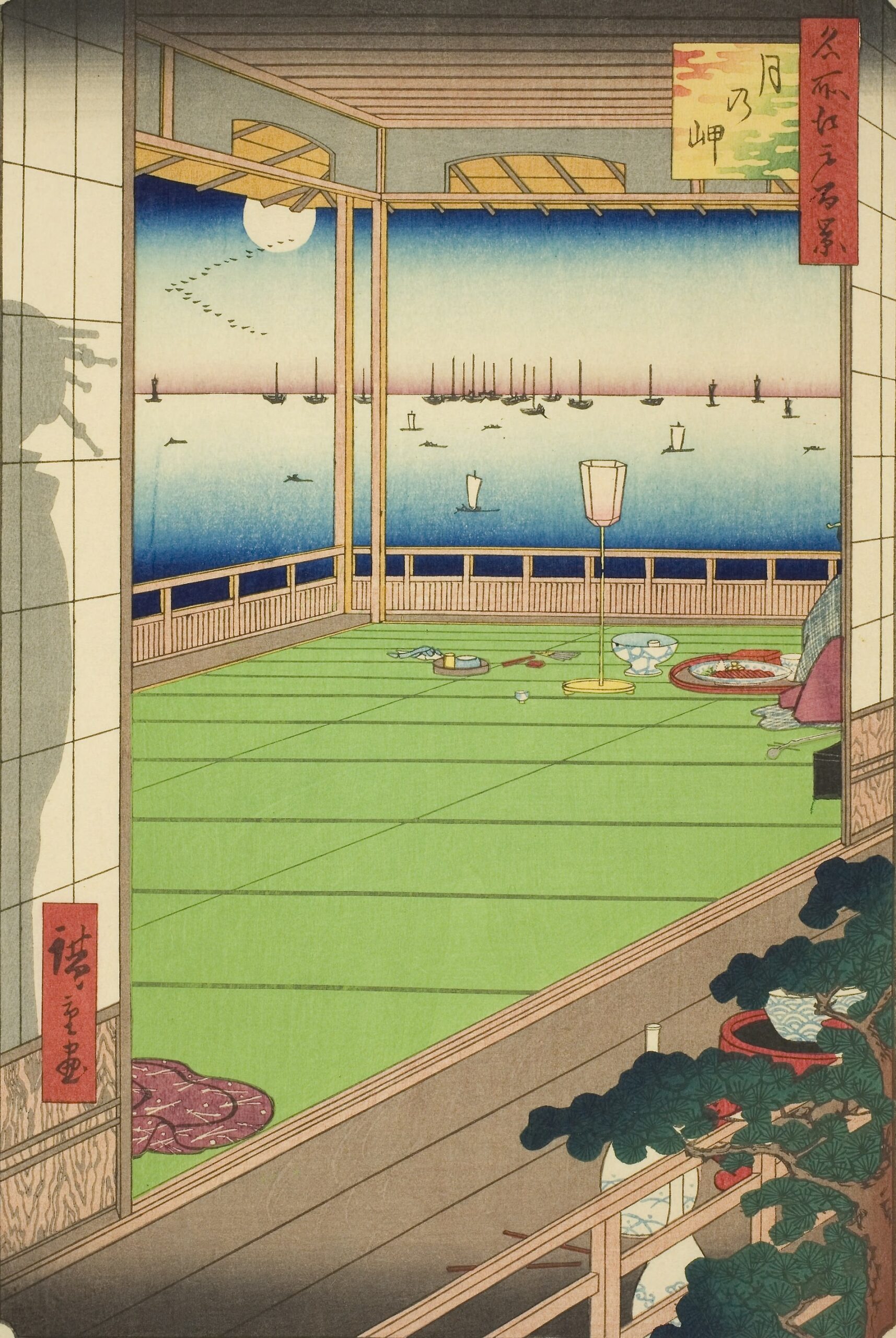
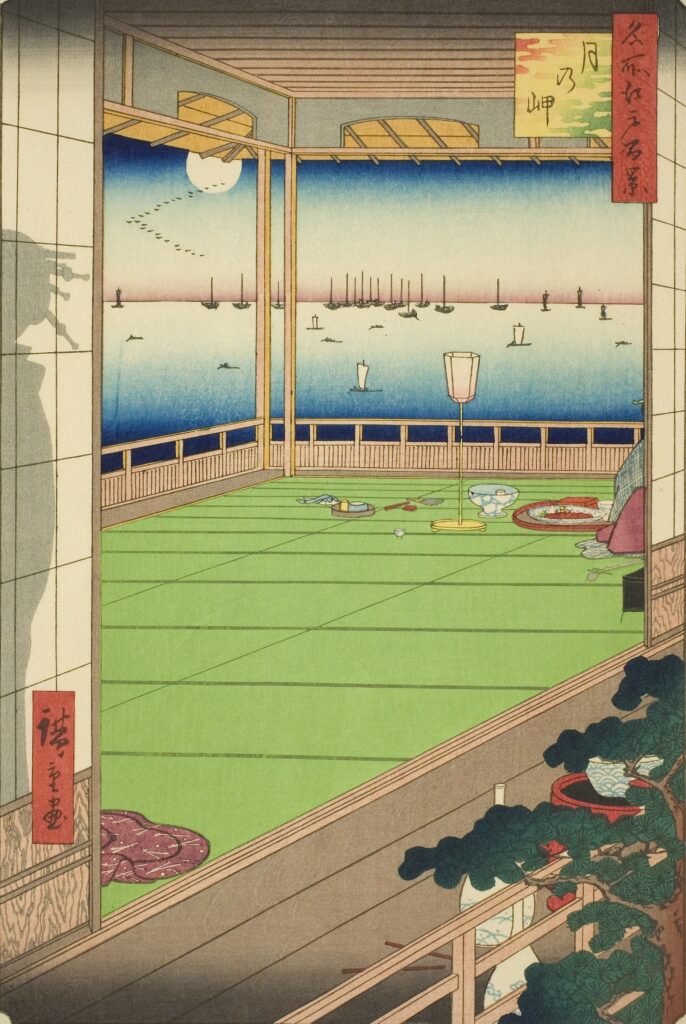
Utagawa Hiroshige-One Hundred Famous Views of Edo-83-Autumn-Cape of the Moon 歌川広重-名所江戸百景-83-秋-月の岬
Current Address: Mita, Hama-Rikyu Area, Minato Ward
Latitude and Longitude: Latitude: 35.6450, Longitude: 139.7510
Published: August 1857 Age: 61
Tourist Guide-Style Commentary: “Cape of the Moon”
■ Introduction
Utagawa Hiroshige’s “One Hundred Famous Views of Edo” is a masterpiece consisting of 119 illustrations vividly depicting Edo’s four seasons and famous places.
One of the illustrations, “Cape of the Moon,” is set in a scenic location downstream of the Sumida River.
The people of Edo had a custom of admiring the moon, and the harvest moon in autumn was a particularly popular event for moon-viewing.
This work, rich in emotion, depicts the harmony between human life and nature against the backdrop of a moonlit view from a cape jutting out over the river.
■ Cape Tsuki
“Cape Tsuki” is thought to be the name of a cape located in the lower reaches of the Sumida River, around what is now Tokyo’s Sumida and Koto wards.
While there are various theories about its exact location, it is described in geographical guidebooks from the late Edo period as a “famous spot for moon-viewing,” a scenic spot where a beautiful moonrise could be viewed from the riverside.
It is said that the cape came to be called “Cape Tsuki” because the scenery of watching the moon reflected on the river’s surface from the tip of the cape was exceptional.
For the people of Edo, the moon was an indispensable subject for waka, haiku, ukiyo-e, and more.
■ Highlights of the Painting
Remnants of banquets can be seen here and there.
The figures of courtesans are reflected on the shoji screens by lanterns and moonlight, indicating that this was “Cape Tsuki,” a famous spot for moon-viewing.
Usually, when people refer to “Cape Tsuki,” they are referring to the Mita Plateau west of Shibata-cho.
However, “Edo Souvenirs” (Edo Picture Book) refers to it as “Takanawa’s Cape Tsuki” and describes it as a famous moon-viewing spot. It seems likely that Hiroshige intended to depict the Shinagawa area in “Cape of the Moon.” However, since there are no teahouses like this in the Yatsuyama area, some believe the setting may have been Dozo Sagami, a famous brothel near the Yatsuyama area.
The banquet hall is equipped with a variety of items, including tobacco pouches, tobacco trays, lanterns, sashimi trays, cup washers, sake bottles, and chopsticks.
■ Walking around “Cape of the Moon” today
Although the exact location of “Cape of the Moon” has been lost, you can enjoy the riverside scenery depicted in Hiroshige’s painting by walking along the Sumida River.
Sumida Park and the Asakusa area are particularly popular moon-viewing spots.
The night view of the Sumida River with Tokyo Skytree in the background could be considered a modern-day version of “Cape of the Moon.”
Gazing at the moon reflected on the river’s surface and the night view, you can appreciate nature with the same feelings as people of the Edo period.
A houseboat cruise is one Edo cultural experience that can still be enjoyed today. Enjoying food and drinks while watching the moon floating on the river and the night view is a perfect re-creation of “Cape Moon.”
■ Tourist Guide Recommendations
- Sumida River Terrace Stroll
The riverside promenade stretching from Ryogoku to Asakusa is perfect for a stroll from dusk to night. - Houseboat Experience
This activity allows you to experience Edo’s moon-viewing culture in the modern day.
Enjoy the moon reflected on the river’s surface and the night view, and imagine Hiroshige’s ukiyo-e paintings. - Autumn Moon-Viewing Events
Moon-viewing events are sometimes held around the Sumida River and at Sensoji Temple to coincide with the harvest moon.