Utagawa Hiroshige – One Hundred Famous Views of Edo – 110 – Winter – Minami-Shinagawa Samezu Beach 歌川広重-名所江戸百景-110-冬-南品川鮫洲海岸
Current Address: Shibaura, Minato Ward
Latitude and Longitude: Latitude: 35.6444 Longitude: 139.7479
Published: February 1856 Age: 60
Tourist Guide-Style Commentary: “Minami-Shinagawa Samezu Beach”
■ Introduction
This is a painting from Utagawa Hiroshige’s “One Hundred Famous Views of Edo.”
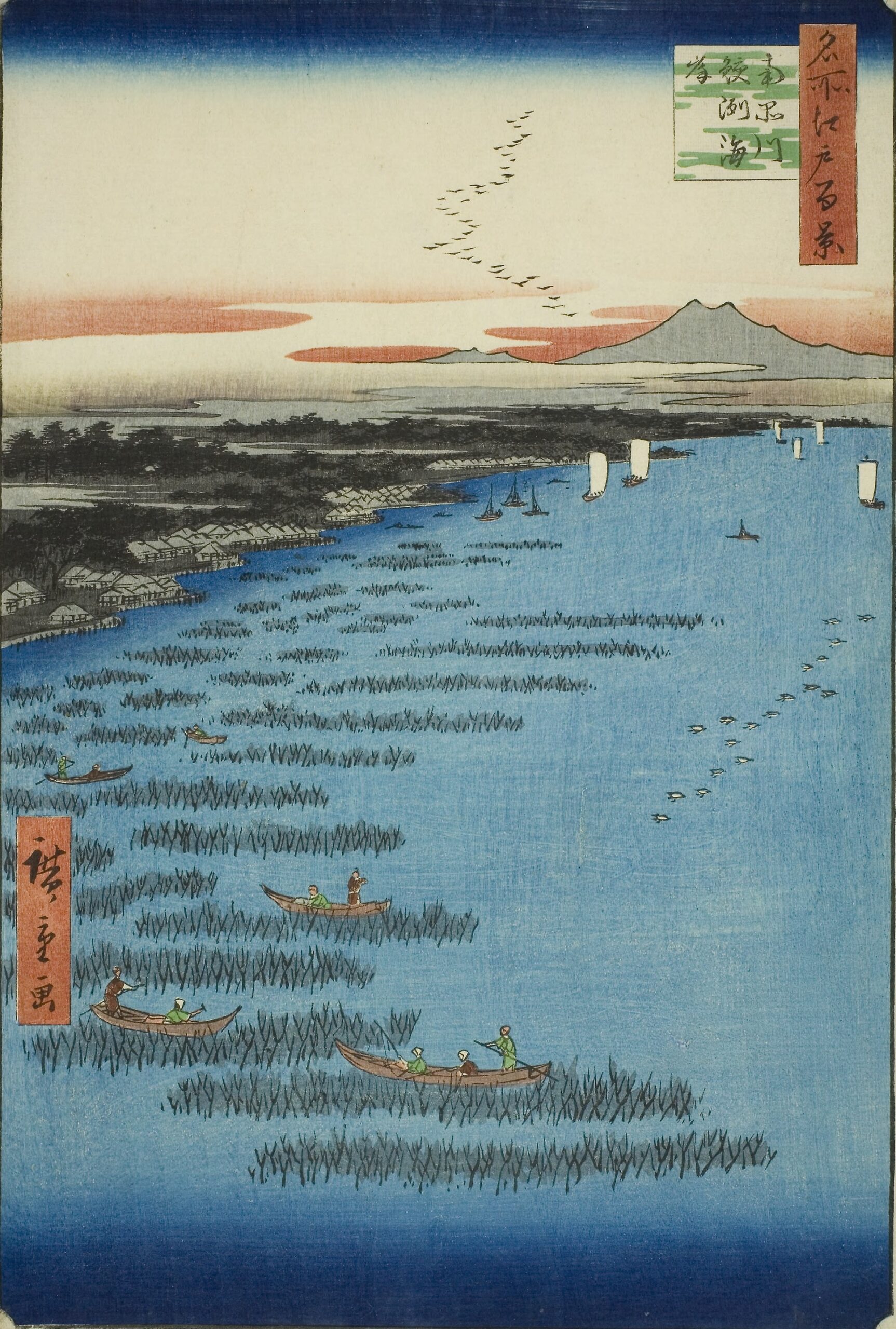
“Minami-Shinagawa Samezu Beach” is a seaside spot where the people of Edo could relax, and it also depicts a scenic spot that evokes the bustle of the road.
Samezu, located south of Shinagawa-juku, is a place where the sea and land meet closely, and many ukiyo-e prints depict common people enjoying clam digging and fishing.
Hiroshige painted this area with the vast expanse of ocean and a distant view of Mount Fuji in the background, condensing the charm of Edo’s travel and leisure activities into one piece.
■Samezu
This area is now the area around Minami-Shinagawa and Higashi-oi in Shinagawa Ward, Tokyo.
During the Edo period, it was a seaside town that stretched beyond Shinagawa-juku, a post town on the Tokaido Road.
The name is said to have originated from the large number of sharks that once inhabited the area, or from the underwater sandbar (sasu).
Samezu was widely known as a famous clam digging spot.
From early spring to summer, common people of Edo would head to the beach at low tide to dig for shellfish and enjoy the sea breeze.
■Highlights of the Painting
The view looks toward Edo, passing through Takanawa and Shinagawa on the Tokaido.
Shinagawa is where two sailing ships sail offshore, and Kaianji Temple lies below.
This temple was founded in 1251 after a wooden statue of Shokannon (Buddhist sage) was found in the belly of a large shark that surfaced in the sea off Shinagawa.
When this statue was delivered to the Kamakura shogunate, Hojo Tokiyori ordered the construction of a temple to house the statue.
The area was named “Sameshu” after the shark.
From winter to spring, people on the coast planted kelp trees, known as norihibi, in shallow waters and harvested the seaweed that attached to them.
Until the beginning of the Edo period, Asakusa nori was harvested in Asakusa, and by 1854 it was being cultivated in the Sameshu area.
The sleepy fishing village and coastline are captured from above, and the mountain in the distance is Mount Tsukuba.
■ Modern Samezu
Today, the Samezu coastline has been reclaimed, leaving no trace of the beach from that time.
Houses and roads have been developed where the land is now connected.
Samezu Hachiman Shrine, a shrine that dates back to the Edo period, is still worshipped by locals.
It is one of the few spots evoking the atmosphere of those days.
Today, when people hear the name “Samezu,” they probably think of the Samezu Driver’s License Examination Center.
Remembering that this area was once a recreational spot for commoners in the Edo period really gives you a sense of the passage of time.
■ Recommended Points from the Tourist Guide
- Strolling Along the Old Tokaido
The old Tokaido from Shinagawa-juku to Samezu retains a historic atmosphere.
Walking along stone monuments and old roads, the landscape depicted in Hiroshige’s paintings comes to life.
- Shinagawa Historical Museum
A facility where you can learn about the history of the Shinagawa post town and Samezu.
There’s also an exhibition of reproductions of ukiyo-e prints, helping you understand Hiroshige’s worldview. - Stroll along the Tokyo Bay coast
While the modern-day coastline is different from what it was back then, strolling along waterfront areas like Tennozu Isle and Shinagawa Seaside gives you a taste of the closeness between the sea and the city that Edo people felt.