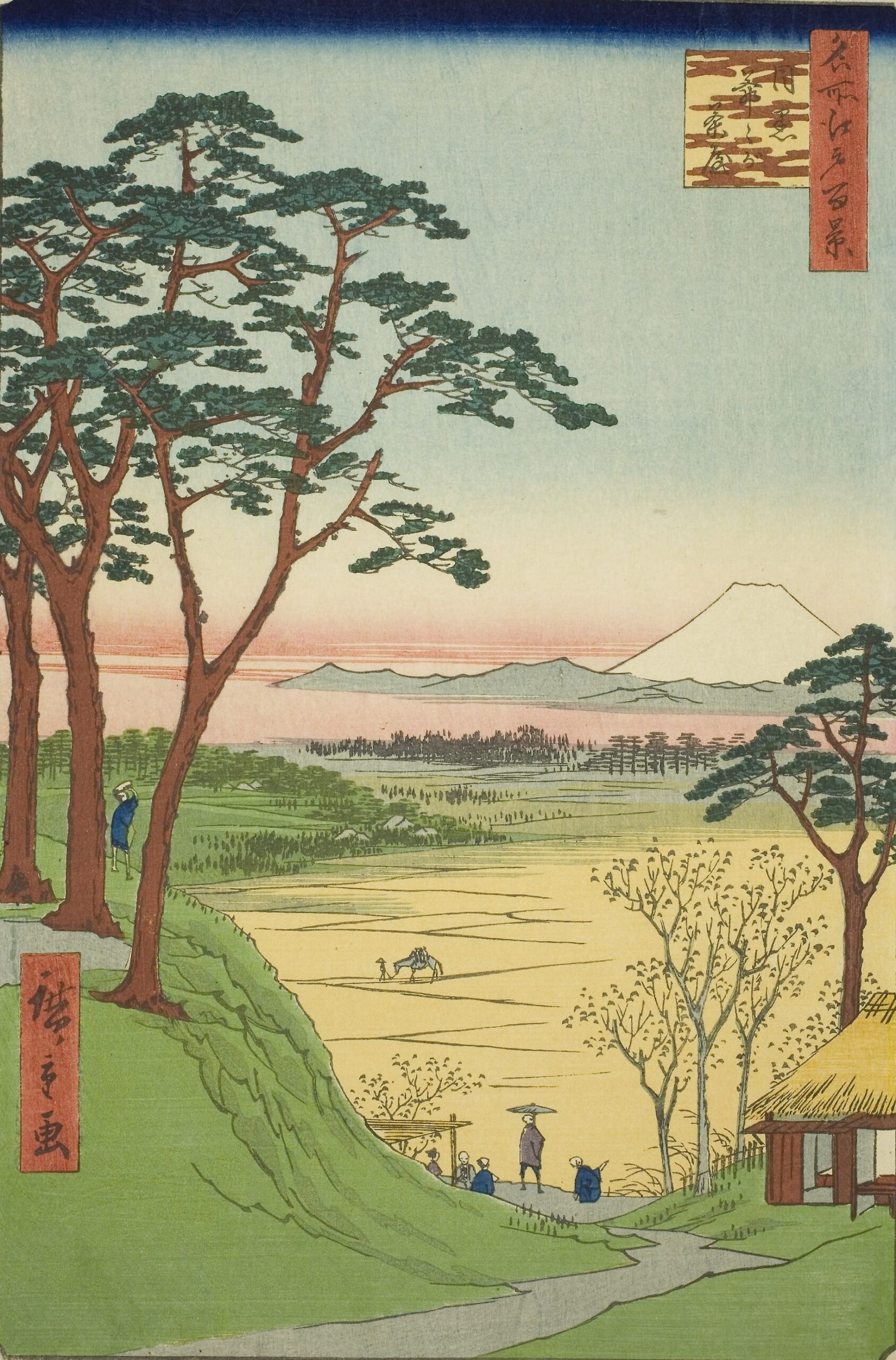
Utagawa Hiroshige-One Hundred Famous Views of Edo-85-Autumn-Meguro Jijiga-chaya 歌川広重-名所江戸百景-85-秋-目黒爺々が茶屋
Current Address: Near Meguro Fudo-son Temple, Meguro Ward
Latitude and Longitude: Latitude: 35.6335, Longitude: 139.7080
Published: April 1857 Age: 61
Tourist Guide-Style Commentary: “Meguro Jijiga-chaya”
■ Introduction
Utagawa Hiroshige’s “One Hundred Famous Views of Edo” is a series of ukiyo-e prints that vividly depict the four seasons of Edo and the lives of ordinary people.
One of the prints, “Meguro Jijiga-chaya,” is set in a teahouse located in what is now Meguro Ward, Tokyo.
This painting, set against the idyllic scenery of the outskirts of Edo, is a valuable piece that conveys the image of Meguro, a popular recreational destination for the common people.
For the people of Edo, Meguro was a “short trip spot” where they could enjoy a variety of entertainment, such as visiting temples and shrines, viewing autumn leaves, and admiring waterfalls.
The teahouses they stopped at along the way were an essential part of the tourist experience, and the “Jijiga Chaya” in particular was so popular that it was preserved as a famous spot in ukiyo-e prints.
■ What is Meguro Jijiga Chaya?
The “Jijiga” in the name is said to refer to the elderly owner who ran the teahouse.
It became so familiar to visitors that it came to be called “Jijiga’s Teahouse.”
Located on the way to Meguro Fudoson (Ryusenzhi Temple), it was a perfect stop for worshippers and vacationers.
It was a convenient rest stop, especially for common people visiting on foot from downtown Edo.
The teahouse served dumplings, amazake (sweet sake), seasonal sweets, and other treats, allowing travelers and pilgrims to satisfy their hunger and quench their thirst before setting off on their next stroll.
This teahouse culture was an essential part of Edo’s outings.
■ Highlights of the Painting
The area where Jijiga Chaya was located was known as the shogun’s falconry grounds.
It is said that one day, the third shogun, Iemitsu, rested at the teahouse and casually addressed the owner, Hikoshirō, as “Jijiga,” which is how the teahouse came to be called Jijiga Chaya.
There is also an anecdote about the eleventh shogun, Ienari, being treated to hospitality by Hikoshirō’s grandson when he visited the teahouse.
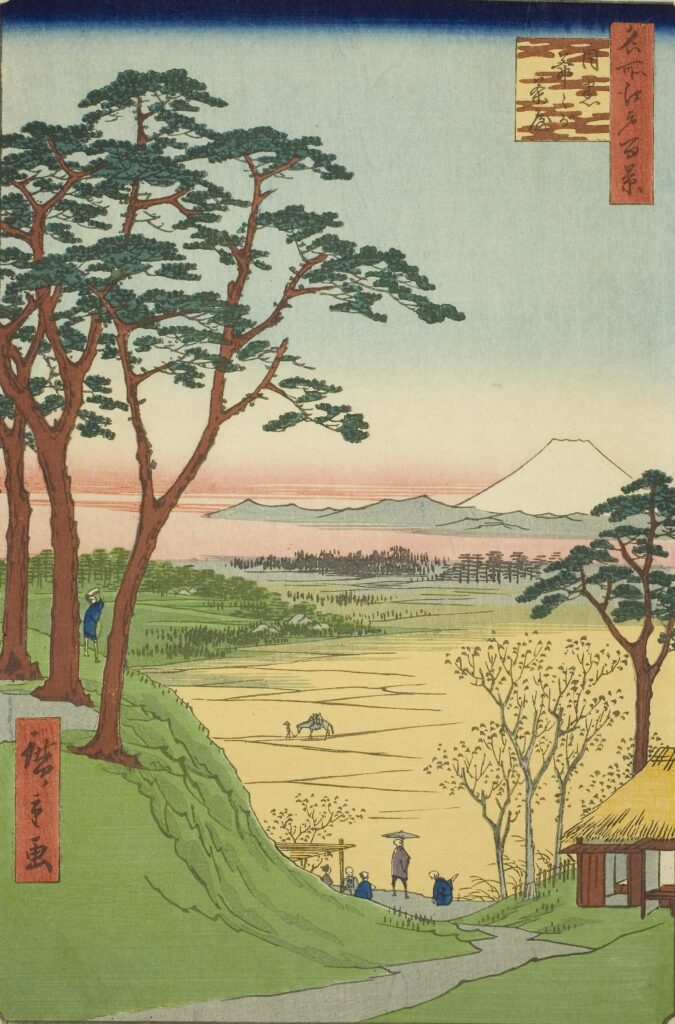
In the foreground, a person can be seen gazing at Mount Fuji from the hill on the left.
Following the slope, on the right, with a reed matted sunshade, is the Jijiga Chaya.
People are sitting here resting, while others are holding parasols and looking in the direction of Mount Fuji.
With an unobstructed view of Mount Fuji from here, the area was known as a scenic spot for viewing it.
Further down the slope is the Meguro River.
■ Walking around Modern-Day Meguro
The old man’s teahouse itself no longer exists.
Walking around the area around Meguro Fudoson and along the Meguro River, you can imagine the atmosphere of the leisure culture of the time.
Meguro Fudoson (Ryusei-ji Temple) is an ancient temple that still bustles with worshippers.
It welcomes people just as it did during the Edo period.
The temple grounds are rich in nature, allowing you to enjoy the colors of the four seasons.
A stroll along the Meguro River is famous for its rows of cherry blossoms in spring.
It remains a popular tourist destination today.
■ Recommended Points from the Tourist Guide
① Visiting Meguro Fudoson
You can relive the pilgrimage culture of the Edo period.
Even though there are no teahouses, you can still feel the atmosphere of a temple town.
② Cherry Blossoms along the Meguro River
Today, the natural beauty reminiscent of the landscapes painted by Hiroshige can be enjoyed through cherry blossoms and autumn leaves.
③ Visit sweet shops and cafes: While reminiscing about the “old man’s teahouse” of the Edo period, you can take a break at a sweet shop or cafe in the area and enjoy a modern-day “teahouse experience.”