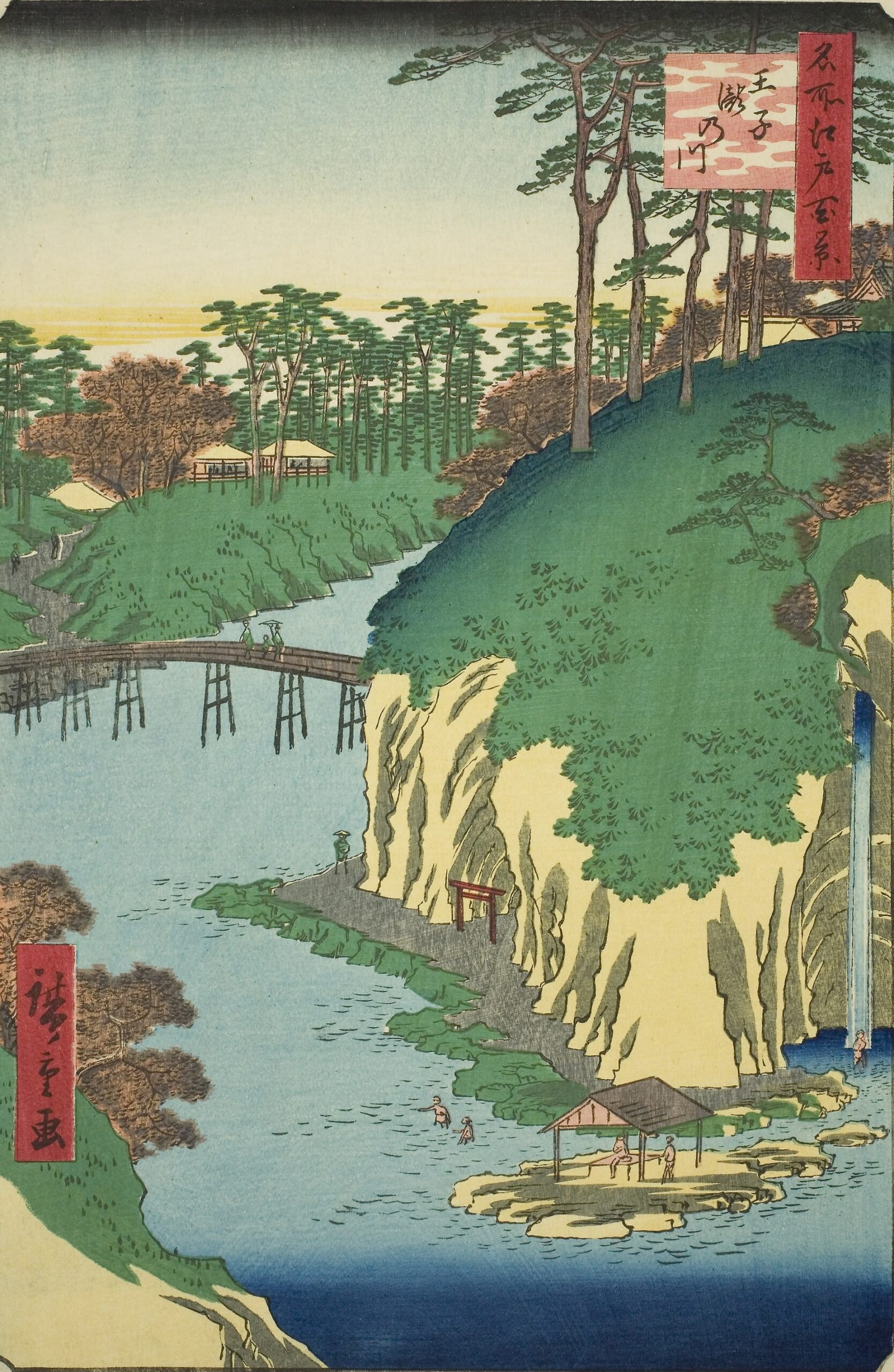
Utagawa Hiroshige-One Hundred Famous Views of Edo-89-Autumn-Oji Takinogawa 歌川広重-名所江戸百景-89-秋-王子瀧乃川
Current Address: Takinogawa, Kita Ward
Latitude and Longitude: 35.7440, Longitude: 139.7290
Published: April 1856 Age: 60
Tourist Guide-Style Commentary: “Oji Takinogawa”
■ Introduction
Among Utagawa Hiroshige’s “One Hundred Famous Views of Edo,” “Oji Takinogawa” is a masterpiece that simultaneously depicts the refreshing coolness of nature and the leisure activities of ordinary people.
The painting depicts the area near Oji in Kita Ward, Tokyo, where the Shakujii River forms a valley known as the Otonashi River.
The people of Edo visited this area as a perfect summer retreat to cool off.
Hiroshige vividly depicts the cascading waterfall, the greenery of the valley, and people enjoying the river, capturing the natural beauty of the Edo region and the enjoyment of ordinary people in a single ukiyo-e.
■ History of Oji and the Otonashi River
Although it is now called the Shakujii River, it has been affectionately known as the “Otonashi River” in the Oji area.
The narrow river, which cuts through the rock face and creates a beautiful valley, is said to have been named “Otonashi River” due to the reverberating sound of the river.
Oji has long been home to religious centers such as Oji Inari Shrine and Oji Gongen, and was bustling with pilgrims.
The “temple and shrine + leisure” culture, which combined visiting temples and shrines with enjoying nature, supported the travel mood of Edo commoners.
Edo’s summers were hot and humid, so it was customary to head to the waterside to cool off.
Teahouses and restaurants lined the Otonashi River, where people enjoyed river fish dishes and relaxed on the riverside terraces, creating an atmosphere reminiscent of the Gion nouryo-yuka (cozy terraces) of the Gion district.
■ Highlights of the Painting
The area downstream of the Shakujii River around Oji is known as the “Waterfall River.”
Both banks of the river are scenic, steep valleys, famous for their cherry blossoms in spring and autumn foliage.
With Mount Asuka to the east and Oji Gongensha Shrine to the west across the river, the area is always bustling with activity.
At the end of the meandering river, Matsubashi Bridge is on the left.
A path leads to Benten Falls on the right.
A torii gate along the way is a cavern.
Benzaiten is enshrined here.
Further ahead, at Benten Falls, people bathe in the waterfalls and others take a break in the rest hut.
Painted on top of the cliff is Kongoji Temple, dedicated to Benzaiten.
This temple is also known as Momijidori Temple, and in autumn, many visitors flock here to enjoy the maple leaves.
■ The Modern-Day Ojitaki River
Today, the area along the former Otonashi River has been developed as Otonashi Waterfront Park.
The river has been covered.
A man-made stream has been restored within the park, allowing visitors to enjoy the ambiance of the past.
Remains of original stonework and bridges remain around the park, evoking the Edo period.
With cherry blossoms in spring and autumn foliage, it remains a beautiful strolling spot, offering beautiful scenery throughout the seasons.
Oji Inari Shrine and Oji Shrine, which were once visited in conjunction with riverside activities, still stand today.
The “Fox Procession” held during the New Year is particularly well-known nationwide and attracts many tourists.
■ Recommended Tourist Guide Points
- Experience the Pure Water Feel at Otonashi Water Park: A relaxing spot where you can stroll while listening to the babbling of the stream.
- Visit Oji Inari Shrine: This shrine is known for the fox fire legend.
The view from the grounds evokes the richness of Oji’s nature, unchanged since the Edo period. - Savor River Fish
Even today in Oji, there are many long-established restaurants and izakayas that serve river fish dishes.