Utagawa Hiroshige – One Hundred Famous Views of Edo – 107 – Winter – Fukagawa Kiba 歌川広重-名所江戸百景-107-冬-深川木場
Current Address: Kiba, Koto Ward
Latitude and Longitude: Latitude: 35.6699, Longitude: 139.8134
Published: August 1856 Age: 60
Tourist Guide-Style Commentary: “Fukagawa Kiba”
■Introduction
Utagawa Hiroshige’s “One Hundred Famous Views of Edo” is a series of ukiyo-e prints that vividly capture the seasons of Edo and the lives of ordinary people.
One of these prints, “Fukagawa Kiba,” depicts Fukagawa, a lumber collection center that supported Edo’s development.
This was a source of lumber essential to Edo’s carpentry and architectural culture.
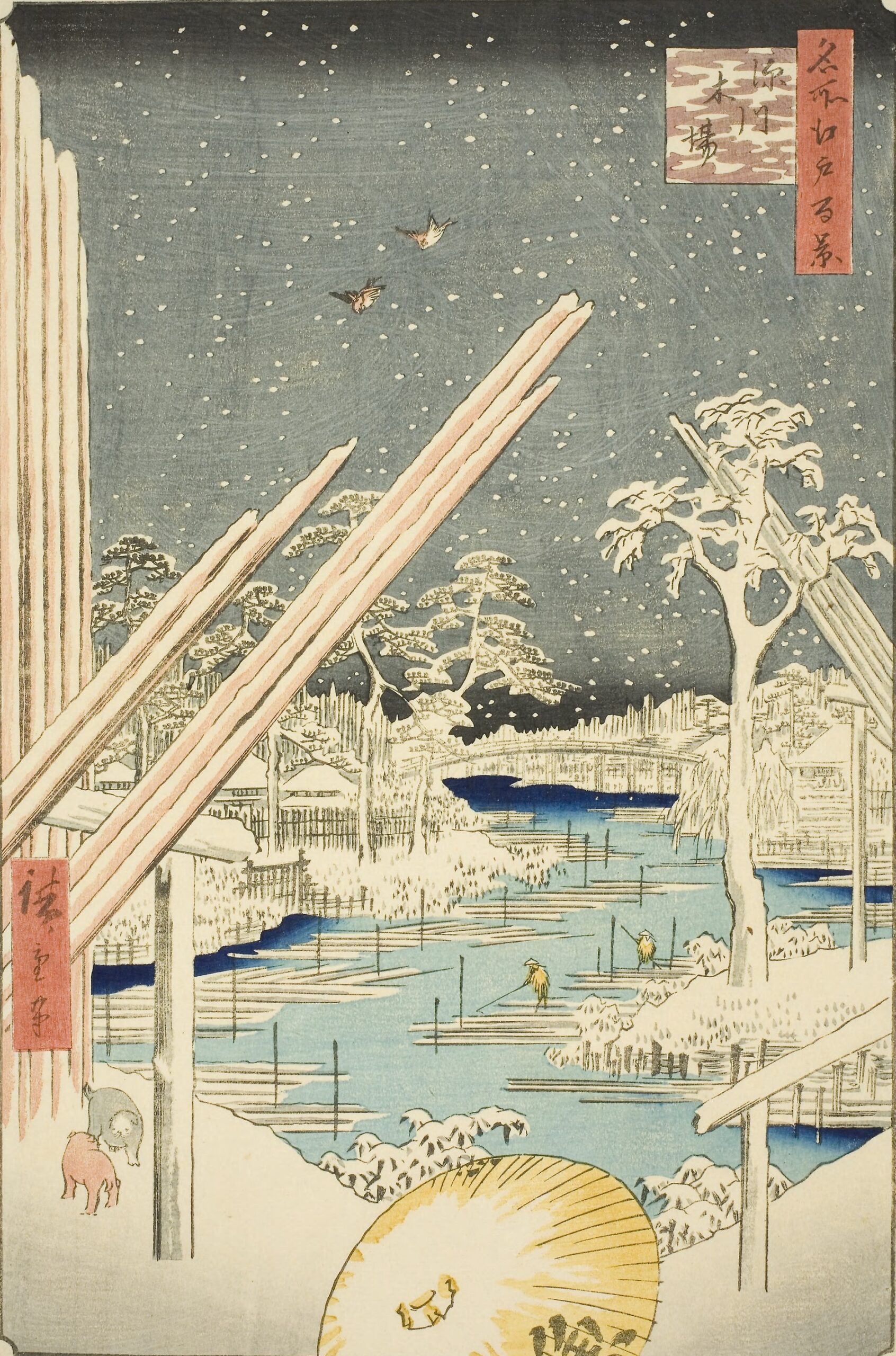
The ukiyo-e vividly depicts lumber floating on the waterfront and people, conveying the atmosphere of a bustling port town.
■About Fukagawa Kiba
Fukagawa Kiba, located near present-day Kiba in Koto Ward, was a vast lumberyard near the mouth of the Sumida River during the Edo period.
Lumber transported by raft from various locations was collected here and supplied to the city of Edo.
Originally located along the Nihonbashi River, the lumberyards were relocated due to the risk of fire and consolidated in Fukagawa from the late 17th century onward.
From then on, Fukagawa Kiba became the “heart of supporting Edo’s carpenters,” fulfilling all of Edo’s lumber needs, from the construction of Edo Castle to the construction of townhouses for commoners.
A vibrant town filled with lumber merchants and carpenters, the lumberyard craftsmen who performed the heavy labor were so strong that they were nicknamed “Kiba’s Catfish” (Namazu, Catfish of the Lumberyard), and they played an important role in Edo’s popular culture.
■Highlights of the Painting
This is an area lined with lumber wholesalers.
Initially, each shop was located near Edo Castle or elsewhere.
Following orders from the shogunate, they all relocated to this reclaimed land in Fukagawa to prevent fires.
Hence, the Fukagawa lumber yard was named “Fukagawa Kiba.”
Moats crisscrossed the yard to transport the lumber, and here you can see laborers, known as “kawanami,” handling the lumber with ease.
Fires were frequent in Edo, so lumber was in high demand, and lumber merchants amassed great wealth.
They built their own mansions in this lumber yard.
The umbrella of a man walking through the snow in the foreground features the character “fish” (fish), a reference to publisher Eikichi Uoya.
■Fukagawa Kiba Today
The former site of the lumber yard has been developed as Kiba Park, a vast green space that serves as a place of relaxation for local residents.
The place name “Kiba,” a reminder of its history as a lumber collection center, still remains.
You can learn about Kiba’s former history and the lumber distribution system at places like the Fukagawa Edo Museum and Kiba Waterfront Park.
■ Tourist Guide Recommendations
① Stroll through Kiba Park
As you leisurely stroll through the vast grounds, imagine the landscape of rows of lumber once lined up here. Enjoy the cherry blossoms in spring and the autumn leaves in fall.
② Fukagawa Edo Museum
Through exhibits recreating the streets of Edo, you can learn about the lives of the people of Kiba.
Comparing the exhibits with ukiyo-e prints will deepen your understanding.
③ Savor Fukagawa Meshi
Fukagawa Meshi, a local dish that supported heavy laborers, remains a local specialty today.
Fukagawa Meshi is rice cooked with clams.