Utagawa Hiroshige – One Hundred Famous Views of Edo – 104 – Winter – Senju Ohashi Bridge 歌川広重-名所江戸百景-104-冬-千住の大はし
Current Address: Senju Ohashi Bridge, Adachi Ward
Latitude and Longitude: Latitude: 35.7447, Longitude: 139.8041
Published: February 1856 Age: 60
Tourist Guide-Style Commentary: “Senju Ohashi Bridge”
■Introduction
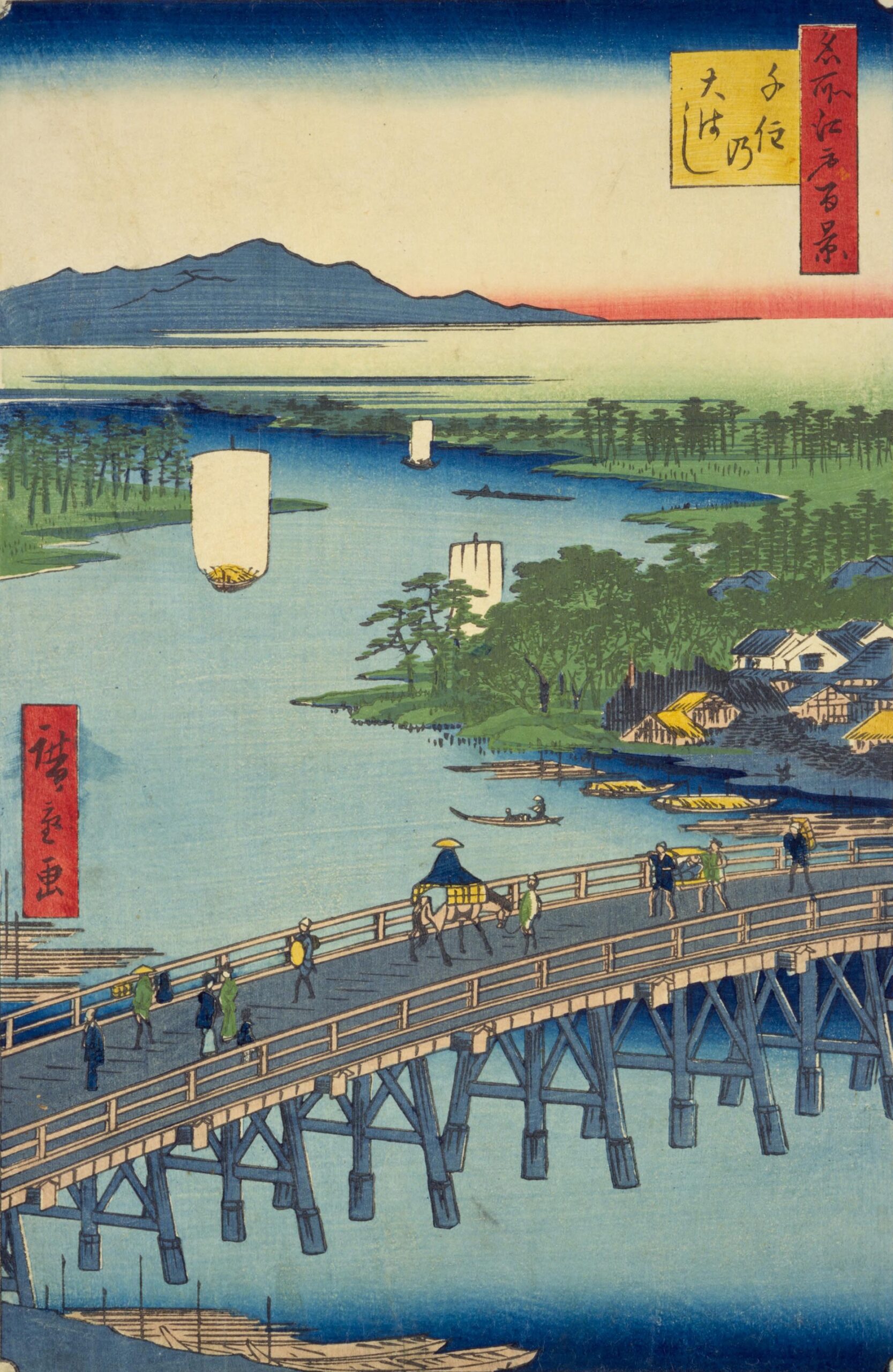
In Utagawa Hiroshige’s “One Hundred Famous Views of Edo,” “Senju Ohashi Bridge” is a work featuring a large bridge spanning the Sumida River.
Senju was the northern gateway during the Edo period and prospered as the first post town on the Nikko Kaido and Oshu Kaido roads.
Located at this strategic transportation hub, the “Ohashi Bridge” was an important bridge connecting Edo and the northern provinces, and Hiroshige depicts the people passing by and the lush river scenery.
■The History of Senju and the Ohashi Bridge
Senju was one of the four Edo post towns (Shinagawa, Itabashi, Naito Shinjuku, and Senju), and the first post town on the Nikko Kaido and Oshu Kaido roads traveling north.
It was a vital stop for feudal lords’ processions, travelers, and merchants on their alternate attendance routes, and its lively streets lined with inns, teahouses, and wholesalers.
Numerous bridges have been built over the Sumida River, but Senju Ohashi Bridge is particularly historic.
Built in 1594, when Tokugawa Ieyasu entered Edo, it is considered to be Edo’s first Sumida River bridge.
This bridge facilitated travel along the highway, and Senju flourished greatly.
■Highlights of the Illustration
This is the first work in the series to be published, marking the northern gateway to Edo.
It was built in 1594 when Ina Bizennokami was magistrate.
It is said that a bridge was built instead of a ferry due to the heavy traffic.
As a gateway to the Ou Kaido and Nikko Kaido roads, it was used by many people on their alternate attendance trips and pilgrimages to Nikko.
Originally called Ohashi Bridge, it was the only bridge spanning the Sumida River system until the construction of Ryogoku Bridge.
The cypress wood procured by Date Masamune, lord of the Sendai domain, was extremely strong and is said to have lasted nearly 300 years.
Three Takase boats can be seen on the Arakawa River.
There is a storehouse at the end of the bridge, and a Nokakeuma horse is passing across the center.
The Nikko Mountains can be seen in the distance.
■Modern Senju Ohashi Bridge
The current Senju Ohashi Bridge is made of reinforced concrete and continues to serve as a key transportation hub, carrying the Keisei Main Line and National Route 4 (the former Nikko Kaido).
While the surrounding area is undergoing redevelopment, it still retains the atmosphere of a post town, with shopping streets and long-established shops scattered throughout.
The area around Senju Ohashi Station offers convenient access to the city center.
There are also historical signs and sites nearby that explain the town’s history.
Senju Honcho Shopping Street retains the bustle of a post town, lined with long-established Japanese confectionery shops and restaurants.
■ Recommended Tourist Guide Route
- Stroll across Senju Ohashi Bridge
Walk across the modern bridge and watch the Sumida River flow while imagining Hiroshige’s paintings. - Historical Tour of Senju-juku
Visit historical sites that convey the atmosphere of a post town (such as the Yokoyama Residence, stone Buddha statues, and the remains of Senju Honjin) to get a real feel for Hiroshige’s time. - Experience Market Culture
In the area where Senju Fish Market once stood, you can still enjoy remnants of the market and its food and drink culture.