Utagawa Hiroshige – One Hundred Famous Views of Edo – 108 – Winter – Fukagawa Suzaki Jumantsubo 歌川広重-名所江戸百景-108-冬-深川州崎十万坪
Current Address: Near Suzaki and Toyosu, Koto Ward
Latitude and Longitude: Latitude: 35.6580, Longitude: 139.8005
Published: May 1857 Age: 61
Tourist Guide-Style Commentary: “Fukagawa Suzaki Jumantsubo”
■Introduction
Utagawa Hiroshige’s “One Hundred Famous Views of Edo” depicts not only the city of Edo, but also many of its surrounding natural beauty and recreational spots.
“Fukagawa Suzaki Jumantsubo” is set at the southern end of Fukagawa, near present-day Suzaki in Koto Ward.
With the vast tidal flats of the seaside as a backdrop, the painting depicts Edo residents enjoying clam digging and strolling.
It was a prime leisure spot for the common people, where they could enjoy the bounty of the sea and nature to their heart’s content.
■Suzaki Jumantsubo
The area facing Tokyo Bay, stretching from present-day Kiba in Koto Ward south of Toyocho, was called “Suzaki.”
The area known as “Jumantsubo” in particular is known for its vast tidal flats.
The name “Jumantsubo” comes from the fact that the tidal flats were so vast, measuring 100,000 tsubo (approximately 330,000 square meters).
Bustling with people enjoying clam digging, fishing, and strolling along the seaside, the area was a familiar tourist destination for the common people of Edo.
Clam digging, especially from spring to summer, was a popular pastime for families and friends.
■Highlights of the Painting
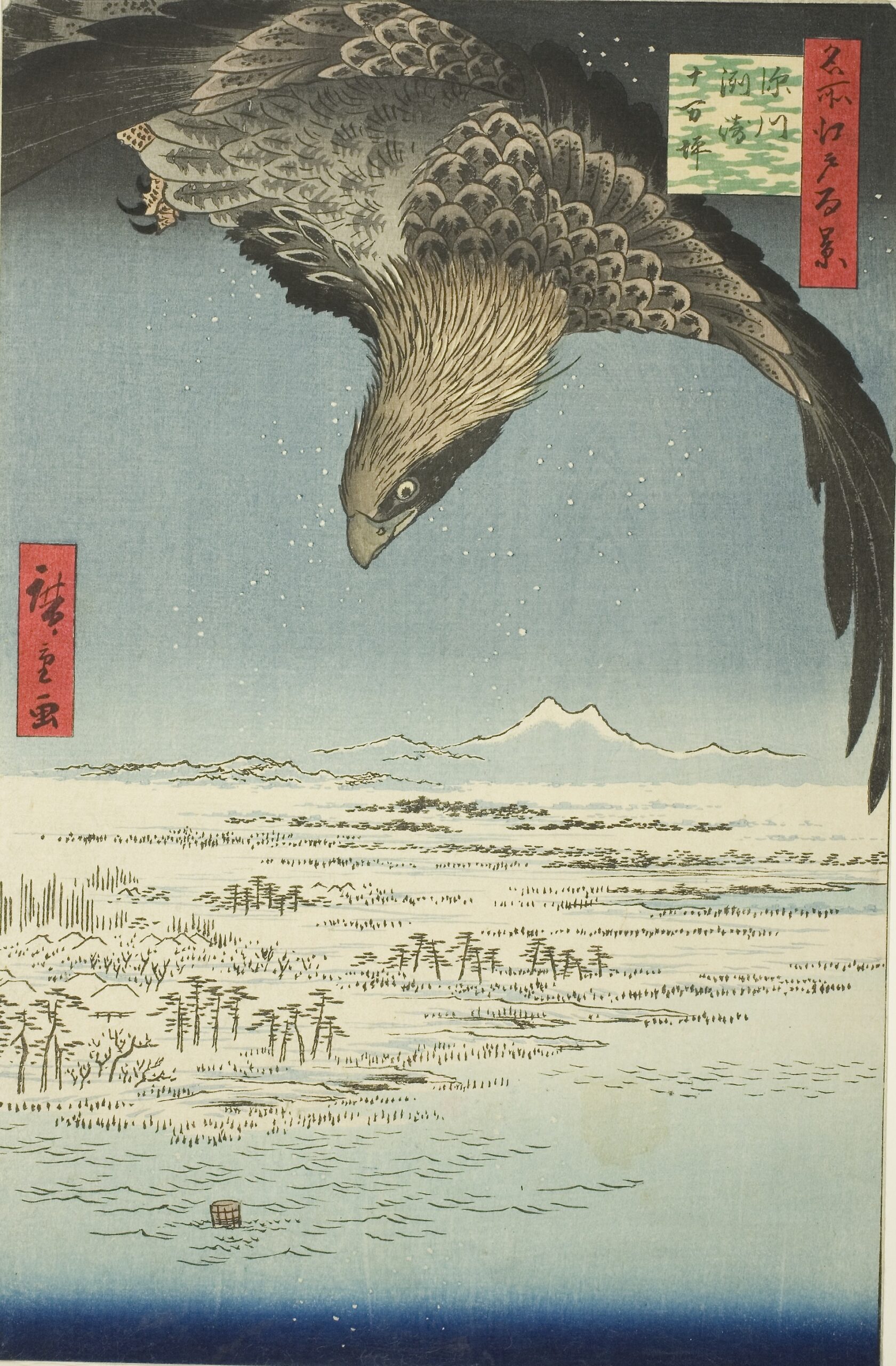
A large eagle soars above the desolate, snow-covered land.
Fukagawa is viewed from the eagle’s perspective, with Mount Tsukuba visible in the distance.
Suzaki is where Benzaiten was enshrined along the coast, and was a famous spot to worship on the first day of the new year.
Also known as the Sumida River tidal flats, Jumantsubo was a swampy area overgrown with reed grass (Roteki) and a dumping ground for garbage (jinkai: trash, dust, and dirt) from all over Edo. Reed grass is a collective term for the reeds and ogi (reeds) that grow in clusters along water’s edges.
In 1723, townspeople Omiya Senda Shobei and Igoya Manzo spent three years developing the area.
Due to extremely strong sea breezes, the area was uninhabitable during the Edo period.
The shogunate established a foundry there, but it was eventually abandoned due to inconvenience.
It later became the property of Matsudaira Satsuma-no-kami, and in 1796, the Hitotsubashi family.
■Modern-day Fukagawa Suzaki
The tidal flats disappeared due to reclamation after the Meiji period, and are now the residential and industrial areas around Suzaki and Minami-Sunamachi in Koto Ward.
The Susaki area is home to Susaki Benten, a deity enshrined in the area, and flourished as a place of worship for safe sailing.
It remains today as Susaki Shrine, beloved by locals.
While the tidal flats themselves no longer exist, the surrounding place names and a visit to Susaki Shrine help to evoke the bustling seaside vibes of Edo.
■Recommended Points from the Tourist Guide
- Visit Susaki Shrine
Experience remnants of Benten worship that have continued since the Edo period. - Stroll through the Kiba and Fukagawa Area
Visit Kiba, once a thriving lumber town, and the Fukagawa Edo Museum to understand the connection between the sea and Edo life. - Sumida River Cruise
Boat along the river to Tokyo Bay and relive the boating and clam-digging experiences of Edo commoners.