Utagawa Hiroshige – One Hundred Famous Views of Edo – 22 – Spring – Hiroo Furukawa River – Commentary 歌川広重-名所江戸百景-22-春-廣尾ふる川 解説
Current Address: Near Minami-Azabu 2-chome, Minato Ward
Latitude and Longitude: Latitude 35.6540, Longitude 139.7120
Published: July 1857 Age: 61
Commentary
<1> Introduction
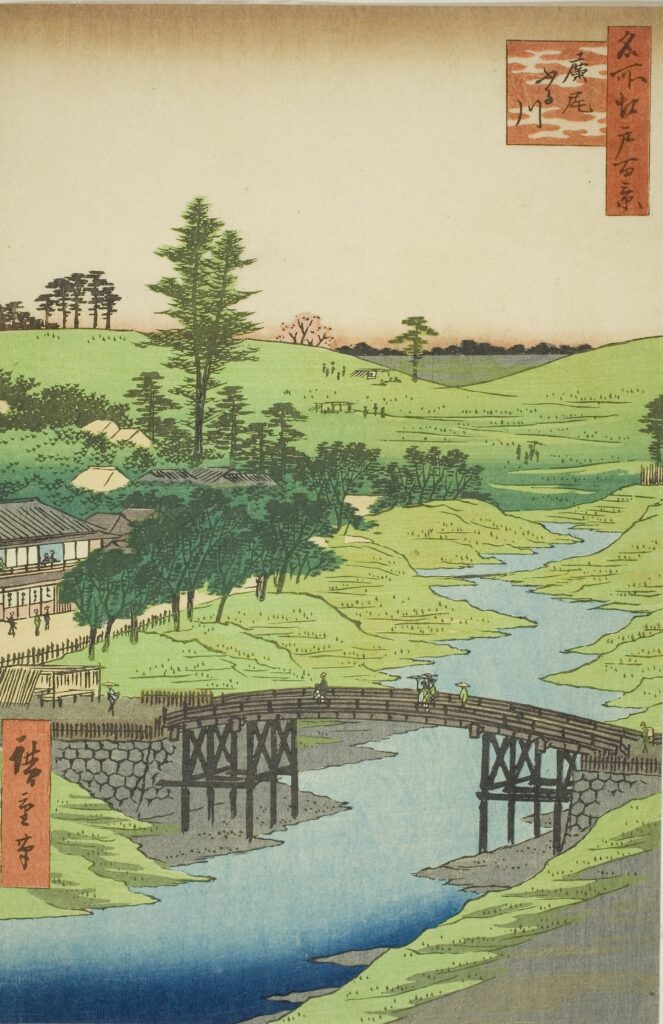
“Hiroo Furukawa River” depicts the Furukawa River, which flowed near present-day Hiroo, Shibuya Ward.
Flowing through southern Edo, this river was a major artery of life, emptying into Edo Bay, and a famous spot for its rural landscapes and waterfront charm.
The painting captures scenes of abundant nature, a step away from the hustle and bustle of the city, conveying the atmosphere of the four seasons.
<2> About the Furukawa River
The downstream section of the Shibuya River, which flows through Azabu, passes through Hiroo and Shirokane, and empties into Tokyo Bay at Shibaura, Minato Ward, is called the “Furukawa River.”
During the Edo period, the river not only provided water for daily life and agriculture, but was also used for transporting goods by boat.
The name Hiroo is said to derive from “vast ridge,” and the Furukawa River flows through a rural landscape.
<3> Highlights of the painting
By capturing the water in a large area and placing willow trees and thatched-roof farmhouses along the river, the painting conveys the idyllic atmosphere of the outskirts of Edo.
Depicting people crossing small bridges and using the river, the painting depicts a landscape in which common people’s lives coexist in harmony with nature.
The gentle ridge of the Musashino Plateau in the background emphasizes Hiroo’s natural abundance despite being located within the Edo metropolitan area.
In the center is Yonobashi Bridge, also known as Sagamidonobashi Bridge.
The Furukawa River is known as the Shibuya River upstream, the Shinbori River and the Akabane River downstream, and flows into the sea at Shinagawa.
On the left is Owariya, founded in 1811.
<4> The Atmosphere of Hiroo and Furukawa in the Edo Period
A tranquil rural landscape lined with fields and waterwheels spread out before you.
A suburban recreational area a short journey from central Edo, it was also a place of relaxation for the common people.
Haiku poets and artists visited this riverside and left their mark on it in their works.
<5> Furukawa and Hiroo Today
Today, Furukawa River has been culverted and revetments have been constructed, leaving little trace of its former glory.
A promenade has been constructed along the river, providing a walking trail for local residents.
Today, Hiroo is a cosmopolitan town home to embassies and international schools.
With sophisticated cafes and shops lining the streets, it looks completely different from the rural landscape of the Edo period.
A walk around Furukawa Bridge and Tengenji Bridge allows you to sense the remnants of the riverbed.
<6> Tourist Guide
① Stroll Around Furukawa
Following the flow from the Shibuya River to Furukawa River, you can experience the transition of the city from Edo to Tokyo.
② Strolling Around Hiroo
Edo’s rural landscape has now transformed into a sophisticated, cosmopolitan city.
Comparing Hiroshige’s paintings with the modern-day landscape clearly shows the dramatic changes.
③ Visiting Museums and Historical Sites
Many historical sites and art museums are dotted around Hiroo, Shirokane, and Azabu.
We recommend taking a stroll while searching for vestiges of the nature and culture depicted in ukiyo-e prints.