Utagawa Hiroshige – One Hundred Famous Views of Edo – 23 – Spring – Meguro Chiyokaike Pond 歌川広重-名所江戸百景-23-春-目黒千代か池 解説
Current Address: Tokyo Metropolitan Teachers’ Training Center, Shimomeguro 1-chome, Meguro-ku
Latitude and Longitude: Latitude 35.6339, Longitude 139.7075
Published: July 1856 Age: 60
Explanation
<1> Introduction
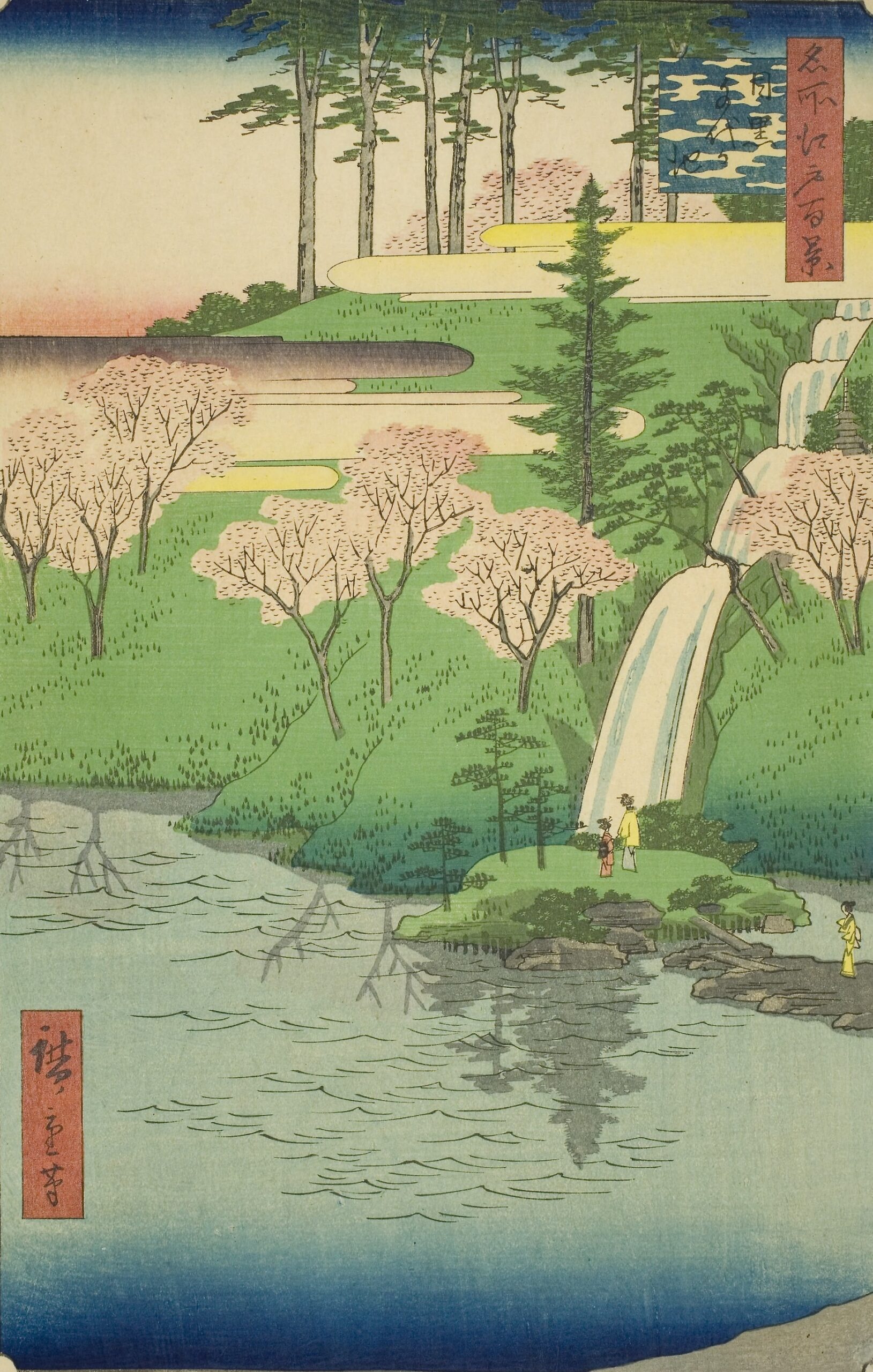
“Meguro Chiyokaike Pond” is set at a pond in the Meguro area.
It introduces one of the scenic spots beloved by Edo citizens.
While the pond is now largely forgotten, Hiroshige made it an immortal record.
<2> About Chiyokaike Pond
Meguro is located at the southern end of the Musashino Plateau, an area rich in spring water and home to numerous ponds and rivers.
Chiyokaike Pond was one of those small ponds fed by spring water.
The name Chiyogaike Pond is said to come from the fact that Nitta Yoshioki’s lover, Chiyo, threw herself into the pond after hearing that Yoshioki had been killed at Yaguchi Ferry on the Rokugo River.
Furthermore, the area was originally called Yarigasaki, but it came to be called Chiyogasaki.
<3> Highlights of the Painting
The water surface of the pond occupies most of the painting, and the reflection of the sky and greenery creates a pure and tranquil space.
Willows, pine trees, and seasonal flowers grow around the pond’s edge, delighting the eyes of visitors.
The abundance of nature and the coolness of the pond are in harmony.
People are depicted strolling along the pond’s shore, indicating its character as a recreational spot for the common people.
The ridgeline of the Musashino Plateau stretches out in a relaxed manner, creating a sense of the expansive nature unique to the outskirts of Edo.
A large pond called Chiyogaike stood at the secondary residence of Lord Matsudaira, lord of Shimabara Domain.
A pine tree stood by the pond, on which Chiyo hung her clothes when she jumped into the water, and it came to be called the “Kimonokake Matsu.”
<4> Meguro and the Culture of Ponds in the Edo Period
Meguro is home to many famous religious sites, such as Meguro Fudoson and Meguro Fuji.
Chiyo-kaike Pond was a popular stop along the way for outings and pilgrimages.
Ponds and streams were essential for drinking water and irrigation, and were central to daily life.
For the common people of Edo, cooling off by a pond was a summer pastime.
<5> The Remains of Chiyo-kaike Pond Today
Unfortunately, Chiyo-kaike Pond itself has been filled in and no longer exists.
The surrounding area has been developed into residential and commercial areas, and the name of the pond has largely been forgotten.
Many remains of springs and small streams remain in Meguro, providing a glimpse into the water environment of the Edo period.
There are many places to enjoy nature and culture, including Meguro Fudoson (Ryusenzhi Temple), the promenade along the Meguro River, and Meguro Gajoen Garden.
<6> Tourist Guide
1. Stroll Alongside Meguro Fudoson
The area of Meguro, where Chiyogaike Pond once stood, was a major tourist destination for commoners who visited the temple and visited the temple.
The atmosphere of the approach and temple town still remains, making it the perfect place for a historical stroll.
2. Cherry Blossoms Along the Meguro River
In spring, the area along the Meguro River is a famous cherry blossom viewing spot..