Utagawa Hiroshige – One Hundred Famous Views of Edo – 24 – Spring – Meguro Shinfuji – Commentary 歌川広重-名所江戸百景-24-春-目黒新冨士 解説
Current Address: Near Nakameguro 2-chome, Meguro-ku
Latitude and Longitude: Latitude 35.6340, Longitude 139.7065
Published: April 1857 Age: 61
Commentary
<1> Introduction
Meguro Shinfuji conveys the unique culture of Edo people, who combined worship of Mount Fuji with a sense of playfulness.
At the time, small artificial mounds modeled after Mount Fuji, known as “fujizuka,” were constructed throughout Edo.
Meguro Shinfuji was one of these, a popular spot where commoners could easily enjoy “mountain climbing” and worship.
<2> What is Meguro Shinfuji?
This fujizuka was built by Fuji-ko followers in the late Edo period.
As the name “Shinfuji” suggests, it was a relatively new fujizuka, even within Edo.
These man-made mounds, only a few meters high, offered panoramic views of Meguro upon their ascent.
For common people who found it difficult to climb Mount Fuji, fujizukas were sacred places where they could perform the “pilgrimage to the mountain” on their behalf.
It was believed that climbing them would bring the same blessings as visiting Mount Fuji.
<3> Highlights of the Painting
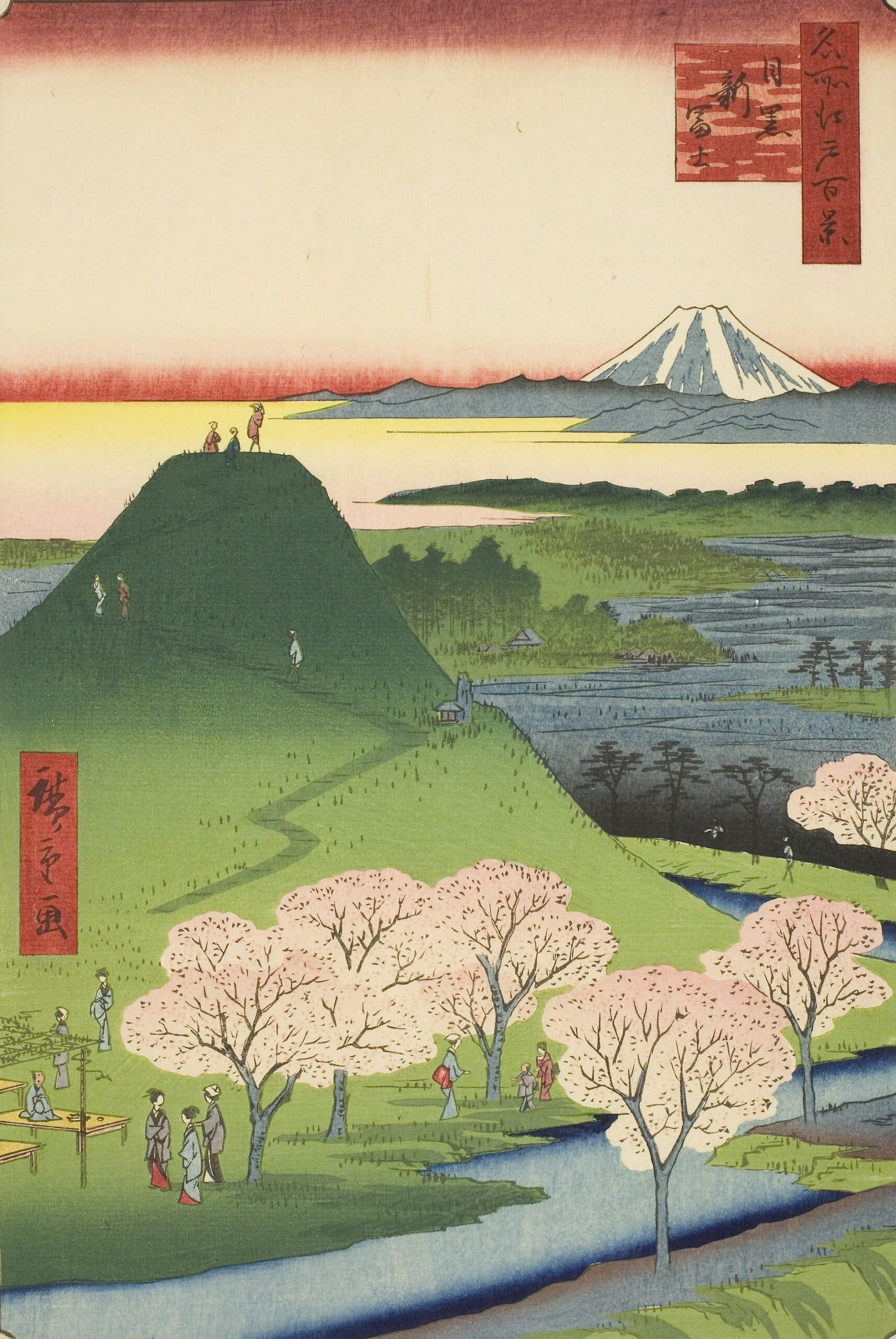
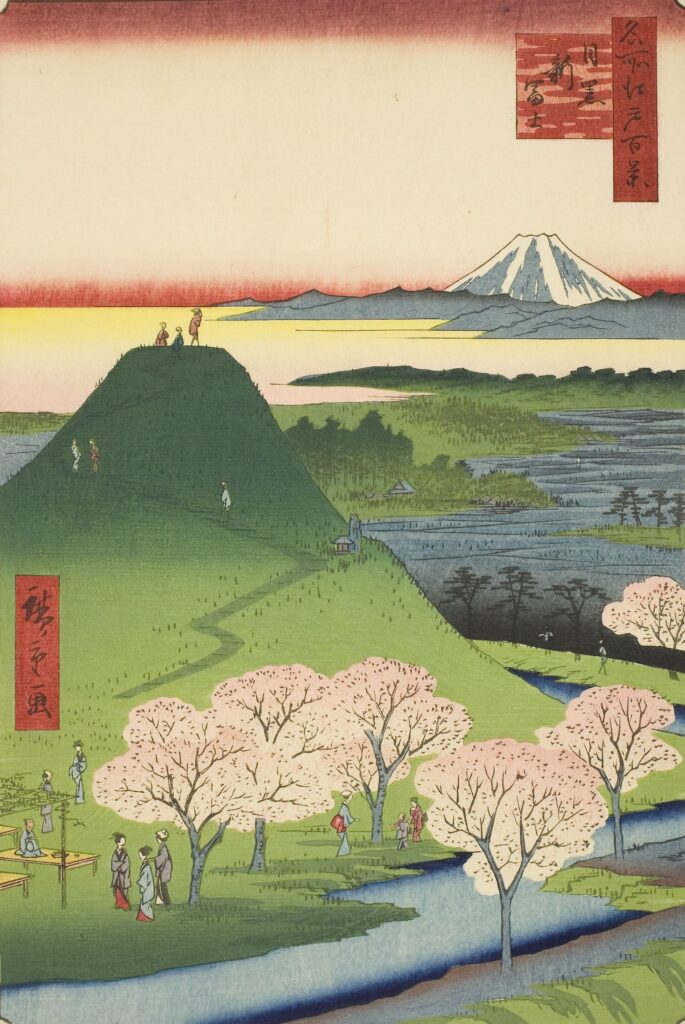
A small artificial mound is placed prominently in the foreground, depicting people climbing it.
The image of common people climbing the stone steps to the summit symbolizes the Edo culture in which faith and entertainment were integrated.
The real, majestic Mount Fuji appears in the background.
The small “New Fuji” in the foreground and the “Honke Fuji” in the distance create an exquisite contrast.
The lush rural landscape around Meguro is also carefully depicted, conveying the tranquil atmosphere of the Edo suburbs.
This is a typical Meguro atmosphere, located on the border between city and nature.
This fujizuka was built in 1819 on the estate of Kondo Juzo, a shogunate deputy (police officer) (Yarigasaki, Mitamura).
Kondo was known for his explorations of Ezo and the Kuril Islands, and later became the magistrate of books.
The first fujizuka was built in this area in 1812.
It was called the original Fuji, and the newer one was called Shin Fuji.
Mount Fuji is depicted in the distance.
The building in the middle ground, surrounded by forest in the countryside, is thought to be Yutenji Temple.
A tributary of the Mita Irrigation Canal flows in front, and a rest hut and Shin Fuji are depicted beneath the cherry blossoms.
The fujizuka is reached by an easy, winding path, and halfway up the mountain, there was a small eboshi-shaped stone and a shrine dedicated to the wealthy.
At the summit, three people are gazing in the direction of Mount Fuji.
<4> Edo’s Fujizuka Culture
Faith in Mount Fuji spread from the mid-Edo period onwards, and many groups of believers known as “Fujiko” (Fuji-ko) formed in the city of Edo.
Members of the groups worked together to build artificial mounds and sanctified them by placing lava and stones from Mount Fuji on them.
Edo citizens would climb these mounds to offer prayers during the “Oyama-kai” (opening of the mountain) season.
In addition to worship, the act of climbing itself was a form of entertainment.
It was a popular summer event enjoyed by people of all ages, from children to adults.
<5> The Remains of Meguro Shinfuji Today
Unfortunately, Meguro Shinfuji no longer exists.
There are several fujizuka that remain preserved in Tokyo today.
Representative fujizukas that still exist: Komagome Fuji Shrine (Bunkyo Ward), Sendagaya Fujizuka (Shibuya Ward), Shitaya Sakamoto Fuji (Taito Ward)
Visiting these mounds allows you to relive the experiences that Edo commoners had at Shinfuji.
The area around the former site of Shinfuji is now a residential area.
Scenic spots dating back to the Edo period, such as Meguro Fudoson and the Meguro River, remain.
<6> Tourist Guide
1. Touring Existing Fujizuka
While Shin-Fuji itself no longer exists, visiting the Fujizukas scattered around Tokyo offers a glimpse into the faith and enjoyment of Edo commoners. The Fujizukas in Komagome and Sendagaya, in particular, are still open for worship.
2. Pilgrimage to Meguro Fudoson
In addition to worship at Mount Fuji, Meguro Fudoson was also a popular pilgrimage destination for Edo commoners.
Walking through places beloved as “Meguro’s famous sites,” just like Shin-Fuji, will give you a deeper understanding of the Edo depicted by Hiroshige.
3. Strolling with a View of Mount Fuji
On clear days, you can still see the real Mount Fuji from the Meguro River and the plateau.
Relive the excitement of Edo people as they gazed upon the “double Fuji” of the small Fujizuka and the large Mount Fuji.