Utagawa Hiroshige – One Hundred Famous Views of Edo – 49 – Summer – Akasaka Paulownia Fields, Evening Rain 歌川広重-名所江戸百景-49-夏-赤坂桐畑雨中夕けい 解説
Current Address: Near Akasaka 3-chome, Minato Ward
Latitude and Longitude: Latitude 35.4020; Longitude 139.4420
Published: June 1859 Age: At the time of death
Explanation
<1> Introduction
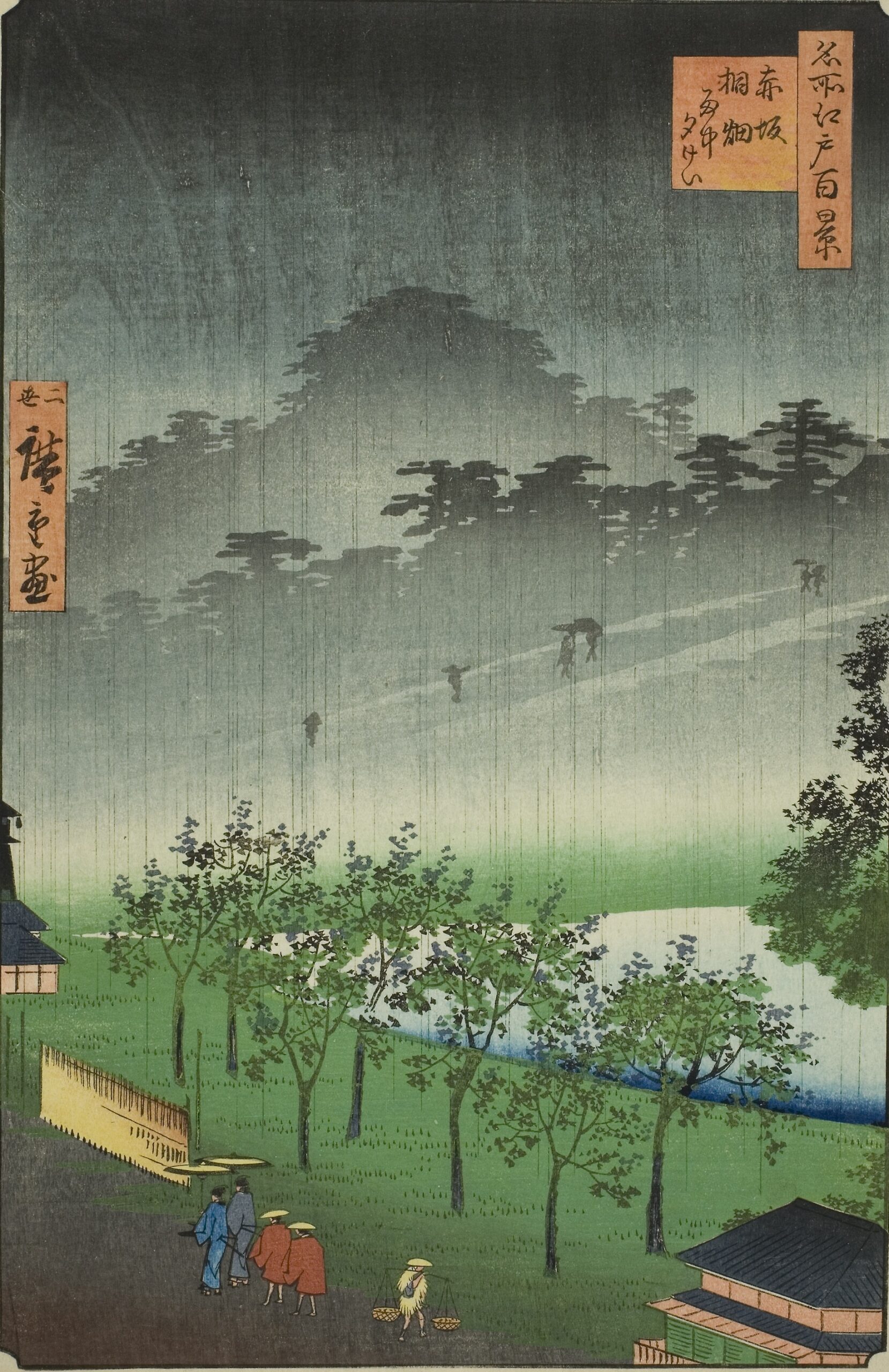
“Akasaka Paulownia Fields, Evening Rain” is a work capturing a summer scene.
The rain-soaked cityscape and the people living there convey the lifestyle of Edo and their coexistence with nature.
Hiroshige not only depicts the bright and bustling city of Edo, but also captures the diverse aspects of everyday Edo by depicting these rainy scenes.
This ukiyo-e depicts the summer showers experienced by the people of Edo, and their resilience as they carried on with their daily lives, even while soaked in the rain.
<2> What is Akasaka Paulownia Field?
Akasaka, located south of Edo Castle, was a mixed area of samurai residences and townspeople’s neighborhoods.
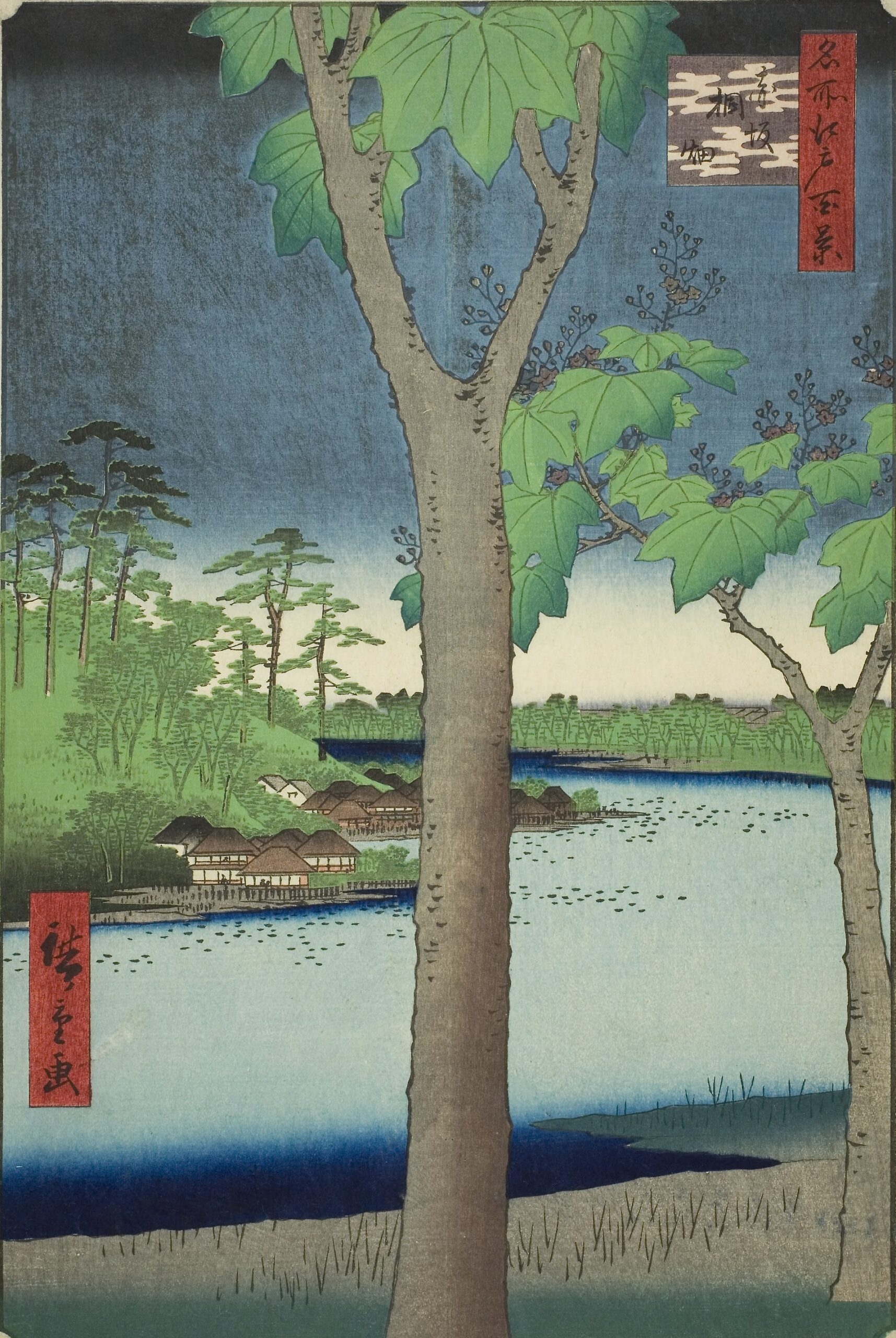
In one corner of the area was a place known as “Kiribatake,” so named because of the large number of paulownia trees that grew there.
Paulownia is considered a noble tree in Japan and is often used in family crests and furnishings.
The Akasaka Paulownia Field was located behind the samurai residences and adjacent to the townspeople’s living areas, making it a familiar sight for Edo residents.
Paulownia trees, in particular, grew large, lush leaves in the summer, providing shade and cooling relief.
Edo was a humid region, and sudden showers and passing showers were a common summer feature.
Places like the paulownia field, along with the scent of rain-soaked leaves and shade, must have made the Edo residents feel the change of seasons.
<3> Highlights of the painting
The rain running diagonally across the entire painting vividly expresses the force of the sudden shower. The heavy rain is skillfully depicted using shades of ink.
The images of travelers running as if chased by the rain and townspeople walking under umbrellas are striking.
Even though they are wet, people continue to live their lives, giving a sense of the resilience of everyday life.
The large paulownia leaves are depicted hanging heavy with rain, conveying the vivid humidity of the summer rain.
You can almost imagine the sound of the rain hitting the leaves.
The pale light of twilight is depicted in the background, creating a striking contrast with the dark, sinking rainclouds.
The “melancholy and refreshing feeling of a summer shower” felt by the people of Edo is captured in this ukiyo-e.
This ukiyo-e was painted by Shigenobu, who would succeed the name Hiroshige II.
The seal was revised in April 1859, after the death of the original Hiroshige, and it is the final work in the series.
It bears the seal “Painted by Hiroshige II.”
This work features the Akasaka Paulownia Fields, which the first artist also painted, and depicts a reservoir pond. However, this painting depicts the slope from the Tamachi area to the left of the reservoir pond, in front of Akasaka Gomon Gate.
The forest on the other side of the slope is the Ii family’s secondary residence, and silhouettes of people walking up the slope are depicted.
The area at the bottom of the slope in the foreground was bustling with many restaurants and brothels until restrictions were imposed in 1842, but by this time it had become deserted.
A samurai accompanied by his attendants in raincoats and a street vendor wearing a straw raincoat and hat are walking in the rain.
〈4〉 The charm felt by the common people of Edo
Summers in Edo were hot and humid, and for the common people, evening showers were a much-anticipated blessing from nature.
When it rained, the dust would settle and the air would become cooler.
“Akasaka Paulownia Fields, Evening Rain” captures the atmosphere of the moment just before the rain stops.
For Edo people, this image was likely a relatable reminder of “those evening showers.”
<5> Walking around Modern-Day Akasaka
Akasaka, located in Tokyo’s Minato Ward, is known today for its skyscrapers and bustling shopping district, but it’s also dotted with shrines and temples that retain traces of the Edo period.
Hikawa Shrine is beloved as Akasaka’s guardian deity and a place of worship dating back to the Edo period.
It is believed that paulownia trees also existed in this area.
Although the paulownia trees no longer remain, walking through the alleys reveals corners and slopes reminiscent of the layout of samurai residences, evoking the era of ukiyo-e.
Walking on a rainy day will give you a taste of the humid Edo atmosphere depicted by Hiroshige.
<6> Tourist Guide
1. Strolling on a Rainy Day
Walking along Akasaka’s slopes on a rainy day allows you to experience the atmosphere depicted in ukiyo-e. The night view of Tokyo seen through an umbrella is also quite picturesque.
2. Visiting Hikawa Shrine
A shrine worshipped by everyone from commoners to samurai. It’s the perfect gateway to learning about Akasaka’s history.
3. Comparison with Akasaka Sacas and the Restaurant District Akasaka is a place where Edo-period famous places and modern entertainment districts coexist.