Utagawa Hiroshige – One Hundred Famous Views of Edo – 78 – Autumn – Teppozu Inaribashi Minato Shrine 歌川広重-名所江戸百景-78-秋-鉄砲洲稲荷橋湊神社
Current Address: Minato, Akashicho, Chuo Ward
Latitude and Longitude: Latitude: 35.6660, Longitude: 139.7835
Published: December 1857 Age: 61
Tourist Guide-Style Commentary: “Teppozu Inaribashi Minato Shrine”
■ Introduction
Utagawa Hiroshige’s “One Hundred Famous Views of Edo” is a series depicting Edo’s famous places and people’s activities throughout the seasons, and is a valuable cultural heritage that provides insight into the landscape of the time.
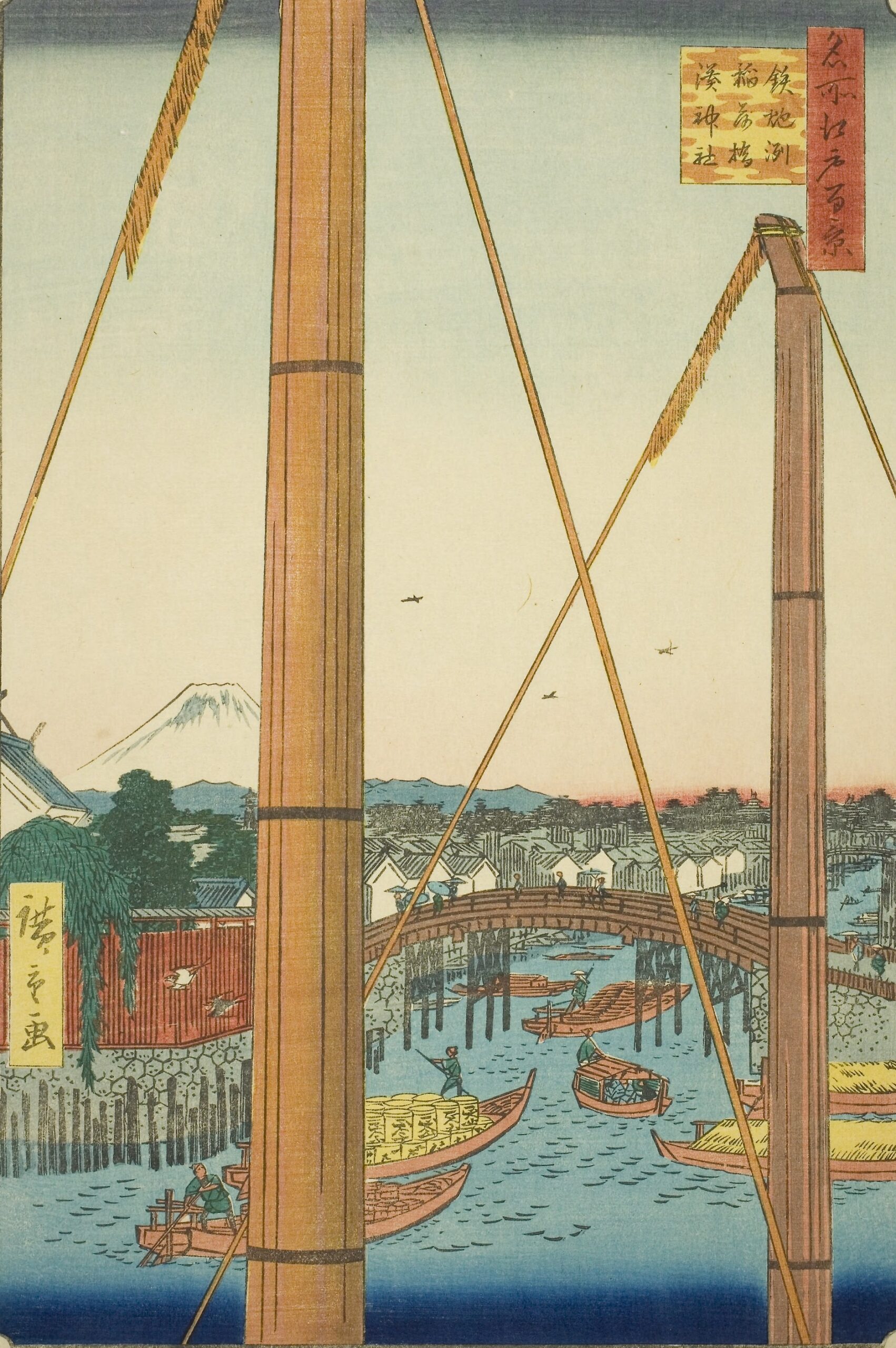
Among them, “Teppozu Inaribashi Minato Shrine” is a richly atmospheric piece, weaving together a river, bridge, and shrine against the backdrop of Teppozu, near the inlet of Edo Bay.
This work clearly demonstrates why Edo was known as the “City of Water,” offering a glimpse into the lives of Edo commoners, where shipping and faith were intertwined.
■ About Teppozu and Minato Shrine
Teppozu is located in the Minato area of present-day Chuo Ward, Tokyo. During the Edo period, it was a low-lying marshland at the mouth of the Sumida River.
The name comes from the location where the Tokugawa shogunate conducted gun test firings.
It developed as a port town and became a bustling hub for shipping and a key logistics location facing Edo Bay.
Minato Shrine was deeply revered by the common people as the guardian deity of Teppozu.
It was once known as “Teppozu Inari,” and bustling with people praying for safe shipping and voyages.
It was an inseparable part of the lives of people living in Edo’s port town.
Inari Bridge was a small bridge located near the shrine, and was an essential route for pilgrims and those traveling to and from the market.
This Inari Bridge is depicted in the painting, forming a symbolic landscape of the region.
■ Highlights of the Painting
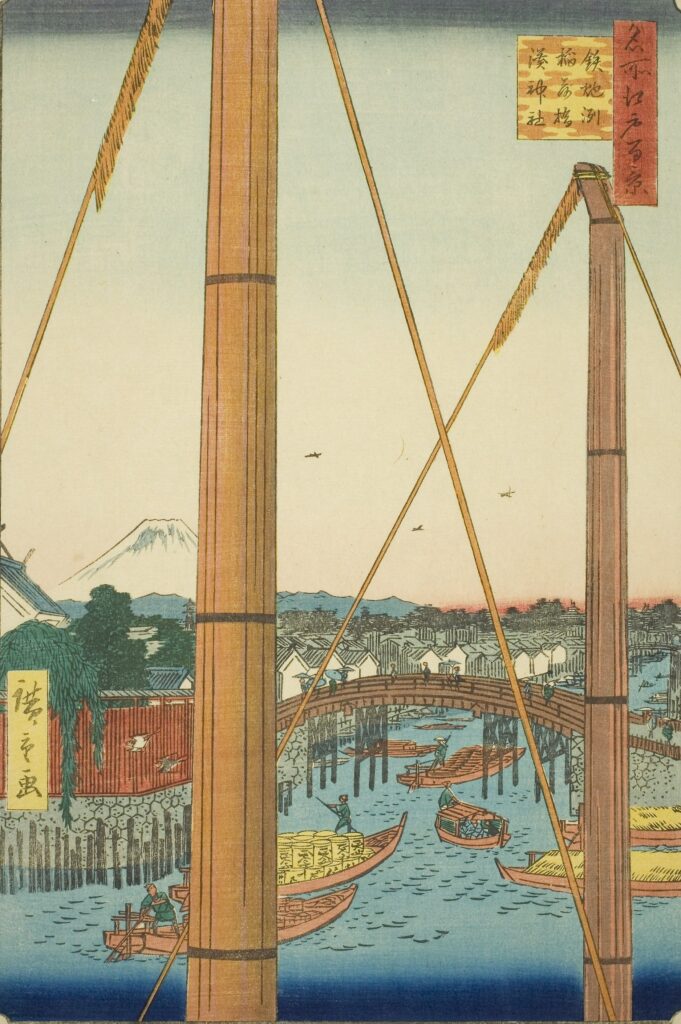
A large ship’s mast is depicted in the foreground, overlooking the townscape of Hatchobori along the Kyobashi River.
Teppozu is the area that continues to the left (from Motominatomachi to Akashicho) and is not depicted much here.
However, the red fence at the corner of Teppozu and Minato Inari Shrine, located at the end of the Inari Bridge in the foreground as people cross, are the guardian deity of sailors.
Below the Inari Bridge is Hatchobori, and tea ships can be seen.
Fujizuka mounds were also built within the temple grounds, which attracted many pilgrims.
The painting also shows busy boat traffic.
The mouth of the Kyobashi River is where rice, sake, and other “downstream goods” transported from Kansai were transferred onto smaller boats.
It was a key distribution point for goods transported to consumption areas within Edo city.
Mount Fuji is depicted prominently.
Edo Castle is depicted small in the distance above the Edo townscape.
■ Modern-day Teppozu and Minato Shrine
Today, Teppozu Inari Shrine is located in Minato, Chuo Ward, Tokyo, and is beloved by local residents.
The shrine bustles with activity during the New Year, with hatsumode (first shrine visit of the year) and Setsubun festivals, passing on Edo traditions to the present day.
Historic sites and information boards indicating the name of the area, along with the surrounding area, offer a glimpse into the townscape of the Edo period.
Today, the area around Teppozu has an urban landscape lined with office buildings and apartment buildings.
Stepping into the shrine grounds, you can sense the vestiges of Edo’s port town.
Amid the tranquility, you can recall the bustle of the past.
■ Tourist Guide Recommendations
- Visiting Teppozu Inari Shrine
This is a place of Inari worship that has continued since the Edo period.
Visiting the shrine while imagining the atmosphere of the shrine depicted in the painting will connect the world of ukiyo-e with the present day.
2. Stroll Around the Port Area
This area, located near the Sumida River and Nihonbashi River, is a place where you can really feel the connection between the waterfront and the town.
Traveling through stone monuments and historical sites will give you a glimpse into Edo history.
3. Combine with Other Sightseeing in the Area
A short trip from Teppozu brings you to nearby tourist spots like Nihonbashi, Tsukiji, and Ginza.