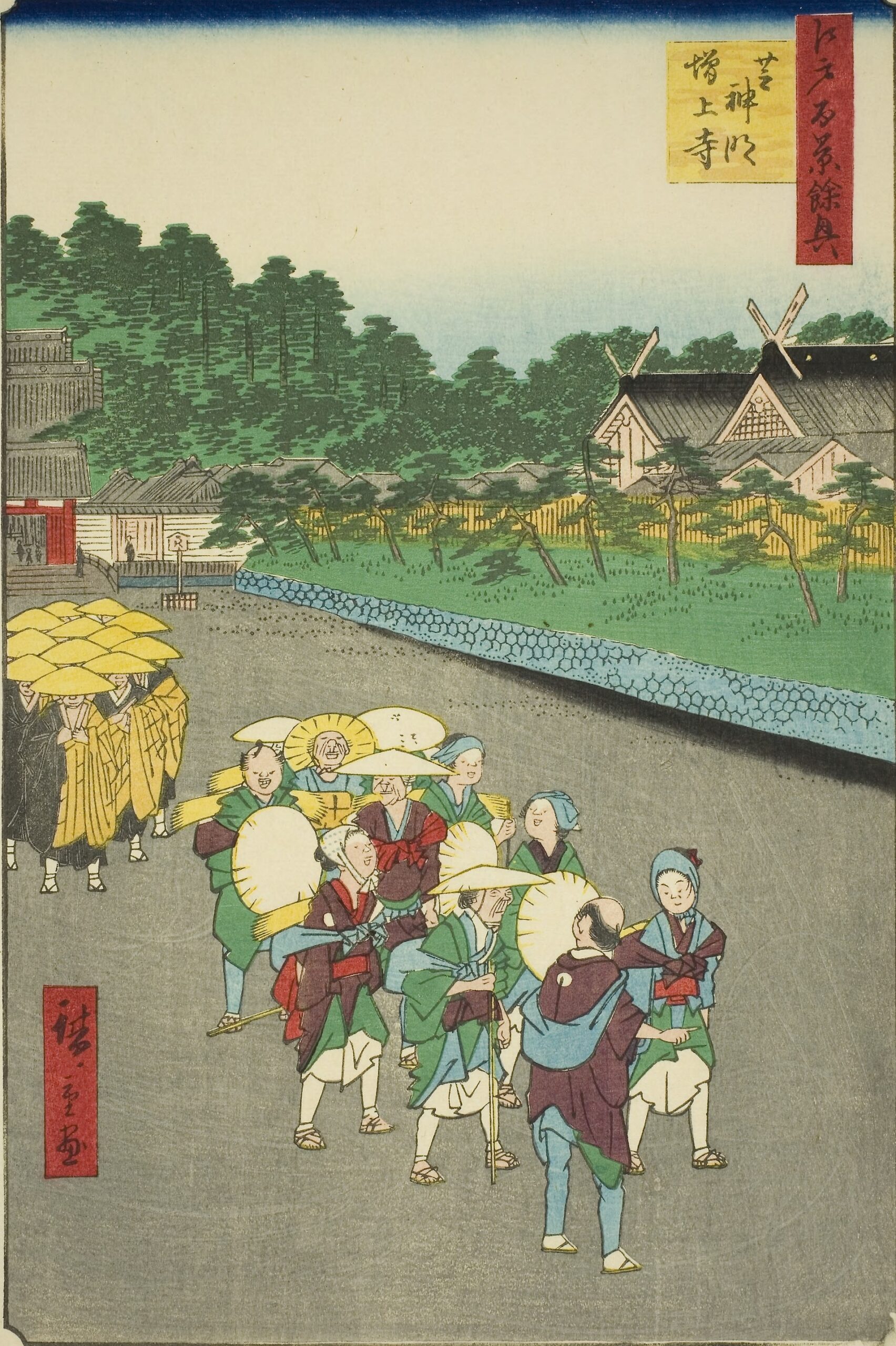
Utagawa Hiroshige-One Hundred Famous Views of Edo-80-Autumn-Shiba Shinmei Zojoji Temple 歌川広重-名所江戸百景-80-秋-芝神明増上寺
Current Address: Zojoji Temple, Minato Ward
Latitude and Longitude: Latitude: 35.6586, Longitude: 139.7488
Published: July 1858 Age: 62
Tourist Guide-Style Commentary: “Shiba Shinmei Zojoji Temple”
■ Introduction
Utagawa Hiroshige’s “One Hundred Famous Views of Edo” is a series of ukiyo-e prints depicting the landscapes of Edo through the changing seasons. Beloved by the people of Edo, the series remains an attractive tourist resource today.
One of the works, “Shiba Shinmei Zojoji Temple,” depicts the landscape of Zojoji Temple, Edo’s most famous temple, and the nearby Shiba Shinmei (Shiba Daijingu Shrine), against the backdrop of Shiba, located southwest of Edo Castle.
This painting captures a scene symbolizing Edo’s religious culture and urban development, conveying the spirit of Edo, a city where the faith and daily life of the common people intermingled.
■ About Shiba Shinmei and Zojoji Temple
Shiba Daijingu Shrine, a Heian-period shrine dedicated to a branch of Ise Jingu Shrine, was affectionately known as “Edo’s Ise-sama.”
Commoners of Edo who found it difficult to visit Ise Jingu Shrine revered this shrine as a proxy pilgrimage site.
The Shiba Shinmei Festival was a highly popular event, known as one of Edo’s three major festivals.
Zojoji Temple is the head temple of the Jodo sect of Buddhism and is also famous as the family temple of the Tokugawa family.
The mausoleum of the Tokugawa Shogunate was located here, and it was one of the religious and political centers within the Edo Castle area.
Its magnificent temple complex and expansive grounds were beloved as famous Edo landmarks.
Because these two famous sites were located close to each other, Hiroshige’s work refers to them side by side as “Shiba Shinmei Zojoji Temple,” emphasizing the religious presence of the entire Shiba area.
■ Highlights of the Painting
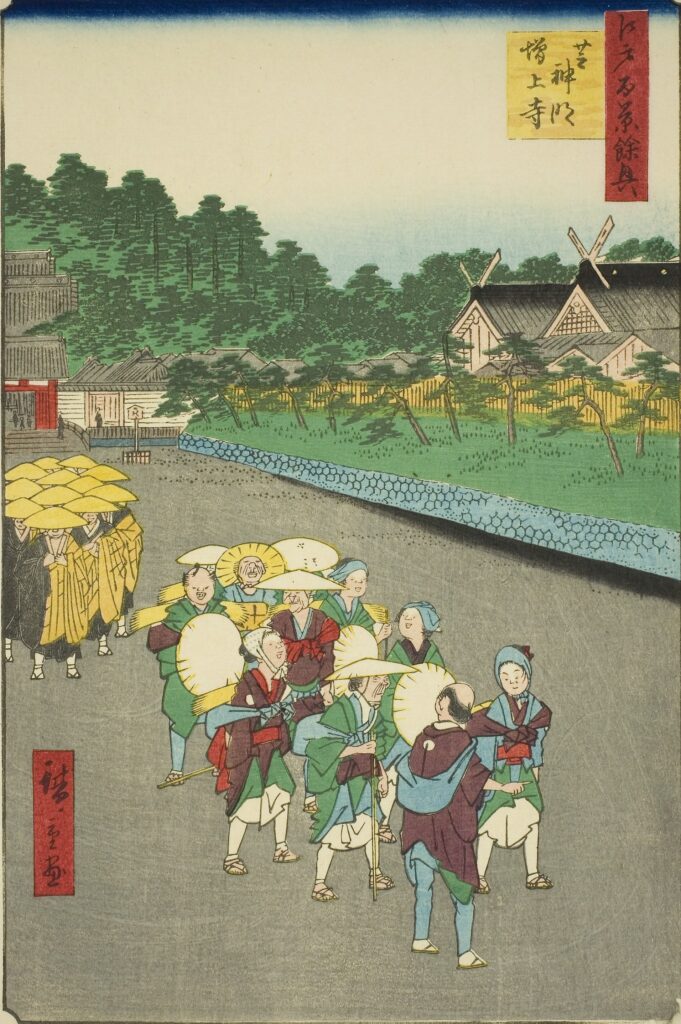
Visible in the background on the left is the main gate of Sanenzan Zojoji Temple.
Zojoji Temple is the family temple of the Tokugawa family and the head temple of the Jodo sect of Buddhism in the Kanto region.
At around 4:00 p.m. (seven o’clock), monks head out into the city to beg for alms.
They are called Nanatsubozu, and this custom is unique to Zojoji Temple.
Meanwhile, walking toward us, laughing and chattering, is a group of people who have come from the countryside to sightsee in Edo.
Each group has an interesting expression. Behind them are the Nanatsubozu.
Beyond them, peeking out from the street, is Iikura Shinmei Shrine. It is commonly known as Shiba Shinmei.
It is known as the “Lazy Festival” because it lasts for a long period of time, from September 11th to 21st.
During the festival, a ginger market is held within the temple grounds, giving the temple its nickname, the “Ginger Festival.”
The temple is also popular with visitors looking for lucky charms, such as chigi boxes, and those enjoying the theater, sideshow booths, and teahouses within the grounds.
■ Modern-day Shiba and Zojoji Temple
The temple is still located in Shiba-Daimon, Minato Ward, and despite being located in the city’s central business district, it is bustling with worshippers.
The “Daradara Festival,” which has been held since the Edo period, is known as one of Tokyo’s Ten Shrine Festivals.
The Zojoji Temple Great Hall, with Tokyo Tower towering in the background, is a symbol of faith that has continued from the Edo period to the present day.
The mausoleums of the Tokugawa Shoguns are also open to the public, allowing you to combine historical exploration with sightseeing.
A walking route that combines Tokyo Tower and Shiba Park is a popular tourist route, allowing you to experience both Edo-era paintings and modern-day Tokyo landmarks.
■ Tourist Guide Recommendations
- Visit the Zojoji Temple Main Hall and Tokugawa Mausoleum
Experience the history of the Edo Shogunate firsthand while touring the graves of past shoguns. - Participate in the Shiba Daijingu Shrine Festival
The Shiba Daijingu Shrine Festival, held in the fall, conveys the same excitement as the Edo period.
It’s a spectacular event that tourists can also enjoy. - A Fusion of Edo Atmosphere and Modern Culture
By combining the tranquility of Zojoji Temple, the bustle of Shiba Daijingu Shrine, and the surrounding gourmet food and hotels, you can experience both Edo and Tokyo.