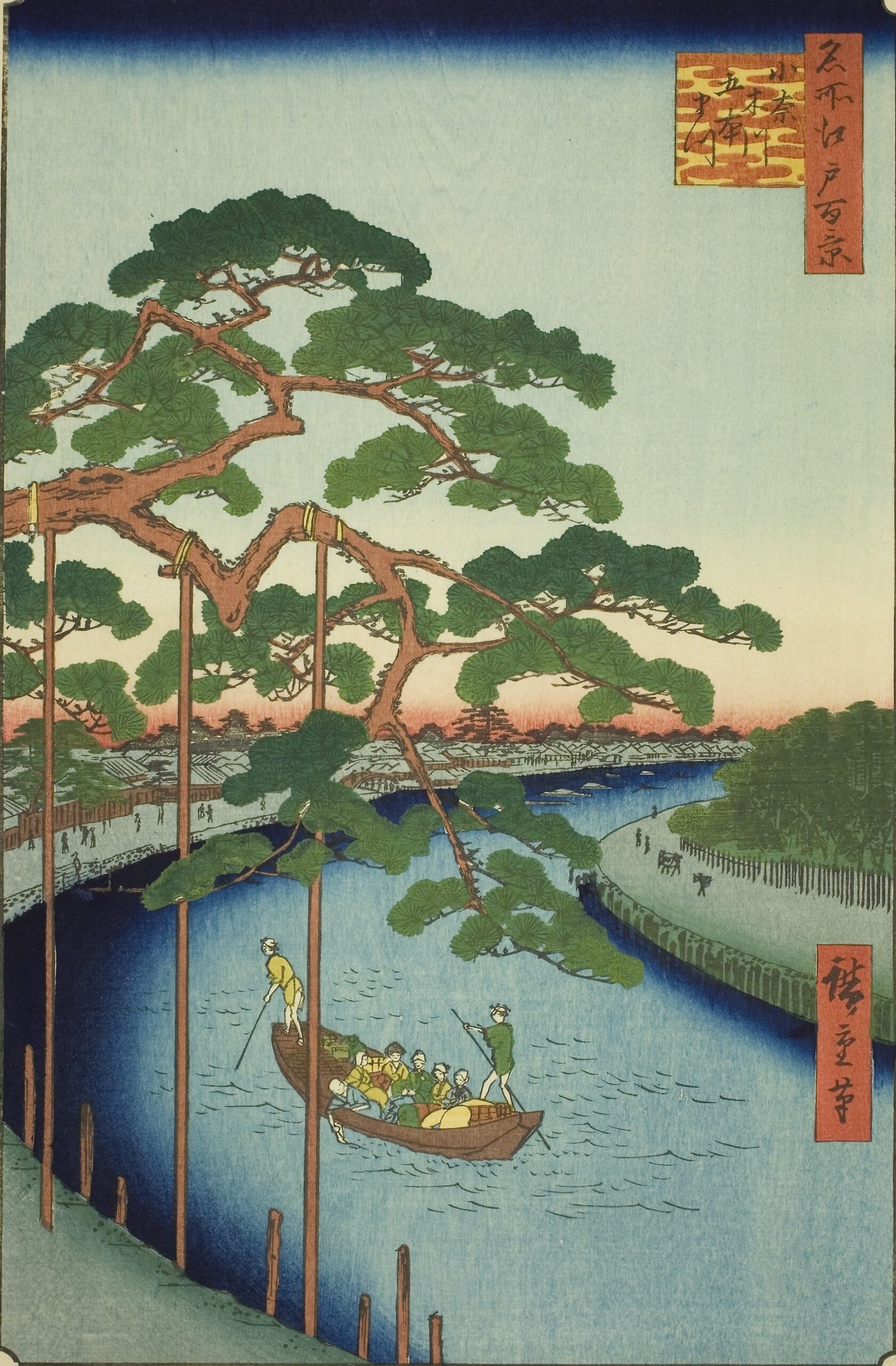
Utagawa Hiroshige – One Hundred Famous Views of Edo – 98 – Autumn – Onagigawa Gohonmatsu (Five Pine Trees) 歌川広重-名所江戸百景-98-秋-小奈木川五本まつ
Current Address: Near Onagigawa River, Koto Ward
Latitude and Longitude: Latitude: 35.6750, Longitude: 139.8180
Published: July 1856 Age: 60
Tourist Guide-Style Commentary: “Onagigawa Gohonmatsu”
■ Introduction
Utagawa Hiroshige’s “One Hundred Famous Views of Edo” is a masterpiece series that vividly depicts the seasonal landscapes of Edo and the lives of ordinary people.
Among these, “Onagigawa Gohonmatsu” features the pine trees along the canals in the downtown area, creating an ukiyo-e depiction of a “little famous spot” for Edo residents.
Edo residents cherished the distinctive trees that towered along rivers and roads, and used them as meeting places and landmarks for outings.
The five pine trees lined up in a row are widely known as a landmark, and Hiroshige depicted them alongside the riverside scenery.
■ About the Onagi River
The Onagi River was a canal that flowed from Kameido in present-day Koto Ward, Tokyo, through the Oshima and Kitasunamachi areas.
During the Edo period, it was an important waterway connecting the Nakagawa and Arakawa rivers with the city of Edo, and boats frequently traveled there carrying lumber, agricultural products, seafood, and more.
In addition to its role as a canal, it also provided water for the surrounding rural areas and towns.
The Onagi River was an important piece of infrastructure supporting logistics and daily life in the city of Edo.
Since the Meiji period, the Onagi River has been filled in due to urban development and river improvements, and much of it no longer exists.
However, place names and narrow roads marking the former riverbed remain in Koto Ward, conveying the memory of Edo’s water transportation to the present day.
■ About the Five Pine Trees
Five pine trees planted in a row along the river were called “Five Pine Trees,” and served as a landmark for travelers and boaters.
It was beloved as a famous spot by the common people of Edo, and even featured in haiku and songs.
Many place names and meeting spots along Edo’s rivers were based on trees, such as “Ipponmatsu” (One Pine Tree) and “Seven Pine Trees.”
“Gohonmatsu” is one such example, and can be considered a famous spot closely linked to the daily lives of common people.
Pine trees are evergreen, and are deeply rooted in Edo period culture as symbols of longevity and constancy.
The sight of five pine trees lined up in a row was beloved more than just as a natural landscape, as it was seen as an auspicious sight.
■Highlights of the Painting
The Onagi River is actually a straight waterway connecting the Sumida River and the Nakagawa River.
It was built by the shogunate to transport salt from Urayasu, and is also written as “Onagigawa.”
It was also called Nabeya-bori (Nabeya-bori) because there were many pot shops in the area.
According to the 1732 publication of “Edo Sunako,” the place name Gohonmatsu (Gohonmatsu) originates from a story about five pine trees originally planted along the Onagi River.
The others died, and the name of this single pine tree became the name of the area around it.
By Hiroshige’s time, this pine tree’s branches had spread across the street from the lower residence of the Kuki clan, lords of Ayabe Domain.
It grew so large that it covered the water’s surface, becoming a rare and famous tree.
Beneath the pine tree, passengers float hand towels on the long ferry boat connecting Fukagawa and Gyotoku.
■ Walking Around the Onagi River Today
The river itself has now disappeared due to landfilling.
You can still feel its traces in the narrow roads and waterways around Kameido and Kitasuna in Koto Ward.
■ Recommended Tourist Guide Course
① Start at Kameido Station
You’ll want to visit the historic Kameido Katori Shrine.
② Stroll Along the Onagi River
You can reminisce about the past while walking along the riverside promenade.
③ Nakagawa Funabansho Museum
Learn about this waterway hub and discover the story behind how Gohonmatsu became a beloved tourist spot.