Utagawa Hiroshige – One Hundred Famous Views of Edo – 51 – Summer – Tsukuda Island, Sumiyoshi Festival 歌川広重-名所江戸百景-51-夏-佃しま 住吉乃祭 解説
Current Address: Sumiyoshi Shrine, Tsukuda 1-chome, Chuo Ward
Latitude and Longitude: Latitude 35.6668: Longitude 139.7866
Published: July 1857 Age: 61
Comment
<1> Introduction
“Tsukuda Island, Sumiyoshi Festival” is based on the festival of Sumiyoshi Shrine held in Tsukuda Island, a fishing town facing Edo Bay.
The work captures the lives of Edo commoners who lived alongside the sea and the excitement of the colorful festival, vividly conveying the Edo culture in which entertainment and faith were integrated.
<2> Tsukuda Island and Sumiyoshi Shrine
Tsukuda Island originated in the early 17th century, when fishermen from Tsukuda Village in Settsu Province (Osaka) were called to Edo to serve Tokugawa Ieyasu and settle there.
Granted fishing rights in Edo Bay, they became renowned for their icefish fishing, supporting Edo’s food culture.
The people of Tsukudajima brought their home religion with them and built Sumiyoshi Shrine.
Enshrining a branch of the Settsu Sumiyoshi Taisha Shrine, the shrine was devoutly revered by islanders as a place to pray for safe voyages and prosperity in the fishing industry.
The festival was particularly grand, attracting crowds comparable to Edo’s three major festivals.
<3> Highlights of the painting
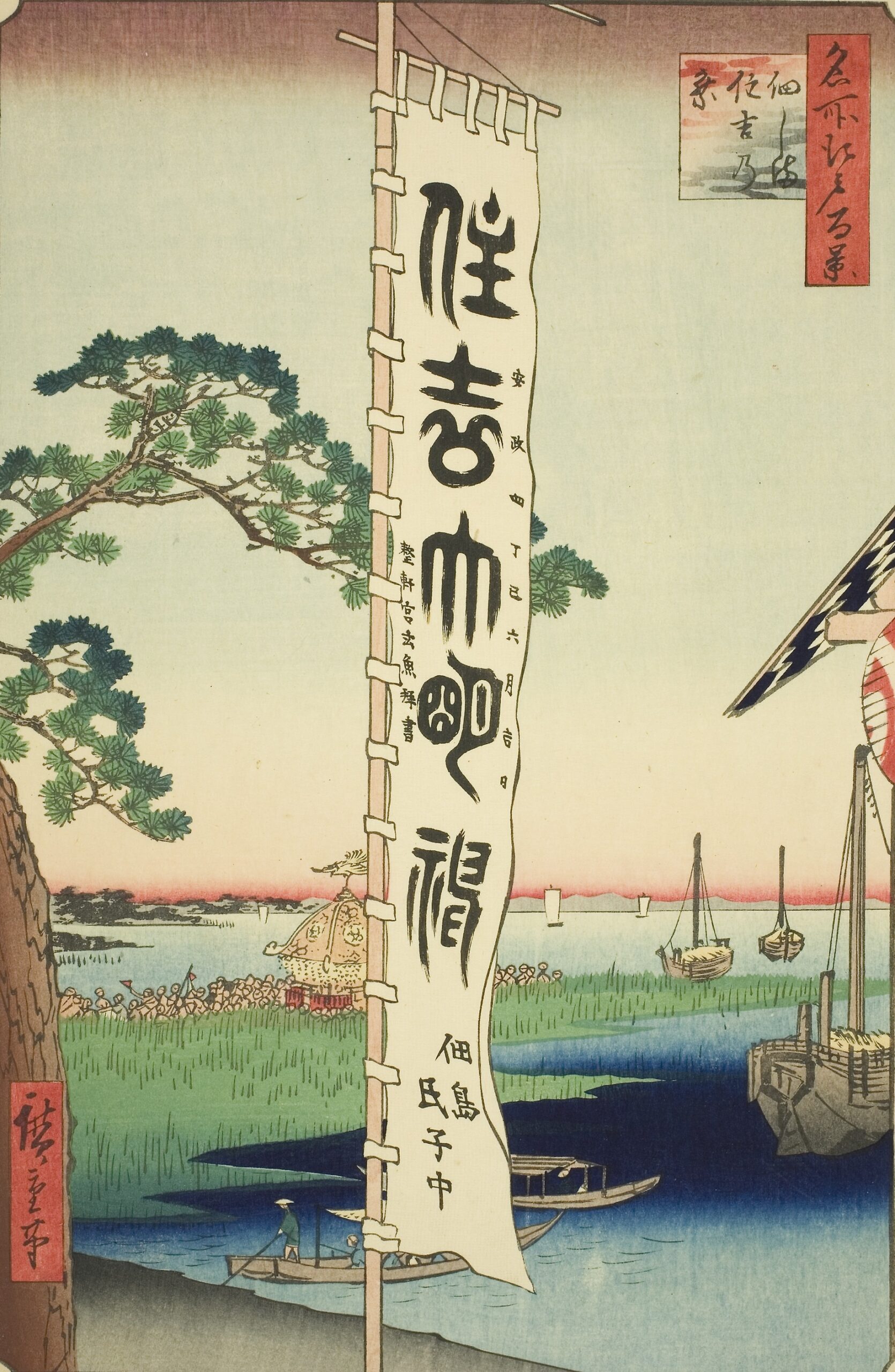
This painting depicts the climax of the festival.
The sight of the boat-shaped floats being carried and marching along with great vigor is truly impressive.
The unique fishing culture of Tsukudajima is strongly expressed.
Edo Bay stretches out in the background, symbolizing seaside life on Tsukudajima.
The close proximity of the sea to the land conveys that the sea was always a familiar presence to the people of Edo.
The depictions of the happi coats worn by the participants and festival paraphernalia convey the splendor of the festival and the enthusiasm of the people.
Tokugawa Ieyasu ordered over 30 people from Tsukudajima Village, Nishinari County, Setsu Province, to emigrate to Edo.
They initially lived around the Nihonbashi fish market.
Later, they moved to this island facing Edo Bay.
The name of the island is taken from their original residence, Tsukudajima Village, and a branch shrine of Sumiyoshi Taisha Shrine, which was worshipped locally, was enshrined here.
The island is located in an inlet of the Sumida River, and was rich in fish and shellfish.
It was particularly famous for its whitebait fishing, which was presented to the shogun.
At the Sumiyoshi Shrine festival held every summer, a banner bearing the name “Sumiyoshi Daimyojin” was raised and a mikoshi (portable shrine) was carried through the sea.
The banner on the front reads, “Sumiyoshi Daimyojin, Auspicious day of June, Year 1858, among the parishioners of Tsukudajima,” revealing the year of its creation.
Next to it are festival lanterns, and a depiction of a fishing boat and a dynamic mikoshi (portable shrine) parading through the sea offshore.
<4> Modern-day Tsukudajima and Sumiyoshi Shrine
Today, Tsukuda is Tsukuda, part of Chuo Ward, and is lined with high-rise apartment buildings.
Sumiyoshi Shrine remains enshrined as the island’s guardian deity.
The Sumiyoshi Shrine Grand Festival, held every summer, is known as the main festival held every three years and still attracts tens of thousands of people.
The temple grounds retain a festive atmosphere reminiscent of Hiroshige’s ukiyo-e prints.
<5> Tourist Guide
① Sumiyoshi Shrine
A symbol of Tsukudajima, it conveys the history of this fishing town, which dates back to the Edo period. The summer festival is particularly notable.
② The Birthplace of Tsukudani
Tsukudajima is also famous as the birthplace of tsukudani. Long-established tsukudani shops still remain, allowing you to experience the taste of Edo.
③ Tsukuda Kobashi and Ishikawajima
From the alleys and bridges that retain the atmosphere of Edo, you can enjoy the contrast between modern skyscrapers and old townscapes.