Utagawa Hiroshige – One Hundred Famous Views of Edo – 70 – Summer – Kanegafuchi, Ayase River 歌川広重-名所江戸百景-70-夏-綾瀬川鐘か渕
Current Address: Kanegafuchi, Sumida Ward
Latitude and Longitude: Latitude: 35.7330, Longitude: 139.8290
Published: July 1857 Age: 61
Tourist Guide-Style Commentary: “Kanagafuchi, Ayase River”
■ Introduction
Utagawa Hiroshige’s “One Hundred Famous Views of Edo” is a masterpiece series that vividly captures the scenery of Edo at the end of the Edo period.
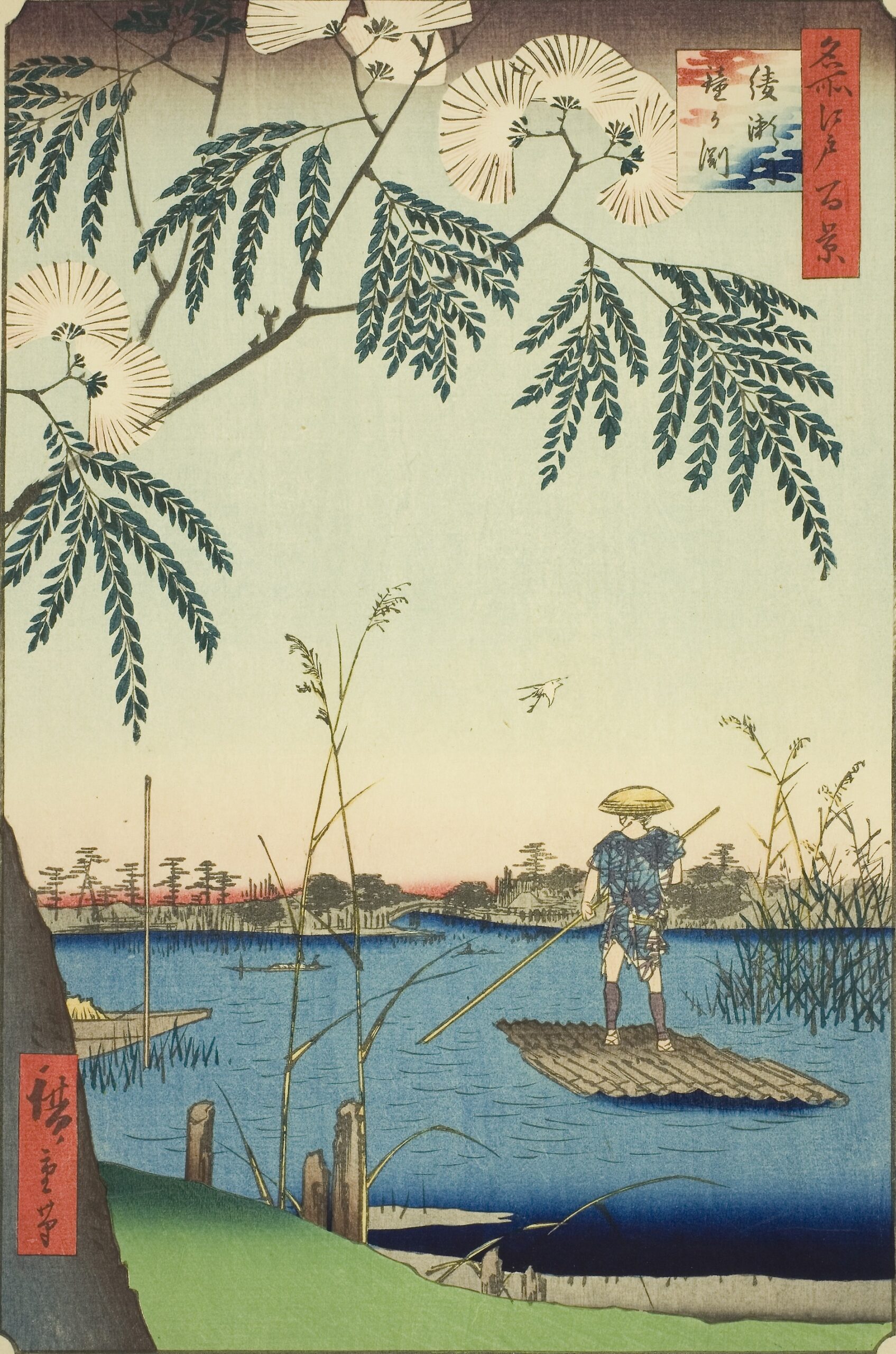
One of the paintings, “Kanagafuchi, Ayase River,” depicts the area around Kanegafuchi, located on the east bank of the Sumida River, and the Ayase River flowing into it.
Hiroshige poetically depicts the idyllic waterfront scenery on the outskirts of Edo, capturing the seasonal atmosphere.
Kanegafuchi has been known since the Edo period as a place for riverside fun and scenic beauty, and is also an area where many legends and stories related to the “sound of bells” remain.
The work exudes the calm, rustic atmosphere of the downtown area, somewhat different from the center of Edo.
■ About Kanegafuchi
One theory is that the name “Kanegafuchi” comes from a pool where a bell from a temple that long ago stood here fell into the river and sank into the water.
It is said that the sound of the bell echoed on the water’s surface, and the place name became a beloved one for its somewhat mystical sound.
Kanegafuchi is a deep pool in the Sumida River, and in the summer it was a place of relaxation for common people who enjoyed swimming and fishing.
The willows and cherry blossoms along the riverbank were also beautiful, making it a popular spot for strolls throughout the seasons.
Many “bell-related legends” remain in this area, sparking the imagination of common people of Edo.
■ About the Ayase River
The Ayase River flows from Saitama and joins the Sumida River.
During the Edo period, it was an important river used for agricultural irrigation and shipping, supporting people’s lives.
It served as a transportation route for lumber and agricultural products, and the riverbanks were constantly lined with docks and merchants.
The area around Kanegafuchi was also a bustling logistics hub.
■ Highlights of the Painting
The three-way intersection where the Sumida River, Arakawa River, and Ayase River converge is called Kanegafuchi.
There are various stories about the origin of the bell.
Choshoji Temple in Asakusabashi was washed away in a major flood between 1341 and 1342.
The battle bell of Toshima Gyobu sank here.
It was dropped when Fumon-in Temple was relocated from the right bank of the Sumida River to Kameido Village.
Shogun Yoshimune ordered the bell to be removed between 1716 and 1736.
It is said that they abandoned the plan because of the danger of whirlpools forming in the riverbed.
The large image in the upper left depicts a Nemu tree.
The Nemu tree’s pale pink flowers bloom around the time of the Little Heat, when the heat of summer really sets in.
The Nemu tree was given its name, “Neburinoki,” “Nebu,” or “Nemu,” because its compound leaves close as if asleep at night.
The Arakawa River flows in the foreground, and beyond that the Ayase River can be seen.
A large raft is depicted moving in the foreground.
■ Modern-day Kanegafuchi
The place name “Kanegafuchi” still remains, and Kanegafuchi Station on the Tobu Isesaki Line (Skytree Line) is the nearest station.
It is a beloved residential area full of old-fashioned charm.
Today, flood control work has progressed on the Sumida River and Ayase River, and traces of the Edo period have faded.
■ Recommended Points from the Tourist Guide
- Stroll Around Kanegafuchi Station
Enjoy traditional shopping and residential areas, experiencing the lifestyle of the old downtown area. - Stroll Along the Sumida River
Feel the river breeze as you walk, and relive the serene river scenery depicted in Hiroshige’s paintings.
We especially recommend visiting during cherry blossom season. - A Short Trip from Asakusa
It’s just a short train or bus ride from Asakusa, so you can enjoy the atmosphere of the outskirts of Edo in between sightseeing.