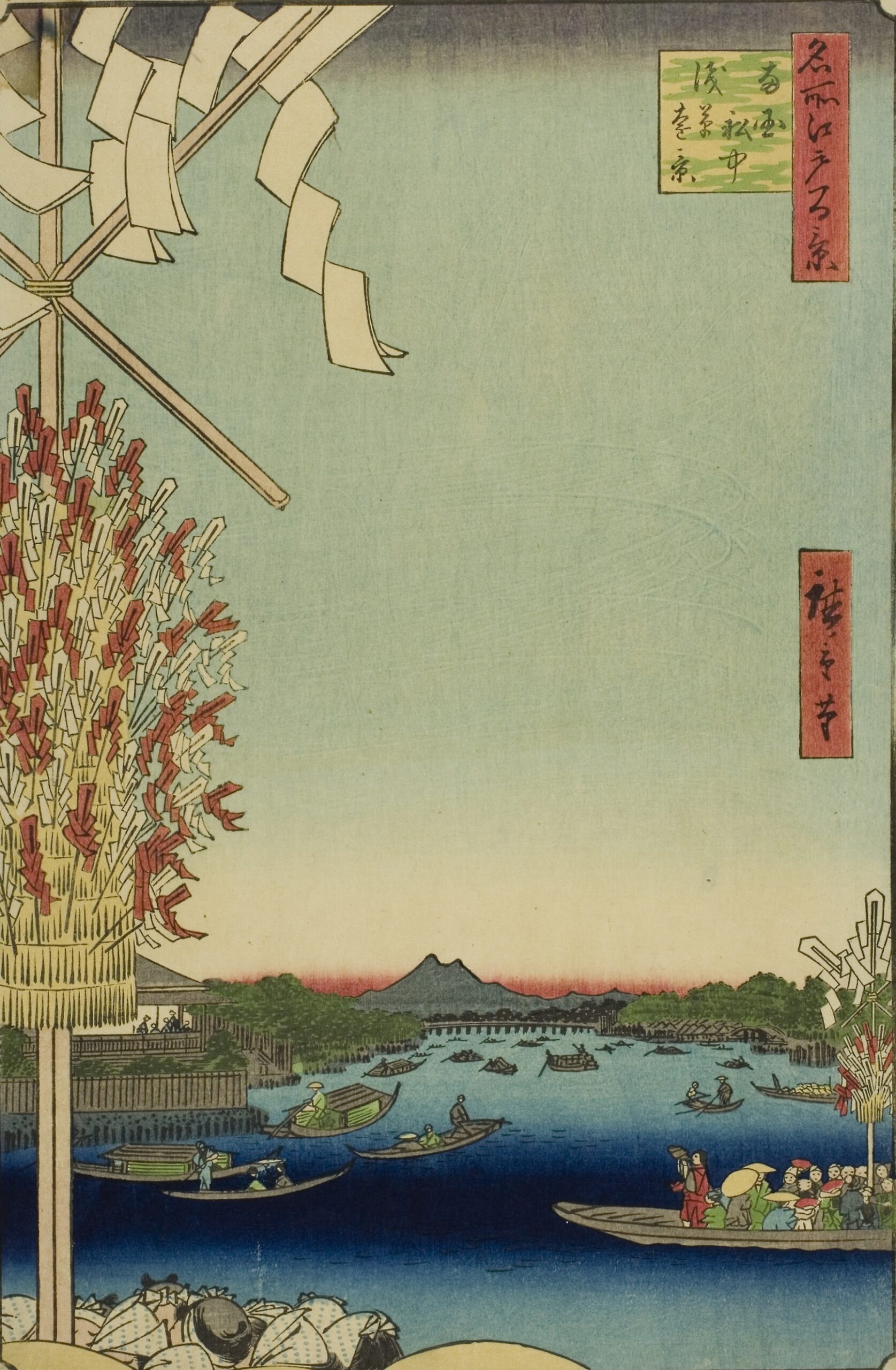
Utagawa Hiroshige – One Hundred Famous Views of Edo – 69 – Summer – Asakusa River, Okawabata, Miyatogawa 歌川広重-名所江戸百景-69-夏-浅草川大川端宮戸川
Current Address: 6-chome, Asakusa, Taito Ward (along the Sumida River, near Imadobashi and Sakurabashi Bridges)
Latitude and Longitude: Latitude: 35.7176, Longitude: 139.8067
Published: July 1857 Age: 61
Tourist Guide-Style Commentary: “Asakusa River, Okawabata, Miyatogawa”
■ Introduction
Utagawa Hiroshige’s “One Hundred Famous Views of Edo” is a collection of ukiyo-e prints that vividly depict the seasons, the lives of its people, and its culture. Among them, “Asakusa River, Okawabata, Miyatogawa” is a painting that symbolizes Edo’s waterfront culture, with the flow of the Sumida River and the bustling surrounding Asakusa as its backdrop.
This work fully conveys Edo’s image as a “city of water” through the people gathered along the riverside, the passing boats, and the ambiance permeating the river. Among Hiroshige’s favorite Sumida River scenes, this one is particularly representative of everyday life.
■ Asakusa River, Okawabata, and Miyatogawa River
Asakusa River
During the Edo period, the area of the Sumida River near Asakusa was specifically called the “Asakusa River.”
It flourished as a temple town for Sensoji Temple and was a lively area where boat traffic and urban entertainment gathered.
Okawabata
“Okawa” was another name for the Sumida River, and the banks and riverbanks along the river were called “Okawabata.”
Water transportation was important in Edo, and Okawabata was a logistics and commercial hub where people and goods gathered.
Miyatogawa River
“Miyatogawa” was also used to refer to tributaries and branches of the Sumida River, and was a common name, especially in the area near Asakusa.
The name “Miyatogawa” also frequently appeared in kabuki and joruri plays, making it a familiar name to the common people of Edo.
■ Highlights of the Painting
The Sumida River originally ran through Sumida Village and was called the Suda River.
After a resident of the capital wrote a poem about Sumida, using the word “Sumida,” it became commonly known as the Sumida River.
Other names for the river include the Sumida River, Okawa River, Sumita River, Kakuda River, Asakusa River, and Miyato River.
The upper reaches of the river were also called the Senju River, the midstream the Asakusa River, and the lower reaches the Sumida River.
With its gentle current and many scenic spots surrounding it, it has long been a popular destination for literary figures.
In the foreground, boats carrying pilgrims on their way to Mt. Oyama are depicted, and to the left is a large Bonten statue.
A little further ahead, a mountain ascetic, acting as a guide, is blowing a conch shell.
The Manpachi Tower is depicted beneath the large Bonten statue.
In the distance is the Azuma Bridge, and beyond that, Mount Tsukuba.
People participating in the pilgrimage to Mt. Oyama in the foreground took mizugori (water sack) at the east end of Ryogoku Bridge.
Following the ascetic monks, they erected a Bonten (branch) and a wooden sword and chanted, “Repent, repent, purify the six senses.”
It is said that many of the participants were artisans and merchants.
■ Walking along the Asakusa River and Sumida River Today
The names Asakusa River and Miyatogawa River are rarely heard these days.
The Sumida River Terrace has been developed into a promenade, bustling with people enjoying walks and jogs.
Sensoji Temple and Nakamise Street remain the heart of Asakusa, unchanged since the Edo period.
As a center of both faith and tourism, it attracts many visitors from Japan and abroad.
Water buses departing from Asakusa connect to Ryogoku and Odaiba, recreating Edo water transportation in modern times.
Views of the Skytree and bridges from the river are fascinating, as they are reminiscent of Hiroshige’s ukiyo-e prints.
■ Tourist Guide Recommendations
- Visit Sensoji Temple and Stroll Along the Waterfront
The main tourist attraction is, of course, Sensoji Temple.
After visiting the temple, a stroll along the Sumida River will allow you to feel the echoes of Hiroshige’s landscapes. - Sumida River Cruise
By taking a houseboat or water bus, you can experience looking up at Asakusa from the river, just like in Hiroshige’s paintings.
A night view cruise is especially recommended. - Sumida River Fireworks Festival
Fireworks festivals are a summer tradition that has continued since the Edo period.
The bustling crowds gathering along the river and the houseboats are a modern-day version of the “Asakusa River Okawabata Miyatogawa.”